The Vital Contrast Between Relinquishment Trauma, Separation Trauma, and Adoption Trauma and Why We Should Consider the Difference 

I am learning and growing to understand all the layers of the adoption experience from an adult adoptee’s perspective. I am entirely open to learning and growing in my experience, my story, and the stories of my fellow adoptees, intercountry adoptees, and/or multiracial adoptees. 

Recently, I was having a conversation with a friend of mine who is an intercountry adoptee, and the conversation was striking to me. She shared a piece with me I had never thought about before, and with this, I learned something very significant that I feel we should all understand, so I felt the need to share it in this article.

When most people think of adoption, they think of a “blessing” or a “wonderful outcome” for a child who was not wanted by their biological parents. Rarely do they know the other side of the coin, the reality of what adoption is, how separation trauma impacts us and what adoption feels like from the adoptee’s lens.

Some adoptees might be fortunate enough to receive the “picture perfect” adoption story; however, all the adoptees I know who could sympathize with this scenario still have deep-rooted issues that stem from the separation from their biological mother and adoption experience. Unfortunately, I have not met one who doesn’t, and I have been connecting with adoptees worldwide for over a decade now. 

Let’s get straight to the reason behind writing this article. 

Relinquish – voluntarily cease to keep or claim; give up. 

Voluntary – done, given, or acting of one’s own free will.

Separation – the act or process of separating: the state of being separated.

When I first began to emerge out of the fog from my adoption experience, I learned that the classification of referring to my experience as “Adoption Trauma” was something I could wholeheartedly relate to. My adoption experience did indeed traumatize me. 

However, it’s vital that I also recognize that the separation from my biological mother has also traumatized me. While many already know this, anytime a mother and a child are separated for any reason, a trauma occurs. This separation is classified as a traumatic experience and can cause a host of issues for the duration of the adoptee’s life. While we can undoubtedly suggest that the separation trauma from our biological mothers is traumatic indeed, it impacts us all at different levels. 

Over the years, I have learned that some adoptees have gravitated towards a well-rounded adoption experience, and many of us struggle every step of the way. Sometimes we’re somewhere in the middle of a complex adoption experience with varying emotions and experiences. One thing is for sure; no two adoptee stories are alike. I learned at the beginning of my healing journey that a lot of times, the adoption experience is lumped into one extensive experience; however, I view the separation from my biological mother as one traumatic experience and my adoption from my adoptive parents as a separate traumatic experience.

When we say “ADOPTION TRAUMA,” when we speak about our experiences, I feel like we are speaking about the experience of our adoptive parents adopting us because this event happens AFTER WE ARE SEPARATED from our biological mothers for whatever reason. It begins at the moment we are ADOPTED. But what about the traumatic experience of separation that happens first? 

While I think the adoption community means well, I see a significant issue with lumping these events together as one. Suppose you research separation trauma, mother and baby bonding and what happens when that bond is disrupted, and attachment theory. In that case, you will quickly learn of all the traumatic layers of losing a person’s biological mother. A baby can be fresh out of the womb, a toddler, or a preteen. Separation from our biological mothers will always create a wound, also known as the primal or mother wound. This wound is the greatest wound of our lives for many of us. For others, they aren’t so profoundly impacted by it. 

But, again, it impacts each of us differently. Still, the extreme end of the spectrum is where I have found myself to be, and the most significant source of my heartbreak, grief, loss, and pain is undoubtedly the separation and loss of my biological mother. This is just my experience as I see it over a decade of coming out of the fog from my adoption experience. I don’t claim to know it all, but I have gained snippets of knowledge and understanding along the way. 

While the term separation can describe anyone who has been separated from their biological mothers, relinquishment can not. I have learned that many adoptees don’t know if they were relinquished or stolen, which changes everything regarding how we speak about and view the adoptee experience. Being separated from our biological mothers is different from being adopted by our adoptive parents. 

Totally different! 

When speaking of my own story, I sometimes say relinquishment trauma when speaking of the primal wound or mother wound, but that’s because I know I wasn’t stolen. Instead, I know my biological mother chose to relinquish me. 

When I speak of adoption trauma, I am speaking of the trauma I experienced AFTER separation from my biological mother and paperwork was finalized with my adoptive family and what happened moving forward. But, again, both are very separate things, and both hold very different experiences! 
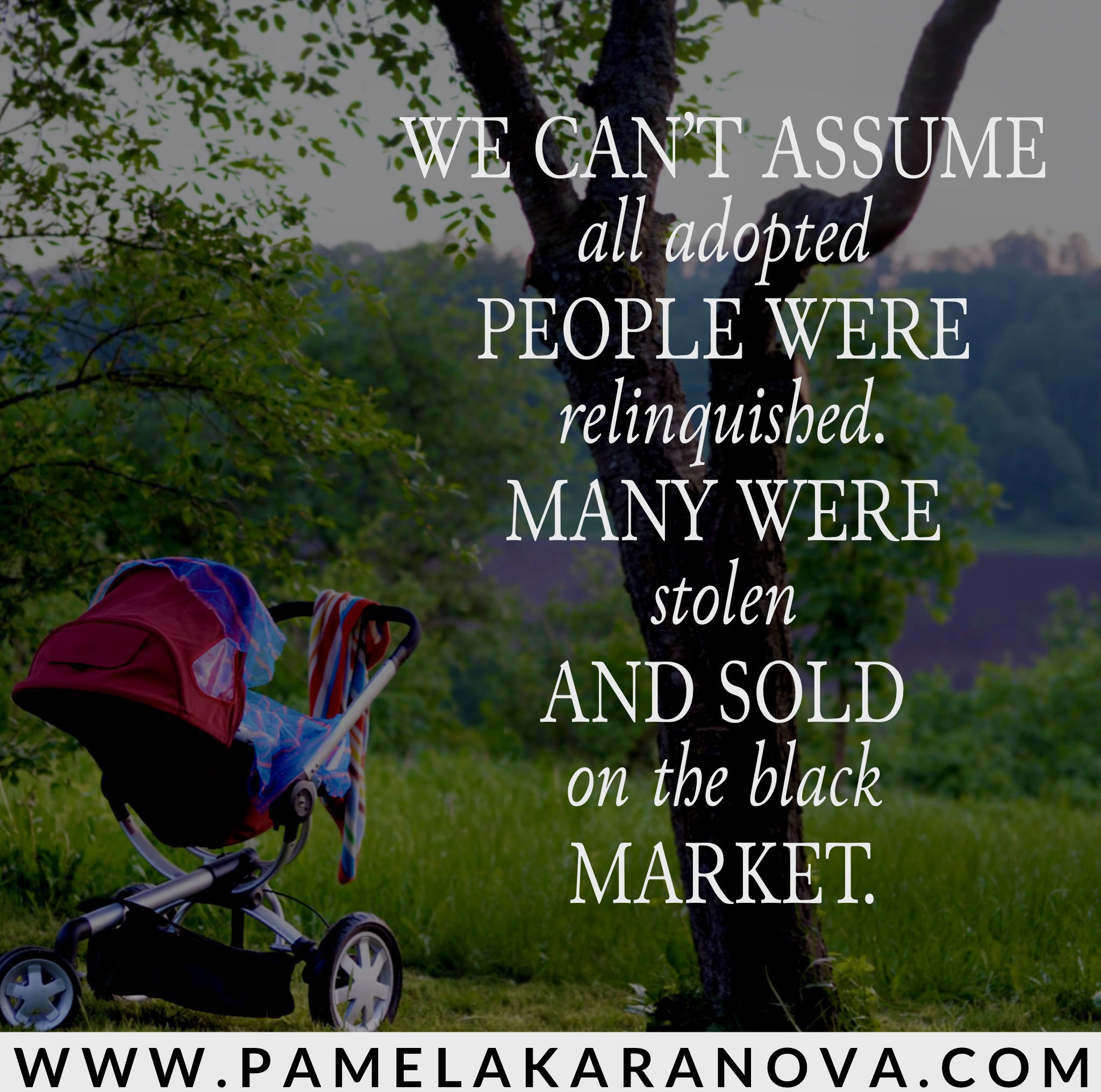
When I speak as a whole about other adoptees being separated from their biological mothers, I tend to gravitate towards separation trauma (instead of relinquishment trauma) because I don’t know if all adoptees were relinquished or not. We can’t assume all adopted people were relinquished. Many were stolen and sold on the black market and other various ways. 

And even when adoptees are relinquished, a lot of the time, the biological mothers didn’t voluntarily give their babies up. Instead, they were often coerced and conditioned, which is a form of gaslighting and manipulation that leads them to feel the shame and guilt many feel, which leads to adoption. 

Some might use the term “Surrender” when speaking of the separation of a mother and a baby. That means “to cease resistance to an enemy opponent and submit to their authority,”  however that doesn’t align with the possibility that there is an UNKNOWN area where a baby could be a stolen baby. 

Adoption Trauma, Separation Trauma, and Relinquishment Trauma all mean different things. I wanted to highlight this because I see “Adoption Trauma” used more and more. When I think a lot of the time, “Separation Trauma” is better fitting for what the person is trying to explain. 

Not all adoptees feel like adoption traumatized them, and not all adoptees feel like separation from their biological mothers traumatized them. We all write our own stories based on what we know and our experiences in life with our adoption journeys. I want to spark conversations with this article and thoughts that will shed light on this topic for anyone that hasn’t thought of these dynamics. 

I say, “Relinquishment trauma, compacted by adoption trauma,” when it comes to MY STORY, which fits me the best regarding my story.  It’s no doubt that no matter how you slice it, Separation Trauma, Relinquishment Trauma, AND Adoption Trauma are all very traumatic experiences. However, it is good to distinguish between them when we communicate our experiences to articulate our messages more clearly and defined. 

Adoptees, How do you refer to the separation from your biological mother?

Have you been able to learn if you were stolen or relinquished? 

How do you refer to your adoption experience or the experience of others who have been separated from their biological mothers and adopted? 

Do you use “Adoption Trauma” across the board, or do you distinguish the two as separate experiences? 

I am curious about others’ thoughts on this topic. 

Thank you for reading,

Love,

Pamela A. Karanova  

Facebook: Pamela A. Karanova

Don’t forget that I’m streaming my articles on several audio platforms for your convenience! 👇🏼

📱 iTunes – https://apple.co/3tKzT5f

🌎 Google – https://bit.ly/3JP6NY0

🎧 Spotify – https://spoti.fi/3Ny6h35

📦 Amazon – https://amzn.to/3JScoga

☕️– Buy Me A Coffee https://bit.ly/3uBD8eI
*The views and opinions expressed in this article are that of the author, Pamela A. Karanova. Reproduction of the material contained in this publication may be made only with the written permission of Pamela A. Karanova

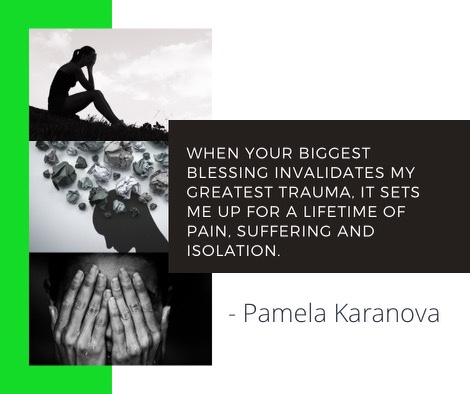
When Your Biggest Blessing Invalidates My Greatest Trauma

img_0272

When your biggest blessing invalidates my greatest trauma it sets me up for a lifetime of pain, suffering and isolation. It facilitates a lifetime of suicidal ideation, because the pain is just too great to process. It makes me feel more isolated and alone than non-adopted individuals can ever imagine. It makes me wish I was aborted and feeling like I want to die for most of my life, because my pain is greater than my desire to want to live. It drives me to attempt to take my life as a teenager, because you fail to admit I have lost anything. It drives me to a place of addiction, because at the end of every day the only way to manage every day life is to numb the pain. When you use bible scriptures to defend your blessing, it makes me question the bible and the God you are speaking of. When your biggest blessing outshines my reality, it makes me feel unimportant and insignificant. When you refer to me as a blessing, it hurts because you are invalidating my adoptee and relinquishee reality.

My story went something like this:

Me: Mommy, did I come out of your tummy?

Adoptive Mom: No, you were adopted. Your birth mother’s choice to surrender you for adoption was my biggest blessing and a dream come true.

Me: What do you mean?

Adoptive Mom: She loved you so much she gave you to me to raise, and I will always love her and be thankful for her decision.

Me: Who is she? Where is she?

Adoptive Mom: We don’t know, honey.

Me: Experienced the most significant mental mind fu*k of my entire lifetime.

I was approximately five years old when this conversation took place, and it’s clear to me that my life was never the same. Every day, I was haunted every hour and every minute wondering, wishing, and dreaming about finding HER.

No matter what questions I had or what mental torment I experienced from this moment forward, my adoptive mom’s joy and happiness trumped everything. My feelings didn’t matter when I was her biggest blessing in life, and her joy  of being a mother trumped my feelings of sadness every damn day.

If I’m transparent, my adoptive mom likely didn’t know the pain and heartache I was experiencing but if she did, her happiness was highlighted over my pain. I was adopted in August of 1974, and my adoptive parents were told to sweep the entire idea of adoption and what it meant under the rug. They were also told the less we talked about it; the better things would be. This is how many adoptions were back in those days, but today is a new day and a new year. It’s 2020, and when you know better, you do better.

However, I ask myself if my adoptive parents knew this, would it have changed anything for my five-year-old self, who was desperately searching for my REAL MOTHER?

I genuinely believe as a 46-year-old woman, if I were able to process my trauma at as early of an age as possible, my healing journey wouldn’t have started at 36+ years old. I wouldn’t have been addicted to substances for 27 years of my life. I recently celebrated 8 years sobriety, however I feel like I’ve spent my entire life not only suffering from the trauma of relinquishment and adoption but healing from the lifelong aftermath of these experiences.

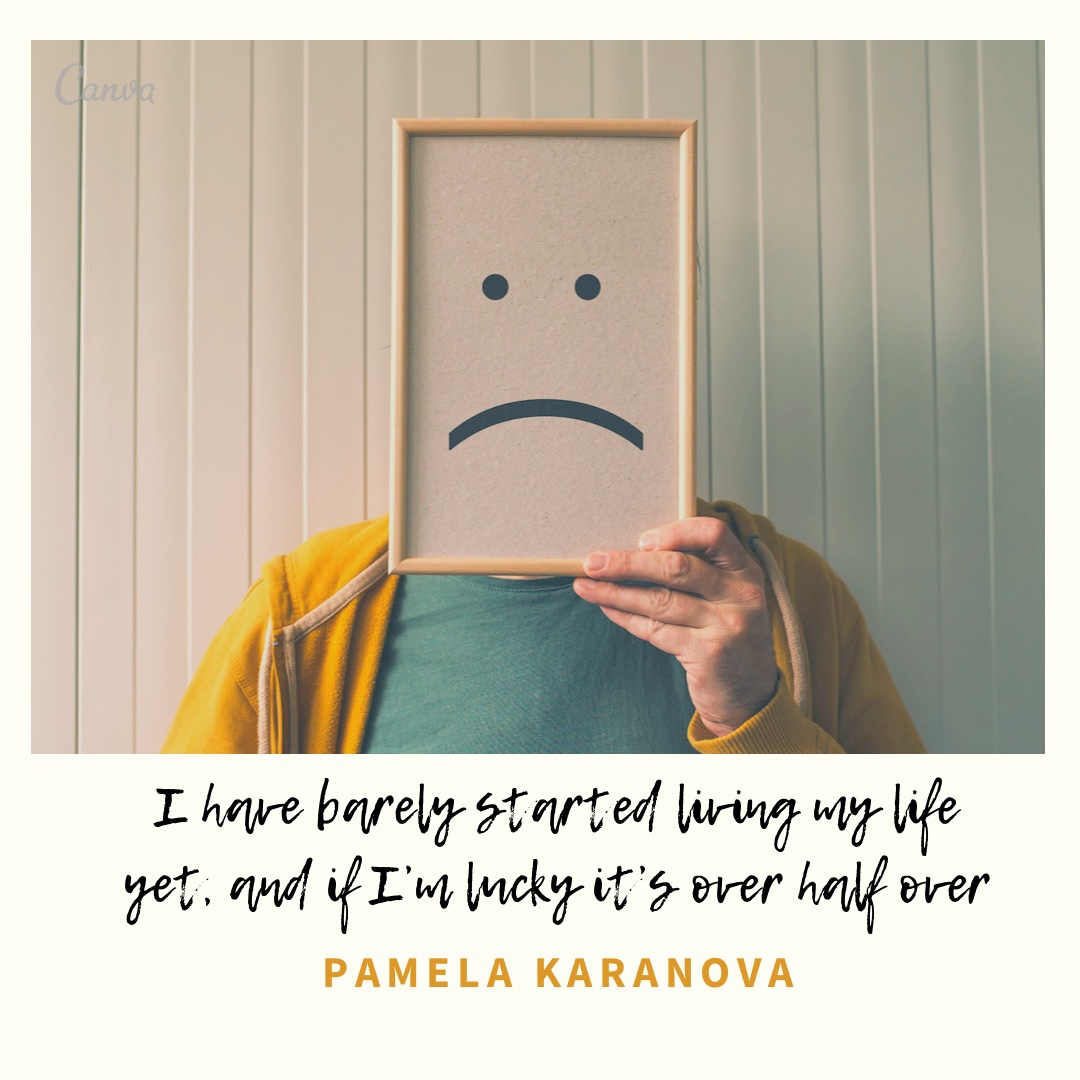
I have barely started living my life yet, and if I’m lucky, it’s over half over. That’s a hard pill to swallow, but I try to remain grateful that I’m here and I’m alive because I know so many of my fellow adoptees are not. This is why I keep sharing and writing. Adoptees are dying!

Adoptions continue to happen all over the world. We cannot continue to fail to acknowledge that before the blessing of an adopted child is brought into a family, it is equally intertwined into the very beginnings of our life, which is a traumatic experience. We must also recognize that relinquishment is trauma, and so is adoption. These are two very different dynamics to the adoptee experience. The sooner society steps out of denial about these truths; the sooner adoptees will start to heal.

Better yet, if our adoptive parents knew these truths from the beginning, would they still choose to adopt anyway? In my experience spending the last ten years networking in the adoption community, most all adoptive parents I have talked to have expressed they TRULY had no idea what they were getting themselves into when they adopted. The adoption agencies and attorneys never shared the truth with them. When they learned what they were up against, it was too late, and they were stuck with this child who has come with deep-rooted relinquishment trauma, or they rehome them and send them back.

Let me be clear, we can have wonderful and loving adoptive homes and love our adoptive families greatly, but the original trauma of relinquishment still remains the same. Networking with adoptees for over 10+ years and hearing their stories, building relationships with them, I can tell you without a shadow of a doubt most of us don’t get happy and loving adoptive homes! If you are that one adoptee or know that one adoptee who’s “Just fine” with being adopted, spend more time getting to know more adoptees. That one adoptee story doesn’t compare to the hundreds of thousands of adoptees who have nightmare adoption stories and adoptive homes. Remember, adoption trauma always compacts the original relinquishment trauma.

In what ways does relinquishment and adoption trauma surface in an adopted individual? It can be acting out at an early age or teen/adult years with anger, rage, self-harm, substance abuse, breaking the law, running away, testing the waters in every way possible. Depression, anxiety, abandonment, mental health issues, self love, self hate, rejection, and Complex – PTSD. Let’s not forget grief and loss. Grief and loss show up in more ways than non-adoptees can even imagine and it lasts a lifetime! We struggle with these things for our entire lifetimes and many adoptees never get the help they deserve, taking this pain to their graves. We don’t wake up one day and it’s gone. It follows us, like ball and chain. For many of us, it feels like we’re doing a life sentence for a crime we didn’t commit.

While our adoptive parents, their friends, and family are celebrating adoption blessings, the truth is that adoptees will continue to attempt suicide at 4x the rate of non-adopted individuals. We will continue to grieve our grief and process our loss alone for a lifetime. We will continue to feel helpless in a world that celebrates our relinquishment trauma and adoption trauma. We will continue to live a life riddled with anxiety, depression, and sadness. We will continue to feel isolated and alone. Many and most of us take these things to our graves, because there has never been any help for us.

Instead, you celebrate our trauma and normalize the separation of a mother and her baby. Nothing about relinquishment and adoption is normal, and all the feelings adoptees feel and how we respond to relinquishment and adoption trauma is normal considering the circumstances. What’s not normal is relinquishment and adoption trauma!

Back in 1974, adoptees weren’t baring their souls to share their stories in hopes of shining a light on the truth about adoption and how it’s made them feel. If they were, there might have been very few of them. Today they are, and it’s making a difference. One of the biggest things I have experienced that’s been a significant hurdle to overcome is that our world celebrates adoption the way they do. Can you imagine our world celebrating rape or child abuse? Can you imagine our world celebrating someone being held hostage at gunpoint? Can you imagine our world celebrating a mother and child dying in childbirth?

Only in adoption is our most tremendous trauma of relinquishment not acknowledged, but it’s celebrated. The mental mind fu*k this causes for relinquished and adopted individuals can’t even be explained. Let me be frank; it’s a big giant clusterfu*k.

While our adoptive parents and society are celebrating, they don’t equally acknowledge that we are being is severed from our roots before any adoption occurs. This is the most significant loss of our lifetimes. We lose genetic mirrors, biological connections, medical history, siblings, grandparents, ethnicity, homeland, and so much more on top of YOU CELEBRATING IT. Stop celebrating mothers and babies being separated!

If you’ve made it this far, I will encourage you to challenge yourself in stepping out of denial about the FACTS that what you were told and what you learned about adoption might not be accurate information. I ask you to open your eyes, ears, and hearts to the truth that relinquished and adopted individuals need you to equally acknowledge all we have lost before you consider celebrating it.

We’re not your blessing. Until you can do this vital step to help aid us in our healing process you have no business celebrating us or calling us a blessing. When our adoptive parents are our elders, we follow suit in what they acknowledge as we are children. If you recognize this, we will realize this. Conversations about grief, loss, relinquishment, abandonment, rejection, culture, genetic mirroring, searching, and reunion need to happen. As children, we will NOT be able or equipped to open these conversations on our own. Without the support of our adoptive parents, we will suffer, and we will suffer greatly.

I hate to shatter the fantasy that your adoption is a blessing, but the truth is before every adoption takes place, relinquishment trauma happens first. Adoptees are dying. Please stop celebrating our relinquishment trauma and adoption trauma, and if even after learning all this, you still choose to celebrate, at least equally share the truth by sharing the painful pieces as well. If you don’t, you will regret it, and please know you are assisting in the stalling of your adopted child’s healing. A lifetime of pain will follow no matter what, but if you choose to assist by opening these difficult conversations, it will help!

If you are the adoptive parent of an adult adoptee, you can still apply this information to your journey, life, and relationship with the adopted individual in your life. I don’t know your story, nor do I need to know it. Start talking about the TRUTH in adoption. Start talking about uncomfortable topics. It could save your relinquishee/adoptees life.

Don’t forget this article along with all my other articles are available in audio for your convenience, just look up Pamela A. Karanova Podcast on Google Podcasts, iTunes , Spotify. and Amazon Music. Interested in treating me with a coffee, to add fuel to my fire? Click here. Many thanks in advance to my supporters!

Thanks for reading.

The views and opinions expressed in this article are that of the author, Pamela A. Karanova. Reproduction of the material contained in this publication may be made only with the written permission of Pamela A. Karanova
My Views on Adoptee vs. Relinquishee

Over the last few years, I’ve learned the noteworthy difference in the concept of an adopted

individual referencing themselves as a relinquishee and why this is even a thing. Take note while I share here, I’m sharing from the perspective of an adoptee adopted from a closed adoption in 1974. I’m not referencing individuals who have never been separated from their biological mothers at the beginning of life.

10+ years ago, I began to come out of the fog regarding my adoptee journey, and in that time, it’s been ten years of processing pain, heartache, adoption, and relinquishment trauma. I had to trace back to the beginning of my life, which we would typically consider being conception. I actually wrote about this before many years ago, Is Adoption the Problem or is Relinquishment the Problem?

 However, we must go much farther back and allow ourselves to spend some time in our birth parents’ shoes, their parents’ shoes, and their parents’ shoes.

Over those ten years, I’ve learned the knowledgeable difference between someone using the reference adoption trauma and relinquishment trauma. They are two very different things, and we must recognize them as such to embrace our healing journeys.

For myself, the root of my pain is a reflection of the original separation and relinquishment trauma from my birth mother. This wound in the adoption community is fitfully referenced as The Primal Wound.

I share my thoughts and feelings based on my experiences, which is especially true for my healing journey. One’s healing journey is never cut and dry, reflecting ONE WAY, so I will never insist what works for me will work for you too, but it might.

I used to refer to adoption trauma as the root of my trauma; however, my growth has caused my views to change over the years. Today, I hear countless individuals reference adoption trauma as the soul wound that an adoptee carries; however, I would disagree. The first trauma an adopted individual experiences is actually from the relinquishment from our biological mothers. This trauma is first, and it is the root of our heartache and pain. Trying to heal these wounds “out of order” where we aren’t acknowledging the root first, can and will stall our healing as relinquishees.

Adoption trauma is definitely in the mix for most of us, who consider our adoptive homes a traumatic experience. Still, we must acknowledge that relinquishment trauma, aka the primal wound, was FIRST.

Adoption trauma compacts relinquishment trauma, making one big cluster fu*ks of trauma on top of trauma. I’m a firm believer in getting to the root of the problem to pull it out and set it on the table to work on it. In my opinion, we must start referring to our pain to share where the root of our heartache and pain comes from, and that’s relinquishment trauma.

The loss of our birth mother is so profound that until we start to recognize this as our original trauma that happened FIRST, our healing will be stalled.

Adoption trauma is a thing. Being forced to bond with a family, you are nothing like is a thing. Adoption abuse is a thing. Adoption itself is separate from relinquishment and in this acknowledgement, I’ve learned this is one reason adoptees are now referencing themselves as relinquishees.

As I embrace a New Year and as 2021 approaches, I feel that for my writings and personal journey, I am going to starting writing from the perspective of a relinquishee because, for me, that’s the one wound that’s been the deepest. It’s the root of my pain. To recognize this, I want other adoptees to consider acknowledging this as their root wound as well. However, it could also be known as the mother wound for adoptees that wound is dual damage.

I have learned over the years some adoptees do not acknowledge adoption or relinquishment as a trauma. However, I feel they likely haven’t done enough research on either of these to make the correlation.

One dynamic of connecting these dots was to step out of denial about relinquishment trauma. This only happened by researching and trying to understand pre and perinatal bonding, separation after birth, and the emotional, psychological, and preverbal trauma that occurs when relinquishment/separation happens. Another avenue to research is generational trauma. No one will tell us to research these things to understand them better, so we must embrace this on our own.

Acknowledging these differences in relinquishment trauma and adoption trauma is critically essential, and our healing depends on it. Moving forward, you will likely see me reference myself as a relinquishee about my views on relinquishment trauma. I encourage you to do your research and study all the adoptee experience dynamics so you can best understand the complex layers of trauma that an adopted individual experiences.

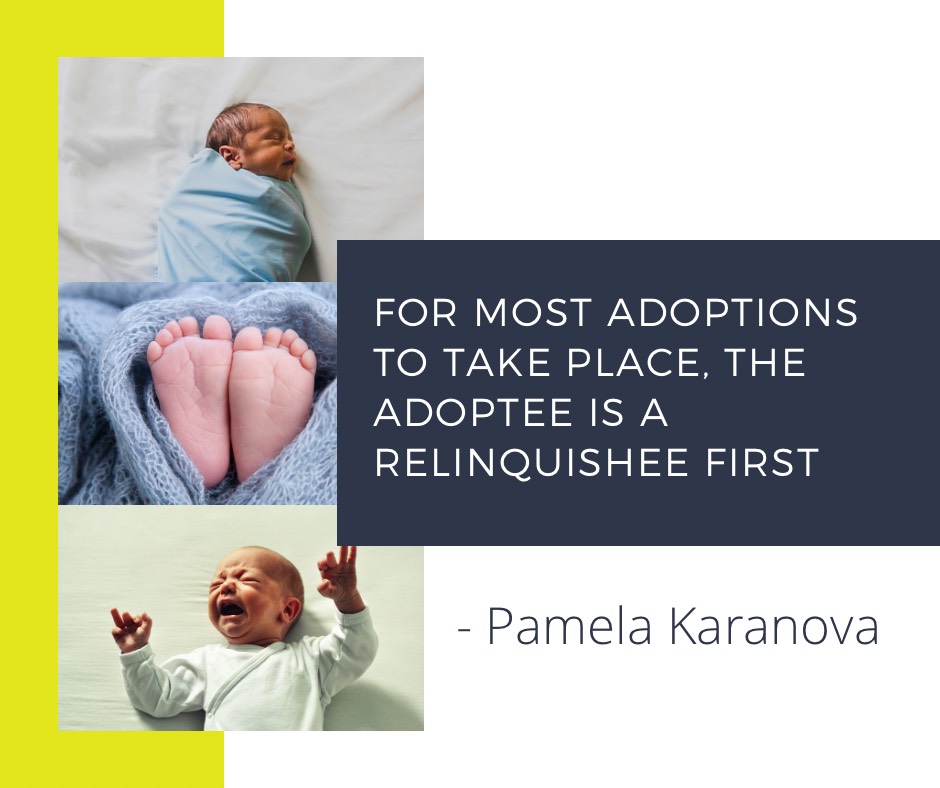
For most adoptions to take place, the adoptee is a relinquishee FIRST. I think this difference is a noteworthy one those in adoption circles should acknowledge because the more we understand, the more we heal.

Don’t forget this article along with all my other articles are available in audio for your convenience, just look up Pamela A. Karanova Podcast on Google Podcasts, iTunes , Spotify. and Amazon Music. Interested in treating me with a coffee, to add fuel to my fire? Click here. Many thanks in advance to my supporters!

Thanks for reading.

The views and opinions expressed in this article are that of the author, Pamela A. Karanova. Reproduction of the material contained in this publication may be made only with the written permission of Pamela A. Karanova.