I’m excited and honored to share a project I’ve been working on for a long while now, months to be exact. I consider this project a gift to the adoption community, and I hope somewhere along the path of life, it helps others. I know convenience usually wins, so my goal is to offer something that might otherwise be inconvenient specifically to my fellow adoptees.
I want to share a little backstory on how I got here. I’ve been working on a memoir for many years, but every time I start it, something happens, and I have to set it to the side. So after 10+ years of trying to write a memoir, I have concluded that memoir writing is not for me.
To be completely transparent, my life is busy and very active. The last place I seem to want to be these days is sitting in front of the computer, spending a lot of time on it. So small doses for short amounts of time seem to work better for me at this stage of my life.
My website has always been a place of freedom because I can share feelings here without anyone interrupting me and telling me how to feel. So many years of my journey are written and shared on my website in chronological order, back to an open letter to my birth mother I wrote in 2012.
It recently dawned on me that my website is my memoir. So I decided to spend some time transferring all of my old articles to audio via the Anchor FM platform via the Spotify platform. Talk about a time-consuming task! I have written over 200 articles since 2012.
This way, my friends, family, and supporters can tune into several mainstream platforms like Spotify, Google Podcasts, and Radio Public to listen to my articles. My words can reach adoptees and people in the adoption community all around the world. I know time is of the essence these days, and people don’t have time to sit and read as they used to. Listening to books on audio and podcasts has become increasingly popular with almost everyone because our lives are so busy we can fit them into the hustle and bustle of life and keep it moving.
One of the most excellent parts about this transition is the growth I can see in myself and my journey over time. In 2012 I wasn’t as seasoned as I am now, and I was beginning to articulate my feelings about being adopted. I was a baby finding my voice. You can tell I was transitioning out of the fog, and over time I’ve learned to spread my wings like a butterfly and continue to share my story. It’s not been easy, but I know I have reached adoptees all over the world, and they are the reason I keep writing. In healing myself by sharing my story, I am helping others heal and gain courage in sharing their voices and stories.
While I wholly support all the memoir writers out there, my dreams of writing a memoir have dissipated into nothingness. It’s not a sad thing or a bad thing. It’s the reality for me and where I am in my life. So I’m celebrating releasing this task from my plate. I hope you celebrate with me.
As I move forward with a new phase of creating the life I want to live, I hope to spend less and less time in front of electronics and more time out in nature, running wild and chasing waterfalls. Instead of writing a memoir, I want to live my future days filled with adventures and spending time with those I love. I want to take road trips and be living my life.
As a self-care technique, I have chosen to leave almost all online adoptee spaces as they aren’t healthy for me, and I am eliminating as many unnecessary commitments and responsibilities from my life as I can. Not just in the adoption community, but everywhere. As a result, you might see less of me online in adoptee-centric spaces, and you might hear less from me in the days to come. If you follow my social media, that will be the best way to keep in touch, but please understand as I distance myself from the online world, I might take longer than expected to respond, and sometimes I might not respond at all. It’s nothing personal.
Let me be transparent; being in the adoption community for over ten years it’s taken a toll on me. However, as I come to a healthier place as each day passes, I have to set new boundaries for myself. In that, I’m stepping away from many activities I have been a part of, and I’m writing a new life for myself. Adoption has taken so much, and it’s time I take it back and enjoy my life with my friends and family. I still plan on writing but that will be the main place you will hear from me so be sure to follow along if you are interested in keeping in touch.
While I share the launching of the Pamela A. Karanova podcast with you, please be advised that this article is my first recorded podcast in my unique voice. To pull this migration off semi-timely, I had to convert the first 200 articles over with a digital voice that is NOT mine. You would be surprised how long this took by itself. I knew there was no way possible I could record the last ten years of articles in my voice and get it done anytime soon. That would be dead, just like the memoir.
Moving forward, I hope to have all my articles uploaded to the podcast in real-time so they will be available in my voice for you to take a listen while you are on your way to work or working out at the gym.
Be sure to follow along on Spotify and share this gift with your friends, family, and followers. You never know who might be impacted by a country girl from Iowa sharing her story!
Thank you to each of you who has supported me this far! I thank you and appreciate you more than words can express.
Don’t forget this article along with all my other articles are available in audio for your convenience, just look up Pamela A. Karanova Podcast on Google Podcasts, iTunes , Spotify. and Amazon Music. Interested in treating me with a coffee, to add fuel to my fire? Click here. Many thanks in advance to my supporters!
Disclosure Statement: If you are someone who considers yourself a Christian, Jesus Follower, Church Goer, Religious Guru, Or if you believe your way of spirituality is the only way, I am asking you to save your comments, judgments, and opinions and share them on other platforms as there are many churches, online platforms and religious circles that would love to use the glory in your story to promote their church and religion. Please don’t come here to use your story to discredit mine. This page and article isn’t for you. We are all free to have our personal spiritual beliefs and journeys. My space’s boundary is not allowing others to use their personal stories to belittle mine.
Chapter 6.
“Spiritual bypassing frequently presents itself as an opportunity to fast-track spiritual progress, a shortcut through delusion to enlightenment. The real delusion here, of course, is the very idea that one can actually cut corners in spiritual practice. All of our attempts to dodge the messy world or difficult relationships, unpleasant emotions, and whatever else we would rather avoid only sidetrack and obstruct us, eventually generating enough suffering to draw us back to the steps we skipped or only partially took — of honoring, digesting, embodying, and integrating the essential lessons in our lives.” – Spiritual Bypassing, When Spirituality Disconnects Us from What Really Matters. Page 37.
In the recovery world, in my world, this concept of Spiritual Bypassing actually set me up for a false reality that I was healed and that I had done the work to get to authentic happiness and wholeness. Don’t get me wrong, I did the work, but it was fast-tracked as if I was running out of time.
Part of my reality was, I never accepted my adoptee truth in a way that allowed me the space to sit with the feelings as I was groomed to bypass them from my early childhood. I never learned it was legitimately okay to be sad about being adopted and that my sadness could last an entire lifetime. I never understood that the grief and loss process is something I would be navigating from the moment of being born by being separated from my biological mother and processing relinquishment trauma for the rest of my life.
Instead, I learned to be hyper-focused in my adult years on being healed because of the spiritual teachings I learned, which stalled my healing and disrupted it. I was set up for a downfall I had no idea how to process. I was made to feel disgraceful and not good enough all the way back to the spiritual concept of being born a sinner. Expectations to be thankful weighed me down for as long as I can remember. My adoptive moms’ feelings of happiness were always highlighted and celebrated, while her happiness was at the expense of the most significant loss of my life, my biological mother.
As a child, teen and adult, I was still feeling anything but pleasant and happy thoughts about being adopted, which caused more damage. I was told my feelings were a choice, and it was my choice to hang onto them or “let them go and give them to God.” I was also told that God was in control, and being adopted was all a part of God’s plan for my life. Gaslighting at its finest.
If I was still feeling pain from adoption, it was clear I was doing the praying, fasting, and serving all wrong. My heart must not be pure enough; I must be sinning too much. Maybe I wasn’t grateful enough?
Relinquishment Trauma isn’t something you can just let go nor is adoption trauma. Trauma can and will impact us for life unless we seek professional guidance and therapy to work on these root issues. No amount of praying has helped erase the trauma, as it always finds a way to circle back around. It’s no wonder, so many in spiritual settings and religious circles are walking around on the pink cloud, yet they are walking dead men and women deep down. That was me for so many years.
I will never forget the beginning of my recovery journey back in 2012; a woman in my step study said sarcastically, “Must be nice, Pamela, to be so high up on that pink cloud!” and I had no clue what she was talking about.
“A life of addiction causes so much pain, hurt, and grief, so sometimes it’s assumed that in recovery, everything will be different. While life in recovery is much more rewarding, it’s not always flowers and sunshine. In early recovery, people often experience a mixture of highs and lows as they gradually adjust to living a life without the influence of drugs or alcohol. Sometimes though, they may experience a short period of elation and euphoria known as the pink cloud.” – Eudaimonia Homes
I can relate to this now, but I was taken back by it then. I can no appreciate the fact that I was sitting on my pink cloud, but my activities in the church and with Christianity helped escalate me to my pink cloud. I like to think of the pink cloud as similar to my experience with spiritual bypassing and how these two concepts can be intertwined. The truth is, the whole time I was in the religious and spiritual settings, I was spiritually bypassing all the hard things I had run from processing my entire life. I might have skimmed over a few topics regarding my birth parents and adoptive parents, but I didn’t sit in it or sit with it, but it was always there. They don’t talk about trauma in church, but they love, support, and promote adoption, which is the root of my trauma.
Outside of church, I was a big part of Celebrate Recovery, a Christ-centered recovery ministry for 4+ years, and I began talking about my adoption/adoptee in the recovery journey there.
Before this, I attended AA for a few months, and it was apparent to me that it wasn’t somewhere I was welcome to share my grief, loss, and trauma from adoption. That’s a whole separate article in itself. While most people were talking about what took them to the rooms of AA, I was focused on what caused me to drink for 27 years.
What was the root of my issues?
Although I believe they are fantastic resources for many, It was clear to me I didn’t belong in these rooms or spaces. At AA, sharing tears and sadness about the loss of my birth mother, siblings, history, family knowledge would easily be laughed at if I was brave enough to share. So occasionally, I shared at Celebrate Recovery but never in AA. The story they wanted to hear at Celebrate Recovery was the story of how “I Gave it all to God, and he healed me!”
I won’t deny, I wanted to believe I had given it all to God, and I tried. I also tried to forget about my pain and that it even existed. It was hard to pretend all the time, but adoptees are the kings and queens of pretending anyway! This created an extra layer of who I was presenting myself to be, but I was not healed deep down. From an early age, I learned to live with a broken heart and how to put on a front for the world. It’s no wonder I fit right into the church and Christian circles. I was an imposter from day one.
One of my many dangerous and traumatic experiences with God, religion, church, and the bible is that I was groomed and conditioned to NOT tune into my feelings because they are evil, immoral, and corrupt. I was lead to believe I should not listen to them or put action behind them as they can’t be trusted. In other words, I should never trust myself and my feelings were sketchy at best. The level of damage this has caused is something I can’t put into words. The spiritual practices of fasting, serving, praying were all pacifiers to keep me busy, floating around on the pink cloud pretending I was whole inside.
I don’t believe God intended for our feelings to guide us. He wants that job. God wants to be our guide. Our feelings should not be what drives our decisions but rather an indicator of what’s going on inside us. We must put our trust in what God says and check our feelings at the door with the Word of God. Living by faith means allowing God to be our guide and not our emotions.” – by Starla Hill
This toxic and disgusting article is precisely what I mean when I say we are wholeheartedly conditioned not to trust ourselves but put our trust in God and God alone. Little girls are growing up learning this turn into young ladies and women with a deep entrusting feeling not to trust themselves or how they feel. Even boys, growing up to be young men and men, are damaging on every level. So how am I supposed to believe in the bible when so much of it is oppressive? It’s simple; I have no argument for your scriptures because I no longer believe in them. I can’t believe in something I know to be harmful. See, it’s much more than my bad church experience.
Being adopted, the layers of being taught not to trust our feelings and intuition combined with being told how to feel about our adoption experience and our feelings are always the back seat to others in our lives, specifically our adoptive parents. We’re entirely silenced for many of us, and it’s no wonder so many adoptees have deep-rooted issues, rightfully so. As if relinquishment trauma isn’t enough, we’re placed in the middle of a complete mental mind fu*k left to navigate it all alone.
I have witnessed Adoption, Religion, Christianity, Church & Institutions set up to separate, divide and destroy people, and they are destructive in more than one way. So, no, I didn’t just have a bad church and adoption experience! I will be writing about that soon!
“We are all in such a hurry to get it, whatever it may be. Greed for speed – fast food, fast money, fast relationships, fast spirituality. Drive-through divinity with organic fries and easy-to-swallow highs. Who wants to spend years doing spiritual practices when the same results can apparently be gained – given a sufficiently open mind and a wallet – in just a weekend! We may even be told that the only thing that could prevent us from seeing the desired results from such a weekend is OUR LACK OF BELIEF IN THE PROCESS. And so the shearing of the sheep goes on. Business as usual.” – Page 41. Spiritual Bypassing.
One of the many dynamics of Christianity’s damage that I have experienced is shaming that we are guilty of not believing enough or being good enough. But, unfortunately, this is usually used in the context of us not receiving the healing or wholeness we desire.
Many years ago, I asked some church friends to come to pray for a terminally ill friend with Cancer just a few weeks before she died. It was the end of her life, yet she prayed to be healed and wanted to live to be with her three children. As they prayed for her to be healed, even with cancer-consuming her body, organs shutting down, etc. when they left her house and walked to the car, they whispered, “Wow, she must have been harboring anger, resentments, and unforgiveness for God not to give her the healing she wanted.”
This is one of the many examples of my experience with my journey in Christian circles that I am ashamed of to the fiber of my being. I remember being so confused by this and not understanding it at all. So God didn’t heal her because she was “bad?” What if she didn’t have the tools to work on her anger, resentments, or unforgiveness? What if she tried to work on them, but she wasn’t where she needed to be yet? This is why she didn’t receive her healing?
This was one of the many deciding factors of me leaving the fold and no longer co-signing in favor of this Christian God everyone spoke so highly of. One example of many I have had that didn’t sit well with my spirit and intuition now that I had walked away and could FEEL MY FEELINGS and acknowledge them.
Equally intertwined into the fiber of my being adoption and relinquishment trauma combined with religious trauma from Christianity, it’s a miracle I’m here to share my story. I see many parallels to conditioning beliefs from very early ages and being told how to feel. Christianity was introduced to me at no choice of my own, and being adopted was a considerable part of my life that was made at no choice of my own.
Of all the years of my life, I spent trying to stay alive, trying to figure this mess out. Finally, in 2012, I found myself in secular recovery programs dedicated to the church, God. After spending several years in these environments, my healing started to happen when I walked away from all of these systems, institutions, and what I was told to believe.
Straight out the door…
My healing started to happen when I looked deep within myself and started to believe in myself like I believe in God, people, places, and things outside of myself. (church, biological family, adoptive family, etc.) It began to happen when I learned to listen to my body and respond to my feelings. Unfortunately, this doesn’t happen overnight when we spend most of our lives being told not to trust ourselves and our feelings don’t matter. It’s a slow and organically moving process. No one told me how to do this, and without God on my side, as I had always believed in my past, I went through a grueling process of no longer believing in this higher power but finding the glimmer of hope I needed to believe in myself. It was scary when I was told not to believe in myself and sacrifice myself for God and my adoptive parent’s happiness. It’s like everyone was happy but me.
But once again, I felt like I was alone on an island, but adoption prepped me for this. I already felt this way, but it was scary for me, and I had to process grief and loss all over again. I lost the church and church family I had spent years investing in and pouring into literally at the flip of a switch. It was a new chapter and a new door, and a harrowing one. I put up walls and swore to myself I would never allow so many people to get close to me again for fear of losing them all over again. And I haven’t, and I won’t. I’m very cautious of who I let in my space, and not many make the cut.
I walked away from the church in 2015, thinking I would find God outside the church more than inside. I did to some extent, but that was an awakening process as well. To walk away from the church and God all at the same time is a terrifying thought. It’s taken me 6.5 years to find my voice and to have enough courage to share my life experiences with Christianity. While I began sharing my adoptee experiences and feelings in 2010, it took me 35 years to get to that point.
More healing started when I began sharing my feelings about these experiences OUTLOUD and writing about my adoption journey without apologizing for how I felt. Unfortunately, I couldn’t do this while I was in religious and spiritual settings (church) because of the happy and positive mindset believers are supposed to have. I also couldn’t share my adoptee feelings until I was estranged from most of my adoptive family. So it’s been a hell of a painful journey to be here to share my story.
I had to get ALONE with MYSELF for this spiritual awakening process to begin, and while years have passed, I’m still evolving and discovering who I am and who I’m not every single day. For me, one of the keys was finding my biological family, and although what I found (rejected by both parents) was heartbreak on top of heartbreak, at least I know my truth. Adoptees need to see it for themselves instead of everyone else telling us or secrets and lies standing in the way.
I’ve been on a spiritual awakening, deconditioning, and deconstructing journey for over six years now when it comes to Christianity. I have been coming out of the fog with my adoption journey since 2005. I entered the recovery realm in 2012 into a new path, living life alcohol-free. I have walked away from everything I have always known on three different occasions to find who I am, so I could be a better version of myself – the one I lost when I was surrendered for adoption. I might as well have been stripped butt naked on a mountain all alone because that’s how it’s felt coming to terms with the realities of all of these areas of my life.
Finally, I’ve been able to look myself in the mirror and shed off all the old things that I carried I no longer wanted to carry. But the depts of everything I have had to lose to get here is something I can’t even begin to put into words. I feel like I’ve lost everything over and over again, but today I am humbly reminded that at least I have myself. I promised myself that no matter what happens in life, I will be true to myself even when my feelings don’t line up with the popular narrative.
There is a lot to be said about being true to oneself. But, unfortunately, many people spend their entire lifetimes fitting in the mold, not wanting to ruffle any feathers, just going with the flow, swimming to their graves.
Not me.
At the end of the day, as lonely as I feel and as painful as it’s been to get here, feeling like I’ve lost everything three times over, at least I am honoring myself and being true to myself in the process. I’m not giving all the glory to an invisible being who has allowed me to be in pain and suffering all my life since birth. Instead, I’m patting myself on the back for finding the glimmer of strength needed to get up every day and try to find happiness amid a lifetime of pain. I’m cheering myself on when I feel like giving up. Finally, I’m getting up enough strength to share the painful pieces of my journey in hopes of reaching other deconstructing adoptees so they don’t feel as isolated and alone as I have.
If you have made it this far, thank you for reading. I am thankful for my followers and hope to gain support from those who have different beliefs and views from me; however, I am prepared to lose some. But, when I’ve already lost everything four times over, I’m used to it. Being born and relinquished, I didn’t have a choice. I have chosen all the others, but it was to honor myself and be true to myself.
Four times in 46 years, I have lost it all.
1. Being born & relinquished on August 13, 1974 – the original root issue of relinquishment trauma.
2. Coming out of the fog about adoption, moving across the country, legally changing my name, starting my life over in 2005
3. Starting my Adoptee in Recovery Journey August 13, 2012 (Alcohol-Free after 27 years of dependence)
4. Deconstruction, walking away from the church, religion, & spiritual conditioning. 2015.
I have lost a lot, but I have my true authentic self, and for me, that’s everything.
For my fellow adoptees, have you ever had to walk away from everything in order to find yourself? What was that experience like for you? For those who consider themselves deconstructing, can you relate to any of what I have shared here?
Don’t forget this article along with all my other articles are available in audio for your convenience, just look up Pamela A. Karanova Podcast on Google Podcasts, iTunes , Spotify. and Amazon Music. Interested in treating me with a coffee, to add fuel to my fire? Click here. Many thanks in advance to my supporters!
The views and opinions expressed in this article are that of the author, Pamela A. Karanova. Reproduction of the material contained in this publication may be made only with the written permission of Pamela A. Karanova
I’ve recently come to a empowering place in my recovery journey where I’m starting to share my deconstruction experiences with Christianity, Church, Religion and Adoption. They are so similar in so many ways. I’m writing as a healing tool for myself, but for others who might be on a similar path so they know they aren’t alone.
Below are a few posts that I’ve recently shared on my Facebook page – Pamela Karanova
Trust me when I tell you, this is only the beginning.
June 16, 2021 Hello Friends, It’s been awhile since I put any personal thoughts and feelings into this page. However, I’m back and ready to roar! I have a lot to share as I’m continuing to evolve, grow and reach destinations in my personal journey I never thought I would reach. Some of the experiences, views and opinions I carry are quite controversial to most. But here, I’m going to try to share them not only to free myself, but to hopefully be a light to other adoptees who might feel similar ways.
While we live in a society that celebrates adoption, do they realize they are celebrating mother’s and babies being separated?
Do they understand when they support adoption, they are supporting secrecy, lies and half truths?
Do they understand that adoptees are dying every day not knowing their truth?
Do other adoptees feel that coming out of the fog about religion is parallel to coming out of the fog about adoption? If so, have you been lonely in this journey? I see you, because I have felt this way too…
In adoption and religion, I see so much damage being done to innocent people, including myself & my family. I can not stay quiet.
While adoptions continue to happen, adoptees are stepping up to share insights on how this has impacted us, and also share areas we feel need highlighted and improved, sometimes even abolished.
As I share my story of coming to terms with the parallels of coming out of the fog about adoption and religion, I will focus on the purpose of healing and allowing others to know they aren’t alone if they might be going through similar experiences.
It’s been a long and lonely journey to get to this space, but I have arrived.
Thank you for following along, and embracing me as I share my journey with the world. – P.K.
June 16. 2021 For me, coming out of the fog about religion has been comparable to coming out of the fog about adoption. It’s been a long and lonely journey for me, but I have arrived at a space of freedom and strength where I am pushing myself to share my story. I am continuously taken back on how similar my experience has been coming out of the fog with adoption, as it’s been coming out of the fog about religion.
It’s eerily similar!
Just like adoption, I can no longer sit in silence as I continue to experience the unjust practices of religious beliefs, Christianity, Church (or adoption/relinquishment trauma), and how they damage, hurt and impact people I know and love and myself… & even people I don’t know and love.
My moral compass will no longer allow me to stay silent, especially when so many people are in agony and pain over these religious beliefs, practices, and circles. Let me point out adoption and relinquishment trauma have a million of the same parallels.
I’m calling out the contradictions, inconsistencies, and appalling discoveries I have made, and I am not backing down or hiding or censoring my feelings! Much of what I share will likely cause some buttons to be pushed, however it doesn’t change my truth (experiences) and how I feel about these topics. – P. Karanova
June 18, 2021 This is my brain when I try to process religious, adoption and relinquishment trauma.
A big majority of it is fear based, and more is trauma based. For the last 10+ years I’ve been on a journey of healing, evolving and self discovery. The larger part of this time I’ve been raising my kids to adulthood as a single parent.
Life has been busy… and hard.
When I think of all the dynamics of my deconstruction journey, and coming out of the fog about adoption and relinquishment trauma and even embracing a new recovery journey living alcohol free after 27 years of dependence, my brain goes into instant overload.
I’ve been trying to process it all as they have happened at separate stages of my life. But when I try to compare them or put the experiences together it’s almost like my brain shuts down. That’s the trauma.
It’s obvious it’s too much.
But I’m still going to try to try to do my best to push forward and share these layers of my experiences in hopes to not only help myself heal, but others who might be suffering alone. I would like to ask for understanding while I share. My words my be off, I might not share in the right order, and sometimes what I share won’t make sense to you.
Lastly, when someone is sharing areas that they feel have been traumatic for them, they don’t need you to swoop in and protest by standing up for the exact thing that has traumatized them. Please STOP before you even start and think before you comment.
Would you tell someone sharing about their heartbreaking divorce how wonderful your marriage is?
Would you tell someone who just lost their child to a horrible illness that your child survived that illness and is thriving well and that wasn’t your experience?
No, no you wouldn’t so don’t please don’t do it to me. It’s not helpful even if you don’t agree with me, and have a different experience I ask you to keep it moving! I appreciate it in advance.
Don’t forget this article along with all my other articles are available in audio for your convenience, just look up Pamela A. Karanova Podcast on Google Podcasts, iTunes , Spotify. and Amazon Music. Interested in treating me with a coffee, to add fuel to my fire? Click here. Many thanks in advance to my supporters!
The views and opinions expressed in this article are that of the author, Pamela A. Karanova. Reproduction of the material contained in this publication may be made only with the written permission of Pamela A. Karanova
Join host Marcie Keithley as she welcomes spotlight guest Pamela Karanova.
Pamela is an adult adoptee, living in Lexington, Kentucky, was born in Waterloo, Iowa, in 1974. Although Pamela’s roots are scattered all over Iowa, she considers Kentucky to be her home.
Over the last ten years, Pamela has dedicated much of her life to not only work towards healing regarding her adoptee journey but also pouring into the adoptee community. She’s created resources for adult adoptees and built relationships with adoptees all over the world!
Registered attendees will be emailed a link to the event on Zoom Meeting on Thursday and Friday. If you add the event to your calendar when you register you can launch the Zoom Meeting from the calendar event. (click the play button in the center of the event image)
IA HF855 – A bill for an act relating to access to a copy of an original birth certificate by an adoptee or an entitled person, providing for fees and including effective date provisions. (formerly HF 723, HSB 226)
I want to share that I am honored and proud to know Michelle Spear, one of the leading forces at Iowa Adoptee & Family Coalition behind this bill being passed. For over seven plus years, Michelle and many others have worked tirelessly to get Iowa laws changed for adopted adults to obtain their OBC’S. I have been cheering them on from states away during this time because I am an Iowa Adoptee, but I have lived in Kentucky since I was 17 years old. I have built a relationship from afar with Michelle and have admired her dedication and hard work in all these years to DO SOMETHING! Her hard work, and dedication hasn’t gone unnoticed. I am eternally grateful!
I remember being told of my adoption back to 5 years old and asking when I could find my biological mother. Year after year of my childhood, I received the same response. “Honey, the records in Iowa are sealed, but when we get enough money for an attorney, we will get the sealed records opened. But right now, we don’t have enough money.”
Sadly, my adoptive mom knew who my birth mother was my whole life, so this was just a lie. I was spoon-fed this lie to simmer my desire and curiosity to know my biological family. However, it never calmed down my desire to want these CLOSED records OPENED and find my people. I can remember wanting my Original Birth Certificate from the beginning of my life.
As I learned of this new Iowa Bill HF855 passing, a wave of excitement and long-awaited happiness has come over me the last few days because of Bill HF855’s passing; I will be one of those adoptees. Finally, a dream come true, and one that I always thought was so far out of reach I would go to my grave never getting to see my OBC.
While I celebrate this massive milestone in adoptee rights, SOME adopted adults in the state of Iowa will not be able to receive their OBC.
Here’s why.
Bill HF855 is subject to redaction at the birth parent’s request. Instead of point fingers at the Iowa Adoptee & Family Coalition that this bill is not a clean bill, I point fingers at the entire adoption system that has set adoptees up with fighting this fight, to begin with. Let’s shine a light on the ROOT of the problem, and not those who are spending year after year fighting tirelessly to shift the laws in Iowa.
While I was overcome with multilayered emotions that I would be getting my OBC in the near future, I was equally sitting in the sadness for many of my fellow adoptees. It seems we’re still infantilized, being treated like perpetual infants who have never grown up.
This saddens me to the core of my being.
The perplexing emotions that have swept through me the last 24-48 hours are complicated at best. One minute I am crying happy tears, and the next, I am crying sad tears. Such significant steps that SOMETHING is moving in the state of Iowa regarding adoptees to have their OBC’s, but we still have so much work to do. Thank you to all who have been there for me during this time!
Part of me is so happy I will finally receive my OBC, and so many other adoptees will as well. I honestly never thought I would be alive to see my OBC and that I would be one of the adoptees who go to their grave, never laying eyes on it. Yet, I always knew Michelle was doing her best to TRY to get something moving in Iowa in the back of my mind.
#simplepieceofpaper movement
It might be viewed as insignificant to many who have never lived without their birth certificates. Still, for many adopted people, we have been denied the right to obtain this simple piece of paper that most non-adopted people might take for granted. When someone is adopted, their OBC is kept secret, filed away in a cabinet, and the adopted person is generally never supposed to lay eyes on it as long as they are alive. They are never supposed to know who they are or where they come from. This knowledge is kept locked away for eternity.
What’s the big deal about having your Original Birth Certificate?
I want to know what information is on my OBC. Did my birth mother name me? Is my birth father listed? Does it have the correct birthday? Does it tell how much I weighed? It’s a tie to my truth, and no law should stand in the way of me having it.
I used to take care of a 86 year-old dementia patient named Pauline. I would go get her to bed at night, and even when she forgot her kids, and grandkids names, she would lay awake and stare at the ceiling and say, “I was adopted out of a home in Louisville, I never found out who my people were, but I always wondered who they were and where I came from. Were they looking for me?”
Even when she forgot many other things in life, she always remembered to her dying days she was adopted, and it haunted her not knowing who she was and where she came from.
How many Pauline’s have died before every learning their truth?
How many will continue to die before learning their truth?
I can share from the experience of building relationships with adoptees for over a decade that many feel like we aren’t alive because we feel like we were never born. Much of this goes back to being denied the right to know who we are and where we come from and to know our birth stories. Our OBC is a direct tie to our history and birth story, and every adopted person on the planet deserves to know their truth.
I also know that adoptees are 4x more likely to attempt suicide and they are over-represented in jails, prisons, mental health, and treatment facilities. These staggering statistics are alarming at best, and we have to understand that the closed adoption social experiment has failed and failed adopted individuals miserably.
Why are we still giving birth mothers anonymity and allowing adoptees to pay the price of shame and secrecy for life? It’s a fundamental human right to know who you are and where you come from. We all have a right to know who our siblings and biological families are. Adoptees are fighting for a document that most people have, and this document shares their truth. Hiding this truth never has been and never will be in the best interest of any child.
Truth and transparency are the only way to go, and anything rooted and grounded in secrecy and lies is only harming adoptees. We can’t heal from secrecy, lies, and half-truths because we don’t know what we’re healing from.
I’m a firm believer that every adopted individual should have UNRESTRICTED ACCESS to their original birth certificate under the law. While Iowa Bill HF855 is a shift I am eternally grateful for, we will continue to have work to do in Iowa and any other state that isn’t allowing unrestricted access to adopted adult’s original birth certificates.
I urge anyone who might read this article to share their voice and speak loud about the unjust treatment adopted individuals experience worldwide, just because we’re adopted. It’s never too late to get involved with supporting adopted adults and push for unconditional access to our OBC’S.
While I’m celebrating for Iowa, and I am celebrating for myself, I am celebrating that step by step, year after year, changes are happening for adopted adults. It’s just deplorable, so many people support adoption, but they don’t realize they are also supporting secrecy, lies, and half-truths.
ADOPTEES ARE DYING, NEVER KNOWING THEIR TRUTH!
We can’t afford to turn a blind eye any longer.
On the flip side, I’m honored to be a part of such a significant milestone for my home state of Iowa and show up to celebrate with them. Wednesday, May 19, 2021, I will be traveling to Iowa for the Governor’s formal signing of bill HF955 into law, allowing Adoptees to Access their Original Birth Certificates. I will spend less than 24 hours in Iowa, but I wouldn’t miss this event for the world! On January 1, 2022, I will be able to apply for my original birth certificate.
Wednesday, I will be wearing YELLOW as a sign of remembrance for Adoptee Remembrance Day, as well as all tribute to all the Iowa Adoptees who died before they ever found their truth. I would like to invite anyone attending this historic event to join in with me to wear yellow as well. I know my emotions will be running high, as many emotions will be that day. I have close friends attending, I will be in great hands.
I want to say a special THANK YOU to my close friends and family who have supported me through these past few days and my journey in general. Keila, Damia & Damond, Thanks for your continued love and support! Thank you Jennifer for being my side kick through this whole thing. Thank you Taylor & Clarita for covering work so I could go! You all have no idea how much your support means to me, and even just listening to me and saving space for my sadness and tears is healing in a million ways. I appreciate you, and I thank you from the bottom of my heart.
For all those who have had a part in this bill moving forward, Michelle, Susie, and the rest of the tribe… I salute you all, I thank you, and I love you. I will always hold a huge space in my heart for your efforts, your sacrifice, and hard work!
Don’t forget this article along with all my other articles are available in audio for your convenience, just look up Pamela A. Karanova Podcast on Google Podcasts, iTunes , Spotify. and Amazon Music. Interested in treating me with a coffee, to add fuel to my fire? Click here. Many thanks in advance to my supporters!
Love, Love!
Pamela A. Karanova
The views and opinions expressed in this article are that of the author, Pamela A. Karanova. Reproduction of the material contained in this publication may be made only with the written permission of Pamela A. Karanova
Today is Earth Day, and Mother’s Day is right around the corner. What does each of these days mean to me, being an adult adoptee?
Let me back things up a bit and explain what my experience was like with my earthly mothers.
My first chance at a mother did not want to mother me.
My biological mother didn’t want me, so she passed me over to strangers. After a lifetime of searching for her, dreaming, and wishing we would cross paths one day, my one true dream of finding her and having a relationship with her was shattered all over the ground. We met one time briefly in 1995, and that was the last time I ever saw her. What felt like a cold-hearted rejection was her not being able to navigate the pain of her decision and hearing how my life turned out. The better life promised wasn’t better at all. Only different. She felt a deep sadness over learning this reality.
That didn’t change how this rejection has made me feel and the truth that it’s impacted every area of my life. She abandoned me not once but twice. The ultimate betrayal from my biological mother has been the most significant wound I have ever carried, even compared to what other people would consider major traumatic events.
This deep mother wound and disappointment has been impossible to shake, and it will be with me for life. I’ve accepted the pain was here to stay, and that was one of the most healing things I have done for myself. Nothing on earth and no amount of pain I have ever felt compares to this wound. She died in 2010, and I hadn’t had contact with her in over 25 years.
It’s deep. It’s raw. It hurts.
My second chance at a mother could not mother me.
My adoptive mother wanted to be a mother so bad, but the reality was she was so mentally ill, she couldn’t parent me. Instead, I suffered greatly because of her mental health issues. She should have never been allowed to adopt a child, let alone two. My adoptive dad divorced her when I was one years old, and knowing she couldn’t care for us be left and moved over an hour away to remarry, and raise three stepsons as his own. My childhood in my adoptive parent’s homes was filled with traumatic experiences that have impacted every area of my life. I’ve spent years recovering from these experiences and a lifetime of seeing how things shouldn’t be. I never bonded with my adoptive mom, and I despise the facts that I was forced to pretend she was my mother.
The lengths of trauma I experienced in these homes have riddled me with anxiety, fear, and the loss of what so many of us deserve and need, and that’s an opportunity at decent mother and a safe place to live. I didn’t need perfect. I didn’t need a big house, fancy cars, and all the material things money could buy.
I just needed one halfway normal, decent mother.
She was suicidal, manic-depressive, and had severe issues that stemmed back to her childhood. She tried to commit suicide by lying in the street, and she would consistently lock herself in her room and take all her pills and the phone with her letting us know as children she’s about to end her life. We would bang outside her bedroom door, for hours begging her not to die.
She was hurting, and instead of work on her hurt, she adopted two daughters to take care of her. Her main goal was to have two daughters to care for her so she wouldn’t have to go to a nursing home. How do I know? Because back to my early childhood, she talked about not wanting to go to a nursing home, more than she talked about just about anything. Because of the toxicity she brought to my life and because she would not abide by common courtesy boundaries I tried to put into play, we were estranged for several years before she died. I don’t regret choosing to separate, as my recovery and being alive depended on it. That doesn’t mean it wasn’t hard. It was the hardest decision I have ever had to make.
I am sad I had to make such a decision but I did it for myself and my kids.
My third chance at a mother figure, I call my Step Monster.
My adoptive stepmother is no one I consider a mother. She has protected her pedophile son over believing me for 46 years. She has turned a blind eye and has chosen to defend him repeatedly. I won’t go into all the details, but she has never been and never will be anyone I consider a mother figure. We have never been close or had a relationship. For my peace of mind, after being ignored for 46 years about the pain her son has caused me and countless others, I have had to sever ties with her too.
Three chances in the mother area, and I struck out.
Every.
Single.
Time.
While my heartache as a child and teenager is hard to put into words, my experiences in my adoptive home and the abandonment from my birth mother lead me to some dark places. I spent most of my juvenile life as a runaway and locked up in detention, drug and alcohol rehab, and group homes for most of my teen years. I was hurting and hurt people hurt people.
Mother’s Day has always been painful for me as it is for so many people, adopted or not. Some people are sad at the loss of a mother they spent a lifetime getting to know, where they have thousands of memories to hang onto forever. Pictures to reminisce and remember. I get sad because I didn’t get that, and there are no memories to hang on to, to keep forever. I have emptiness, sadness, and abandonment issues that continue to revisit me. Processing grief & loss are going to be with me for life.
I’ve accepted it.
I’ve also accepted these were the cards I was dealt. For the last 11 years, I have been on a healing journey. If you read back over my website, you can see the changes and growth that have transpired over the years. In that time, you will see that nature is something I gravitate towards, and if you follow any of my social media, you will see waterfalls and Mother Nature have a considerable space in my life.
You see, nature, aka Mother Nature, has been a sacred space for me since my early childhood, growing up in the country in Iowa. Inside any of the homes, I was in was chaos and trauma. So outside, running wild in the forest was the only freedom I had as a child. It was healing for me, and it was an escape. It was one of my first loves, along with the sky. Read “The Sky & I” to learn more about my tie to the sky.
As I circle back around and will soon be celebrating nine years of living a life free from alcohol, I’ve been reacquainted with my first love, Mother Nature. Of all the areas I’ve been incorporating into my life for self-care reasons, nature has always been the only one always to be dependable and always there. It wasn’t my birth mother, or my adopted mother, or my step monster.
It was and is MOTHER NATURE.
Bucket list Adventure, Pine Island Double Falls – Daniel Boone National Forest, Kentucky
As Earth Day is here and Mother’s Day is to follow, I am making a conscious choice to redirect myself to focus on the mother who’s always been there – Mother Earth.
As I discover who I am, I have found joy in adventures in the Kentucky forest by chasing and finding waterfalls. Kentucky is filled with over 700 waterfalls, and exploring nature and taking as many people as I can is one of the most powerful healing tools I have yet to find. Trust me when I tell you, I have tried it all. Between 27 years of alcohol dependency, church hopping, religion, other people, places, and things, nothing has provided me with what mother nature has.
Many aren’t aware, but there are healing dynamics to being close to, in, or near bodies of water. I always felt it, but I never knew it was an actual thing. I have a friend and fellow adoptee in recovery named David B. Bohl, and David is an advocate of BLUE MIND.
Q. What is Blue Mind?
A. Blue Mind: A mildly meditative state characterized by calm, peace, unity, and a sense of general happiness and satisfaction with life in the moment.
It’s also described in the book Blue Mind: The Surprising Science That Shows How Being Near, In, On, or Under Water Can Make You Happier, Healthier, More Connected, and Better at What You Do
David shares, “As many of you know, I am a student of Blue Mind science, an advocate for Blue Mind methods, and a practitioner of Blue Mind daily living techniques. There is no doubt in my mind and experience that proximity to, and engagement in, water provides physical health, mental health, and spiritual/relational benefits that have been scientifically identified – and are essential in today’s stressful world.”
Coming to know David as a friend and fellow adoptee in recovery, we have discovered that we have many things in common, but our love for being near water is one of them. David shares online his outdoor trips in and near water, and I do as well. Mine are usually running off into the forest to chase waterfalls all over the state of Kentucky. We aren’t too far from our next adventure close to a body of water, whatever we are doing. Thank you, David for your continued inspiration over the years!
Surprisingly, after reading the beginning of the Blue Mind book from David’s recommendation, I learned that the author of Blue Mind, Wallace J. Nichols is also an adoptee. I will not lie; something about that shook me up! I had no idea he was an adoptee, but I was so excited to now know of 3 adoptees who have found the healing and therapeutic benefits of being close to water. I can’t wait to read the rest of his amazing book! I’m sure there are many more adoptees who find healing around bodies of water.
While 2021 is moving swiftly and Earth Day is here, I’ve been thinking of ways to connect to Mother Earth and give back to her and to give to others in the process. I can reflect on my childhood up to my current days. I no longer drink alcohol to cope with adoptee pain, and I celebrate nine years of sobriety in August 2021. This is a massive milestone for me, especially finding both birth parents and learning they are both alcoholics.
One of the things I’ve learned about recovery is that you need to replace it with something else when you remove something. My connection to mother nature has become exceptionally strong in the last nine years. I consider my nature adventures as one of the most effective self-care practices I have yet to discover.
While I think of all Mother Nature is to me, and how she’s been there over my earthly mothers, and she’s never let me down, I get emotional. My truth that no one can come between that connection or take it away is something I think about a lot. Even back to my childhood, she’s been there for me and continues to be there. I call it wilderness wellness, and it’s FREE.
Top of the falls, ya’ll.
I like to combine my mother nature adventures with not only seeking waterfalls, but getting wet and dirty and not thinking twice about it. I think many times we’re groomed from childhood to not get wet or dirty. I see countless people never want to get their feet wet, or get dirty and it pains me to see. Water and dirt have never hurt anyone. Take your shoes and socks off, get in the water and get dirty. I promise you, you won’t regret allowing yourself to be free in this way.
It could mean putting your bare feet in the grass (grounding) or taking a walk outside at your closest park. One of my main goals in life is to encourage people to seek wilderness wellness in their backyards because we all have endless adventures in our state, and most of the time, they are free. You might need a tank of gas and a few snacks. My discovery of how Mother Nature fills me up has been rejuvenating to my mind, body, and spirit in many ways. My adventures are a combination of forest bathing, hiking, nature play, blue mind, grounding, walking, and doing everything in my power to be a kid again. I feel like I’ve been searching for home my entire life, and finding Mother Nature has brought me back home.
As Mother’s Day can be perplexing for adopted people at best, I have decided I’m going to honor Mother Nature for Mother’s Day moving forward. I’m a firm believer that we can all write our stories to suit what fits us the best. Focusing on the mothers that failed me is agonizing. I believe each Mother’s Day will still feel a sense of sadness when it comes to them, and I’ve accepted I always will. I will save space for processing that pain; however I need to process it.
I want to try to shift my focus on how much Mother Nature has done for me and Earth Day – today is HER DAY. I wanted to write this article dedicated to her, to share how much she means to me. It’s not all about what she does for me, but what can I do for her? I salute HER and will do all I can to take care of her moving forward.
I’m not sure where you are with your healing routine and your self-care regimen, but I encourage you to add some wilderness wellness to your self-care toolbox and share it with your friends & family. I love taking elderly people to nature because they are a population that is lacking that resource due to mobility limitations and many other roadblocks.
For me, when so much is lost, never to be seen again because of adoption, I get comfort in knowing that Mother Nature something no one can take away from me. Today I celebrate Earth Day for so many reasons! Mother’s Day I will celebrate being a mother to three incredible humans and Mother Nature because she’s always been there for me. If you feel like following along on my Into the Wild: Kentucky Wilderness & Waterfall Adventures please like my Facebook page today by clicking here. You can also find me on Instagram under @intothewildky.
Here are a few of my outdoor adventures shared with some of my friends & family. I encourage you to escape for some nature play and wilderness wellness. You might find what you have been searching for all along.
Do you like to get outside in mother nature?
Do you find it to be healing and theraputic around bodies of water?
If so, what are your favorite nature things to do?
How are you celebrating Earth Day and Mother’s Day this year?
What do you do to cope with Mother’s Day if it’s a hard day for you?
Don’t forget this article along with all my other articles are available in audio for your convenience, just look up Pamela A. Karanova Podcast on Google Podcasts, iTunes , Spotify. and Amazon Music. Interested in treating me with a coffee, to add fuel to my fire? Click here. Many thanks in advance to my supporters!
Thanks for reading,
The views and opinions expressed in this article are that of the author, Pamela A. Karanova. Reproduction of the material contained in this publication may be made only with the written permission of Pamela A. Karanova
They say to prepare, but there is no real way to prepare for what some adoptees find when they make the choice to search for biological family.
Searching for and finding biological family as an adoptee is opening up Pandora’s box repeatedly. It is the beginning of a new era of uncovering the secrets that so many think they have protected us from. Even under the best of reunion stories, it is still the beginning of a new painful path that adoptees experience.
If we’re lucky, one door closes, and another door opens. And that’s just it if we’re lucky. Society says at least you have found your truth when so many other adoptees would die to find theirs. Even when the truth has been excruciatingly painful, society thinks we should still feel LUCKY. Even our fellow adoptees suggest this at times, and I understand why they feel this way, mainly when they haven’t found their biological families yet.
I think our friends, families and loved ones sense us in agony before we search and find and in all honestly they hope we will feel “better” after we find out truth. However, when they still see us in agony after we reunite, it hurts them to see us hurt. They want to take our pain away, and they have high hopes reunion will do that. Truth and reality is, it usually doesn’t. It brings on a new set of heartbreak, pain, grief and loss.
Searching and finding biological family, I like to describe it as trading one type of pain for another. Both types of pain are different but equally painful. The pain of the unknown for adopted individuals is like the feelings a parent might have who has a missing child somewhere out in the world. Imagine your 10-year-old child was abducted on the street, and they vanished with no trace ever to be found. The agony that parents must feel every waking moment of every day having their child missing.
Adoptees think similar to this, but it is not just one family member. It’s their very own mother, father, grandparents on both sides, siblings on both sides, and cousins on both sides. We’re on an island all alone, searching in our minds from the moment we find out we are adopted for our biological connections. This is painful from the very beginning. If you don’t think so, I would like to ask you how many adopted individuals you have gotten to know and listened to their stories over the years? I have gotten to know hundreds, if not over a thousand, and not one of them has said adoption has been 100% wonderful. It’s complex, emotional, and painful at best.
Can you imagine what it feels like to not know what your mother looks like?
Or her name?
I know you can’t because it’s unimaginable.
The big difference is, parents of missing children are expected to feel the feelings they feel having a missing child. Society saves space for them, their grief and loss. They have some memories to hang onto, and they have their child’s names and they know who they are. My heart goes out to these parents, because I know it’s a nightmare on every level but I wanted to describe the difference in what adopted individuals experience.
At all costs, we are just supposed to be grateful. If we aren’t, we are labeled as ungrateful, angry, and many other hurtful words.
This is not helpful to the adoptee experience.
To feel whole, complete, and like I was an actual living human being, I had to find this woman that gave birth to me. I had to see her face and know who she was. I fought the closed adoption laws in Iowa like HELL to find her. If I didn’t, I would be dead right now. In my mind, this would solve all the pain I experienced and the heartache I lived with my whole life all the way back to coming home from the hospital with strangers at a few days old.
Living in the unknown is a different type of pain. It was for me anyway. I describe it as agony. Every waking moment of every day for me was painful. I was sad, filled with anxiety, and as I grew into my pre-teen self, it turned into self-sabotage and self-hate. All I needed was HER.
During this time, I had anticipation and high hopes that one day I would be reunited with the woman who gave me away, but things would be different this time. If she “loved me so much,” she had to want to know me and have me back in her life, right?
WRONG
She never wanted to be found, she never wanted to meet me, and she was nothing like what I dreamed about finding my whole life. She was quite the opposite. She was a disappointment on every level and I am still 20+ years later, upset by this disappointment. She considered herself doing me a favor meeting me one time, and we had a 2-hour visit together. After this visit, she shut me out and never spoke to me again. During the visit, she asked me about my life and how my childhood was. I have always been an honest person, even when it hurts. I expressed to her I never bonded with my adoptive mom, and my adoptive parents divorced when I was a year old. I was raised on welfare, food stamps and experienced significant emotional, mental, and even sexual abuse in my adoptive home.
It crushed her, and it was too much for her to handle. Twenty years passed, and she shut me out, not being able to face HER DECISION. She assumed I would have the better life promised to her. I received a message she had passed away, and I traveled to Iowa to her funeral.
I was told by some of her closest friends at her funeral that she was distraught that my adoptive parents divorced, and if she had known that was going to happen, she would have kept me. They said this REALLY BOTHERED HER.
Knowing this truly helped me understand why she shut me out, but it didn’t take away the pain or lessen it. The pain of being rejected by a biological parent is indescribable. The pain of being rejected by your mother, the woman who brought you into the world, is a pain that never goes away. Check out The Primal Wound to learn more.
I’m trying to relay that we should never assume that just because an adoptee finds their biological family that it’s going to be the key that turns the page for them. Or imagine that their life will finally be complete and that they can eventually MOVE ON. Sometimes what we find is so devastating, moving on isn’t an option for many of us. For those of us who can, somewhere along the lines we’ve come to a place of acceptance.
Telling adoptees to MOVE ON or GET OVER IT is never helpful.
It’s actually quite the opposite. High hopes are shattered to the ground, and the disappointment of what was found sets in and rips our hearts to shreds. The grief and loss process continues and will remain a significant component of our lives for the rest of our lives. Adoptees are the kings and queens of adaption, and we do our best to put on a smile for the world to see. It takes everything in our power to pretend that everything is okay deep inside. But it’s usually far from it.
We also must remember that this adaption behavior and pretending is instilled into many of us from a very early age. When we learn that our greatest heartbreak is our adoptive parents’ greatest blessing, we discover our feelings aren’t important. This makes us feel like we aren’t important. We must keep them hidden for fear of upsetting our adoptive parents. Our heartache and heartbreak for the mystery woman we fantasize and dream about are insignificant compared to our adoptive parents’ feelings of finally becoming parents.
The mental mind paradox that any adopted individual has to endure is enough to take us out of this world. It’s way too much for one person to bear. Non-adopted individuals can’t comprehend what the big fuss is all about. Accepting they never will understand because they don’t have the experience has been a critical component to my healing journey. Even when non-adoptees TRY to understand, they simply can’t. We do appreciate those who TRY.
Aside from the failed reunion with my biological mother and rejection from her, I experienced the same failed reunion and rejection from my biological father. Even after DNA confirmation that I am his daughter, he has no desire to know me or have a relationship with me. He said that he would have kept me if he would have known about me, but I was adopted without his consent, so he had no say so. In his eyes, it’s too late now. Double rejection and double heartbreak is a hard pill to swallow. It’s heavy to carry, and the pain surfaces in the grief and loss process for me, which I’ve accepted it will last a lifetime.
Aside from being rejected by my biological parents, I found a long-lost brother who was the best part of my search and reunion. We spent five years catching up for lost time, making new memories together, and being elated that we finally found one another after all these years apart. This reality turned into a shattered nightmare when DNA testing showed we shared no DNA. I can’t even put into words how this experience has made me feel. The heartbreak is accurate, and I have no words to describe it. Pain on top of pain.
After a lifetime of dreaming, I get to meet my biological grandmother at least one time, I succeeded. I can’t express how thankful I am that I had enough courage to drive across the country (even after being told by my biological father that I could not meet her) to meet her for one hour as she lived in a nursing home in Iowa. I stayed one hour, and was a dream come true. It opened the connection to my first cousin, who thought she was the only granddaughter. I was honored to be invited back to Iowa for a second visit to meet her and her family and see my biological grandmother a second time. She took me to the land where my grandparents lived, which she described her childhood memories as being like “heaven.” Even with this being a dream come true, when I returned home and the dust settled, this “reunion” became so emotional for me that it set me up for intense grieving I wasn’t prepared to experience. I became sad, depressed, and things spiraled out of control. My grief and sorrow for what was lost and what I missed out on being robbed of these relationships were all I could bear to handle. I was so sad. I just wanted my life to end because of all the pain, the grief, the loss I was feeling. Death seemed like the only way to escape the pain.
Learning to live with a broken heart has been a key component to my healing journey.
Even ten years post reunions with biological parents and all the pain I have experienced in that time from other dynamics to my adoption journey, I still wouldn’t change the fact that I chose to search and find my people. Even when they haven’t accepted me, knowing my truth has been healing in its own way. I don’t regret it, but handling the aftermath is something I will be navigating for the rest of my life.
Even when our loved ones might expect reunions and finding our TRUTH might be the answer for our healing and freedom, in some regards, it can be. Still, the other side is that we suffer in silence carrying the tremendous pain and sorrow of what should have been, what could have been, and all that was lost because of adoption. The difference for adoptees is that our world doesn’t acknowledge we should even be feeling this way; they do not leave space for us and don’t understand why.
Reunion is still just as messy as adoption, and it looks different for each of us. Even being embraced by one or both biological parents carries pain. It brings grief, and it brings loss. Instead of the outlook that when adopted individuals find their biological family, it will be the CURE ALL for the adoptee, let’s reframe things to help them embrace what they are about to experience. It could be happiness; it could be sadness; it could be a combination of both. It could be feelings that are so complex, they don’t even understand them themselves. It could be emotions so difficult that they withdraw; they use coping mechanisms to get through and become shut off.
There is no limits to what an adoptee might find when they search for their biological family. I think many of us are set up for the greatest disappointment of our lives when we assume our birth mother “loved us so much” but her actions of rejection show quite the opposite. Many of us find addicts, graves, happy homes without us, that our biological parents married and had more kids after us, or single women who never married or had more kids. Sometimes we find parents who are happy to be found, and others who want to slam us in jail for pursuing them. Sometimes we are received but only if we agree to remain a secret. Sometimes siblings embrace us, and sometimes they reject us. Some of us are told our biological parents are dead, but we later find that was a lie to discourage us for searching. This happened to me! (never believe what you have been told, until you prove it) I’ve heard it ALL over the years!
No matter how the adoptee responds, non-adopted individuals must meet them right where they are, and they should accept this is a lifelong journey for the adoptee. They should also accept that nothing they say or do, can take our pain away. Being adopted never goes away, so our feelings won’t go away either. The sooner non-adoptees can get this, the easier it will be on the adoptee.
We must remember that no matter how the adoptee feels, it’s normal for a not normal situation. There is nothing ordinary about being severed from your roots, abandoned by your biological mother, and fighting the world for your truth. To my fellow adoptees, I love you, I see you, I hear you. XOXO PK.
Don’t forget this article along with all my other articles are available in audio for your convenience, just look up Pamela A. Karanova Podcast on Google Podcasts, iTunes , Spotify. and Amazon Music. Interested in treating me with a coffee, to add fuel to my fire? Click here. Many thanks in advance to my supporters!
Thanks for reading.
The views and opinions expressed in this article are that of the author, Pamela A. Karanova. Reproduction of the material contained in this publication may be made only with the written permission of Pamela A. Karanova
Trigger Warning: Abuse, Childhood Sexual Abuse, Rape, Suicide
Goddamn Green Girl -12 Years Old
Please consider reading my previous two articles before reading this one. They will help you understand this article better. You will find them here and here.
As I started to get my feet wet to learn about Internal Family Systems, the first part of me has presented herself.
I named her Gooddamn Green Girl.
It’s 6:11 am on Saturday, March 6, 2021. I set my alarm for 5:00 am this morning, so I could get up early and do some housework, brew some coffee and write an article about Goddamn Green Girl.
I’m already in tears, thinking about her. I’ve learned on my healing journey; tears aren’t something to run from; they are therapeutic. As soon as the thoughts about Goddamn Green Girl come to my mind, an enormous amount of pain follows her. Anger and rage are at the forefront of my perception. Goddamn Green Girl isn’t sharing her life for sympathy, or for anyone to feel sorry for her. She’s sharing because it’s evident that she’s never been heard or listened too so having the space to share her thoughts is a big deal to her, especially living a life never having a voice.
The IFS model has given her a voice, and that alone is a critical step for her. You would expect for me to start at the beginning, where the core of relinquishment trauma resides for me being adopted. However, Goddamn Green Girl has stood out to me first, as being the soul protector of self, making the most significant impact in my life. If I don’t start with her first, I don’t think I will identify my other parts to follow. To learn more about Internal Family Systems click here.
Goddamn Green Girl made her grand entrance around 12 years old. To read some of her pre-teen backstory, you can visit here. She was rooted in abandonment, abuse, and trauma, and as she grew in her persona, the hardness of her heart grew as well. She discovered alcohol, which was an everyday part of her life, beginning at 12 years old. She never fit in anywhere, not even in her own skin.
Her name is significant to her journey. Her adoptive mom would always threaten she would go to hell for using the Lord’s name in vain, so it made her want to do it more. Trust me; she did it more. She also told her she would hell for dating outside her race, but she never acknowledged Goddamn Green Girl didn’t even know her ethnicity. Dating others looking nothing like her seemed safer to her; at least she knew they weren’t a biological sibling. Knowing she was going to hell made her want to rebel more, and she did. Her favorite color was neon green, and this is why her name is Goddamn Green Girl. She was rebellious, and she was hell on wheels. At all costs, Goddamn Green Girl was a protector, because no one else was looking out for her.
In the deep space of Goddamn Green Girl, she was experiencing the biggest disappointment of her life. She found out she was adopted around five years old, and she set up a false hope that her biological mother giving her away had to be a big mistake. Who would give their baby away and mean it? She believed her birth mother would come back to rescue her, and she waited and waited and waited.
She hates waiting, and finds it to be a huge trigger.
Her adoptive parents divorced, and her adoptive dad remarried and moved away to raise a new family. She would visit her adoptive dad every other weekend during her childhood, where an older stepbrother sexually abused her. Her adoptive mom had always shown signs of mental instability. Before and after adopting two daughters, she showed signs of emotional and mental discord. The home she grew up in grew more and more toxic and emotionally abusive. I will write more about what I experienced in this home soon as I share more parts.
Pre-Goddamn Green Girl – 11 Years Old
Goddamn Green Girl was sprouted from a 10-11-year-old girl who grew up in an abusive adoptive home, and after escaping this environment each day, she found herself in the streets of Cedar Rapids, Iowa. The newfound freedom she experienced was a freedom she had never felt before. She liked it, but truthfully, she was acting out in pain. The reality had finally set in that her birth mother wasn’t coming back. Deep down, she was broken-hearted. No one understood the complexities of her grief, which showed up as anger, self-hate, and rage.
At 12 years old, she was arrested for the first time with a group of kids who burglarized a laundry mat. This was her first experience with breaking the law, and it was only the beginning. She soon became dependent on alcohol to take her pain away, and running the streets was a daily ordeal. She only went home to shower, change clothes, and hit the streets again.
She remembers looking in the mirror at this age and having no idea who was looking back at her. Who did she look like? Where did she come from? This was when her self-hate and sabotage began, and it was a deep part of her life for many years to come. In the back of her mind, being outside running the streets, she had a chance at running into her biological family. She was hopeful that she would find her birth mother one day, and her spirit was never going to be settled until she did.
She became acquainted with a family by becoming friends with two sisters, who took her in as a little sister. Their older brother, who was 18-19, showed Goddamn Green Girl attention, and around 13 years old, She was in her first relationship with him. She so desperately wanted to belong and be a part of a family; most of the time, she never wanted to go home. Let’s be honest; she didn’t want to go home anyway. This just gave her more reason to stay away. She spent close to a year going back and forth between this house and her own, showering and going right back. Keep in mind; alcohol was always available here, and soon, it would become her best friend.
Around the age of 14, she experienced the first physical abuse from the relationship she was in, and instead of run away from the abuse, she kept going back. She thought this must be what love is, right? Why would he go to the extent of abusing me if he didn’t care? At least he didn’t leave me as my biological mother did. The whole concept of him choking her and slapping her showed her he loved her. Kind of like her birth mother giving her away, love always equaled pain.
The abuse continued, and she started to fight back, which only made it worse. They set her up to be raped in an attic at a house party, and they succeeded. She wanted to belong so badly; even after this, she went back. Her view of love was utterly skewed. When your biological mother “loves you so much she gives you away,” it’s easy to have a toxic idea of love. It’s a mental mind fu*k in itself. They also tried to rape her on the kitchen floor in broad daylight, where someone else stopped them and helped her out of there that day. At first, she had no memory of it because they made sure she was intoxicated first. Later, pieces of these memories came back, and they plagued her mind for years to come. This information was tucked away, locked up never to be told to anyone. Shame took over. After the rape attempt, she decided she wasn’t going back to this house anymore, but it was only because someone else convinced her not to go back. If they hadn’t, she would likely have gone back. No one knew her experiences at this house, and she was ashamed and blamed herself. If she weren’t drinking alcohol, this would have never happened—more deep-rooted hate set in, more profound than before.
Goddamn Green Girl always had trouble in school and could never seem to focus on what was in front of her. Traditional school was not an option as anxiety being around so many other people would make her physically ill. She ended up dropping out of traditional school, and off and on she attended the school for “the bad kids.” The idea of being labeled as one of the bad kids, lined up with her feelings of being bad just for being born, and abandoned by her birth mother.
Badness followed her everywhere she went.
It was in her DNA.
Soon, she was onto the next abusive boyfriend. He had controlling ways, and her mind, that was also love. If he didn’t love her, he wouldn’t care or stay. Love leaves, right? He stayed. She ended up pregnant by him at 15 years old, and she miscarried the baby due to the abuse he inflicted on her. She often wonders about the child she would have had, at 15 years old. She always felt like he would have been a boy. What would he have been like? How old would he be now? This relationship and this kind of abuse was much more extreme than the first if you can even imagine that. She doesn’t want to go into much detail, but he was angry and rage-filled and was known in the city she grew up in as tough, and she was his punching bag. But she loved him, and she believed he loved her, so she stayed with him until she was 17 years old.
During that time, she was a runaway. She was in and out of several group homes, detention centers, drug, and alcohol treatment, and she broke the law more times than she can even try to remember. She hoped somewhere along the way, someone would kill her, but only after trying to take her own life didn’t work.
No one even noticed.
While in drug and alcohol treatment at 15 years old, she was put in a hospital room and handed the big book from Alcoholics Anonymous. It was apparent she needed to get familiar with this book, or she was never going to make it out of this locked facility. One of the first confusing areas for her was the concept of finding God, and that was something she had to do to make it out. She knew of God because her adoptive mom read the bible, read her devotionals, and threatened her with hell throughout her life. Is this the same God? Goddamn Green Girl decided to fake it until she made it out of this treatment facility. Not one time was her root issue of relinquishment trauma, compacted by adoption trauma ever discussed. Just like all of her therapy appointments throughout her entire life, adoption was never addressed.
Goddamn Green Girl hated herself, She hated the world, and She hated everyone in it. Her grief, loss, abandonment & rejection showed up as rage. She continuously provoked physical altercations with others, but her acts of violence on others were actually how she felt deep-down about herself. If her own mother didn’t want her, who else would want her? The more she hated herself, the more alcohol she drank, the more she was arrested, and the more she just wanted to die.
The reality was the pain was so great; she didn’t want to feel it anymore. Where was God? If this was his plan for her life, F*ck him. Dying seemed like the only way out. She just wanted to find her people; She wanted her truth; She wanted to find her way home, to her biological family, because all that was missing from their life had to be her. They were all that was missing from her life. In the back of her mind, She had a tremendous hope that they must be looking for her, and it was only a matter of time until she found her way back home. She felt that ANYTHING had to be better than the abusive adoptive homes she grew up in.
Therapy was a constant part of Goddamn Green Girls life, from the age of 5+. Therapists were never equipped to open the topics of root issues of relinquishment trauma or adoption trauma, so Goddamn Green Girl never worked on the root issues. Around 18 years old, she found herself in another therapist’s office. This time was the first time she shared the childhood sexual abuse from her oldest adopted stepbrother.
She was encouraged to contact her adopted father and her adopted stepmother to share this news. Over the next 30 years of her life, they ignored her and never validated her experience as valid. They never addressed the issue, and Goddamn Green Girl felt ignored entirely, which added further destruction to her life of being invalidated and heard.
Until the age of 21, Gooddamn Green Girl lived a life in the streets while paving a destructive path everywhere she went. What changed everything for her was having her first baby in 1994, who finally give her something to live for when she didn’t want to live for herself. She was up for many new challenges, learning how to be a mother when she never had a healthy example of one was at the top of the list. She was determined to go back to school, graduate and make something of herself. Goddamn Green Girl still shows up sometimes, and she will always be a part of Pamela’s life. She’s learning to acknowledge her and to give her what she needs, which is something no one else has done.
Goddamn Green Girls adoptive mom finally came clean at 21 years old after a lifetime of deception; (lying she knew Goddamn Green Girls truth) that she knew who who her biological mother was. Her initial reaction was more rage, for being lied too. However, she was set out on a new search, to find the woman she had dreamed about her whole life, her birth mother. Alcohol was still her best friend, and it was the only way she knew how to cope with a lifetime of pain, and what has passed and what was to come. From a runaway teenager, to a new mom – she finally had something to live for. Now Goddamn Green Girl was a mother, of a beautiful baby girl. ❤
Now that I (Pamela/Self) have been able to identify Goddamn Green Girl, and acknowledge her part in my life, I am able to sit with her and nurture her which is something no one else has ever done. She visits frequently, in different experiences I have in life, and she’s triggered frequently also. Learning the dynamics to Goddamn Green Girl, and her triggers is helping my SELF understand and make sense of it all. Through IFS, I’m learning that none of our parts are bad, even when much of this article is heavy, I acknowledge that Goddamn Green Girl is a part of me who was protecting other parts of me. And she was brought to life, out of my child and baby parts. I am currently identifying them as well, and they will be shared in the near future.
For my fellow adoptees, have you been able to identify any of your parts? Child, teen or adult? Have you ever used IFS therapy? What’s your experience been like?
The views and opinions expressed in this article are that of the author, Pamela A. Karanova. Reproduction of the material contained in this publication may be made only with the written permission of Pamela A. Karanova
My close friend Stephani has hipped me to the world of Internal Family Systems – IFS, and it’s changed my life. I will be candid, Stephani has been talking about doing “Parts Work” for as long as I’ve known her, but I had no idea what the context of “Parts Work” meant. As my relationship with Stephani has gotten stronger over the last few years, she’s helped me identify different parts of me when we’ve had conversations about life experiences.
Over time, it’s sparked my interest in wanting to get to the bottom of what “parts of me” even means.
IFS is a transformative, evidence-based psychotherapy that helps people heal by accessing and loving their protective and wounded inner parts. We believe the mind is naturally multiple, and that is a good thing. Just like members of a family, inner parts are forced from their valuable states into extreme roles within us. We also all have a core Self.
Self is in everyone. It can’t be damaged. It knows how to heal.
The more I learned about IFS, the more I began to identify different parts of me, and I started to evaluate what role these parts have played in my life currently and back to my childhood at my earliest memories. I am still at the beginning stages of learning about IFS, so my writing might be based on the level of understanding and experience I currently have with IFS. I feel the need to share this because I am still learning.
One of the many IFS dynamics I am drawn towards is the concept that we all have parts, and we all have SELF. Self is the true us and who we are. IFS guides each of us to know that we have no bad or negative parts, and all of our parts have served a great purpose. These parts have been protectors to help protect SELF from harmful experiences at some point along our journeys. They can surface at different areas of life as protectors, and sometimes they stay in the background, not surfacing at all.
Moving forward, I want to share some of the parts of me that I identify as I move forward with the Internal Family Systems Model. Example – I have already identified one of my teenage parts. I’ve named her and acknowledged different times when she shows up in my current life and what she protected me from in my teen years. I’ve been able to identify and tap into her feelings, and she’s already shared a lot of her role with other people. In doing this, she already feels she has a voice, which has never happened. She’s shared things about her that have been locked inside for 46 years. Sharing is healing, so even this small step has created an extended-release for me.
I’ve identified one of my five-year-old parts, and I’ve also named her. She played a pivotal role in my childhood. I want to share more about her in a separate article. I’ve identified one of my pre-five-year-old parts, and I haven’t come up with a name for her yet. She holds the terror and trauma from relinquishment separation from being given up for adoption. As I navigate my IFS journey and move forward with understanding these parts, I hope to know how these parts impact me to this day and what they have protected me from in the past.
This all might seem like a strange foreign language because I can relate. Those were my thoughts in the beginning. However, when I have tried EVERYTHING under the sun to heal my adoptee/relinquishee issues, and nothing has worked, it leaves me in a state of mind where I’m willing to try anything. The more I learn about IFS – the more it makes sense to me. It’s given me a new tool to discover and learn about layers of myself, which has given me a new fresh wind at trying to figure it all out. It’s given me a chance to provide a voice for all the parts of me who have so desperately wanted to be heard, but no one has been available to listen.
Some of the questions I have –
Why am I the way I am?
Are my ways serving me a good purpose?
What do I need to identify and change?
Now I can begin to understand my sensitivities and where they come from?
Healing can happen from these discoveries. I’m excited to start the IFS process and share some of my self-discoveries with you. I feel this model might be something that other adopted individuals might consider learning more about. One thing is for certain; healing isn’t going to come knocking on our doors. It’s up to each of us to seek healing ways out, and that’s going to look different for each of us. As I move forward with learning more about IFS, and the process of seeing a new adoptee/therapist I want to share my discoveries with you all. Even if it helps one adoptee, it’s worth the share.
A special shout out to my close friend Stephani – Thank you for your willingness in sharing your parts with me, thank you for encouraging me to learn my parts. Thank you for listening to me share about my parts. Thank you for your transparency, and most of all THANK YOU FOR YOUR FRIENDSHIP! XOXO P
To my fellow adoptees, do you know anything about IFS? Have you tried using it in the past? Are you currently using this model? If so, what’s your experience been like? Has it helped you? If so, how?
The views and opinions expressed in this article are that of the author, Pamela A. Karanova. Reproduction of the material contained in this publication may be made only with the written permission of Pamela A. Karanova
On February 19th, I had an accident where I slipped hard and fell on the ice, and I hurt myself badly. I was trying to get to work to take the lady I care for to get her Covid-19 Vaccine, and time was in a significant crunch. It was 6:30 AM on a Friday, and the sun hadn’t even started coming up yet.
As my feet slipped out from in front of me and my back and backside landed hard on my three front steps covered with ice. My left hand was mangled in the railing, my car key snapped off the keyring and flew in the snow. My right palm tried to help me land but ended up being bruised and hurt as well.
I tried to find my car key, but I was completely taken back, and now I didn’t even have a car key to get to work. I started to become frantic while my pinkie was bleeding, swelling, and causing me a lot of pain. My backside was doing the same.
I remembered I had a spare key inside, but I had to find a battery. Thankfully, I was on my way to work, pretty banged up. I arrived one minute early. Over the next few hours, a football-sized bruise appeared, and the color changed from dark purple to almost black. The swelling was out of this world. I still had to work, which was not easy.
As the days passed, my pain set in, and I was beside myself. After nine days, I hoped my pain would be better, but I was still in a significant amount of pain. While the bruise was getting lighter, the knot in the middle of the bruise was the same size, about 5in x 6in, and the pain was still about an 8. I decided this past Sunday I was going to the ER to check it out to make sure nothing else was going on. I also wanted to discuss some pain medication for nighttime which seemed to make sleeping impossible.
All CT scans came back normal, which I figured they would, and they ended up sending me home with some pain meds, and they wanted the hematoma that was causing so much pain to absorb itself back into the skin. In the meantime, they gave me a shot in my arm of pain meds.
This shot was so painful; I had immediate tears stream down my face, and at that moment, it hit me. Something that never hits me.
I wanted my mom.
This wasn’t the familiar daily feeling of wishing I had a mom as an adult; it was much deeper than that. I want a mom every day, and I’m constantly reminded I don’t have one but this was a deep and sad longing, one that has rarely ever come out in my adult life.
Is it a sign of healing?
Is it a sign of saving space for my inner child to come out?
It was a new experience for me because my story is a story that has unfortunately set me up to live a life MOTHERLESS. As the thoughts of wanting a mother came over me, this deep sadness came over me. I was in the ER hospital room alone, and I realizedI didn’t have a mom.
It’s not that my moms are dead, and I had a lifetime of beautiful memories with them, and they just no longer existed because they passed away. Both my adoptive mother and biological mother have passed away. It was more so the sadness set in that the biological mother I wanted and needed didn’t want or need me. And the mother that wanted me couldn’t care for me; she wasn’t there for me. She was mentally ill, and she was emotionally and mentally abusive in a lot of ways. She caused me a lot of childhood trauma, and I never felt connected to her or bonded with her. I felt like I was forced to bond with her, which was traumatic in its own way.
This reality set in, and tears were nonstop. I let myself cry and sit in the sadness. I couldn’t help but think about the last time being connected to my biological mother in a hospital, which was 46 years ago, the day I lost her on 8.13.74. Did you know the maternal bond that’s formed with your biological mother is the core bond that sets the tone for the path of your life? There is lack of resources for adoptees on this topic that directly connects adopted individuals who are relinquished by their biological mothers but there are many studies and articles for adoptive parents, and non adopted individuals.
Robert Winston and Rebecca Chicot explain –
“Infancy is a crucial time for brain development. It is vital that babies and their parents are supported during this time to promote attachment. Without a good initial bond, children are less likely to grow up to become happy, independent and resilient adults.” – The importance of early bonding on long term mental health and resilience in children.
David Chaimberlain, Ph.D. says –
“Separation of mothers and newborns is a physical deprivation and an emotional trail. Mothers know deep within themselves what scientists are just discovering – the relations between mothers and babies are mutual, reciprocal, even magical. A baby’s cry triggers release of the mother’s milk, the only perfect milk on earth for babies. In addition, there is a vital power in the baby’s look and touch to turn on feelings and skills necessary for successful mothering.” – Babies Remember Birth.
Where does this leave relinquished newborns in regards to the prenatal and perinatal bonding and the traumatic separation at the beginning of life?
When I was a child, I used to have a reoccurring dream that I was about 4-5 years old, running down a maternity ward’s long hallway. Everything was white. I had a hospital gown on, no shoes, and the hallway went on forever and ever. I remember a clock being at the end of the hallway, and the time was disappearing minute by minute as I ran. I remember jerking all the curtains back, one by one in terror, as I searched for HER. It went on forever. I never did find her, but this dream was reoccurring through most of my life. Did this hospital visit connect me to that dream subconsciously? It’s hard to fathom I’m 46 years old, and discovering these connections and truths are still impacting me greatly.
I’ve recently started to become familiar with IFS – Internal Family Systems by recommended by a great friend, Stephani H. (TY STEPH!) Watching the video will explain what IFS is the best, but in a nutshell, you identify different parts of us that have been parts of us back to the beginning of our lives. It helps us learn our parts are all welcomed and a part of us.
Stephani mentioned that it was my inner child part that wanted my mom, and when she said that, it made total sense to me. It was the little girl in me that just really needed my mom with me, and the entire concept that she wasn’t there, and she has never been, and she never will be set in. It was a hard pill to swallow. I was in a significant amount of pain, and that didn’t help me any.
The best part is, I’m learning that my feelings of sadness are not feelings to run from; they are feelings to sit with. I didn’t realize that was my inner child feeling that way until after I was already home and Stephani mentioned it to me. I was blown away because it made total sense.
If I thought of that while I was at the hospital, IFS teaches us to talk to the parts, welcome them and give them what wasn’t given to me as a child. I didn’t realize it until I was already home, but my sadness consisted, and I got comfort in understanding the dynamics of my child part coming out while I was at the hospital.
I have recently decided to give IFS therapy a try, and in the last month of learning about it, it is a miraculous and fantastic tool. I don’t want to share much here, but I plan to write about my experience with IFS because I want other adoptees to consider using it as a healing tool.
At a very young age, I was disassociated from the entire concept of wanting and needing a mother to protect myself. When those feelings came, it caught me off guard. I’m usually a strong person, and tears are something in the past I have held inside. But this time, these feelings wouldn’t let me. Even when I tried to stop crying, the feelings of wanting my mom overwhelmed me. I’m 46 years old and still navigating the aftermath of adoption.
As I learn more about IFS, self & my parts, I want to share them with you! I’m also starting therapy with a new therapist who is an adoptee! I am excited about this process. It seems I’ve done a lot of self-work, but I have never done trauma work. I have work to do. I think acknowledging these parts is the first step, and making the choice to sit with them, and no run is the next step. What’s next? I hope to share with you what the process looks like by trauma informed therapy, IFS and other techniques I am using to navigate the healing process from an adoptees perspective who also lives a life sober of alcohol.
Adoptees, have you ever been in a situation where you wanted your mom on a deeper level? Did these feelings surprise you? I would love to know how you describe them? What helps you navigate them when they come?
Don’t forget this article along with all my other articles are available in audio for your convenience, just look up Pamela A. Karanova Podcast on Google Podcasts, iTunes , Spotify. and Amazon Music. Interested in treating me with a coffee, to add fuel to my fire? Click here. Many thanks in advance to my supporters!
The views and opinions expressed in this article are that of the author, Pamela A. Karanova. Reproduction of the material contained in this publication may be made only with the written permission of Pamela A. Karanova
We are eager and enthusiastic to unveil the Adoptee Remembrance Day website with you! As the very first Annual Adoptee Remembrance Day launched in 2020, it’s created a firestorm of activities across the globe that take part in this day. Such a symbolic day for the adoptee community needed its very own space to share upcoming news, events, articles, and all things – Adoptee Remembrance Day.
What is Adoptee Remembrance Day?
Adoptee Remembrance Day – October 30th serves several purposes.
It raises public awareness of crimes against adoptees by adoptive parents, an action that current media does not recognize. It also allows us to publicly mourn and honor the lives of our brothers and sisters who we have lost who might otherwise be forgotten. It raises awareness about adoptee suicide, shining a light on a difficult topic. Through these actions, we express love and respect for the adoptee community. Adoptee Remembrance Day reminds others that we are their sons, daughters, parents, friends, and lovers. Adoptee Remembrance Day gives our allies a chance to step forward with us, memorializing those who have died too soon, and it also recognizing the loss all adopted people experience, before they’re actually adopted.
While this topic remains sensitive in nature, adoptees who are murdered by their adoptive parents is increasing around the world. It is a time to honor their legacy by setting aside a day just for them. While those who have passed away before us, are no longer able to speak and share their stories or voices, there are many adoptees today who are paving the way for the voiceless to become strong enough to share their voices and stories. We are the voice of the voiceless.
We also recognize that there are international adoptees who are living without citizenship and/or have been deported due to mistakes by adoptive parents, adoption agencies, attorneys, and ultimately, the U.S. adoption system. Some international adoptees must survive abuse and neglect, including in regards to their citizenship, from their adoptive parents. We honor the adoptees who did not survive or are struggling to survive their deportations to countries they left as children where they have no support network and limited access to support services, including mental health care, clothing, food, and shelter. Lack of citizenship is a tragic and often unacknowledged issue facing the adoptee community. Please visit Adoptees for Justice to learn more.
This is what Adoptee Remembrance Day is all about.
While our first annual Adoptee Remembrance Day in 2020 was a day that was echoed all around the world, it is evident that it was only the beginning. As the years pass, our hope is this day grows larger and continues to expand across the globe. We hope that the truth about relinquishment trauma is recognized, acknowledged, and addressed as a critical component before any adoption ever takes place. We want to raise awareness of the complexities that adopted people experience by hearing the voices of those who have the lived experiences, the adopted individuals themselves. We want to honor those adoptees we have lost from suicide and at the hands of their adoptive parents by setting a day aside to recognize them and the loss we feel without them.
We are honored to share the first story on the new Adoptee Remembrance Day website by the highly thought of Sara Graves. Sara has agreed to share her story publicly, and we couldn’t be more proud of her and honored to share it as we unveil the new website. We admire her willingness to share her story and applaud her strength in this process. To help us celebrate Sara and her story, please visit the Adoptee Remembrance Day website and leave her a message of support and love. You can view Sara’s story by clicking here.
Don’t forget to follow the Adoptee Remembrance Day website and the Facebook page. You can RSVP to the next Adoptee Remembrance Day by clicking here. Have an idea for the next Adoptee Remembrance Day? Please submit it here.
To everyone who has participated on this day, thank you. We’re sending love and light around the world, and as adoptees share their truth, our voices get stronger together. Adoptee Remembrance Day 2021 is only a few months away. Please reach out to us if you would like to get involved by sending us a message here. – Pamela Karanova, Adoptees Connect, Inc.
Help Support the Growth of our Growing Network!
Adoptees Connect Inc. is an IRS approved 501(c)(3) public charity. Donations to Adoptees Connect are tax deductible as allowed by law. Please consult your tax advisor regarding deductibility. EIN: 83-1862971. Thank you for your generosity in helping our vision move forward.
When your biggest blessing invalidates my greatest trauma it sets me up for a lifetime of pain, suffering and isolation. It facilitates a lifetime of suicidal ideation, because the pain is just too great to process. It makes me feel more isolated and alone than non-adopted individuals can ever imagine. It makes me wish I was aborted and feeling like I want to die for most of my life, because my pain is greater than my desire to want to live. It drives me to attempt to take my life as a teenager, because you fail to admit I have lost anything. It drives me to a place of addiction, because at the end of every day the only way to manage every day life is to numb the pain. When you use bible scriptures to defend your blessing, it makes me question the bible and the God you are speaking of. When your biggest blessing outshines my reality, it makes me feel unimportant and insignificant. When you refer to me as a blessing, it hurts because you are invalidating my adoptee and relinquishee reality.
My story went something like this:
Me: Mommy, did I come out of your tummy?
Adoptive Mom: No, you were adopted. Your birth mother’s choice to surrender you for adoption was my biggest blessing and a dream come true.
Me: What do you mean?
Adoptive Mom: She loved you so much she gave you to me to raise, and I will always love her and be thankful for her decision.
Me: Who is she? Where is she?
Adoptive Mom: We don’t know, honey.
Me: Experienced the most significant mental mind fu*k of my entire lifetime.
I was approximately five years old when this conversation took place, and it’s clear to me that my life was never the same. Every day, I was haunted every hour and every minute wondering, wishing, and dreaming about finding HER.
No matter what questions I had or what mental torment I experienced from this moment forward, my adoptive mom’s joy and happiness trumped everything. My feelings didn’t matter when I was her biggest blessing in life, and her joy of being a mother trumped my feelings of sadness every damn day.
If I’m transparent, my adoptive mom likely didn’t know the pain and heartache I was experiencing but if she did, her happiness was highlighted over my pain. I was adopted in August of 1974, and my adoptive parents were told to sweep the entire idea of adoption and what it meant under the rug. They were also told the less we talked about it; the better things would be. This is how many adoptions were back in those days, but today is a new day and a new year. It’s 2020, and when you know better, you do better.
However, I ask myself if my adoptive parents knew this, would it have changed anything for my five-year-old self, who was desperately searching for my REAL MOTHER?
I genuinely believe as a 46-year-old woman, if I were able to process my trauma at as early of an age as possible, my healing journey wouldn’t have started at 36+ years old. I wouldn’t have been addicted to substances for 27 years of my life. I recently celebrated 8 years sobriety, however I feel like I’ve spent my entire life not only suffering from the trauma of relinquishment and adoption but healing from the lifelong aftermath of these experiences.
I have barely started living my life yet, and if I’m lucky, it’s over half over. That’s a hard pill to swallow, but I try to remain grateful that I’m here and I’m alive because I know so many of my fellow adoptees are not. This is why I keep sharing and writing. Adoptees are dying!
Adoptions continue to happen all over the world. We cannot continue to fail to acknowledge that before the blessing of an adopted child is brought into a family, it is equally intertwined into the very beginnings of our life, which is a traumatic experience. We must also recognize that relinquishment is trauma, and so is adoption. These are two very different dynamics to the adoptee experience. The sooner society steps out of denial about these truths; the sooner adoptees will start to heal.
Better yet, if our adoptive parents knew these truths from the beginning, would they still choose to adopt anyway? In my experience spending the last ten years networking in the adoption community, most all adoptive parents I have talked to have expressed they TRULY had no idea what they were getting themselves into when they adopted. The adoption agencies and attorneys never shared the truth with them. When they learned what they were up against, it was too late, and they were stuck with this child who has come with deep-rooted relinquishment trauma, or they rehome them and send them back.
Let me be clear, we can have wonderful and loving adoptive homes and love our adoptive families greatly, but the original trauma of relinquishment still remains the same. Networking with adoptees for over 10+ years and hearing their stories, building relationships with them, I can tell you without a shadow of a doubt most of us don’t get happy and loving adoptive homes! If you are that one adoptee or know that one adoptee who’s “Just fine” with being adopted, spend more time getting to know more adoptees. That one adoptee story doesn’t compare to the hundreds of thousands of adoptees who have nightmare adoption stories and adoptive homes. Remember, adoption trauma always compacts the original relinquishment trauma.
In what ways does relinquishment and adoption trauma surface in an adopted individual? It can be acting out at an early age or teen/adult years with anger, rage, self-harm, substance abuse, breaking the law, running away, testing the waters in every way possible. Depression, anxiety, abandonment, mental health issues, self love, self hate, rejection, and Complex – PTSD. Let’s not forget grief and loss. Grief and loss show up in more ways than non-adoptees can even imagine and it lasts a lifetime! We struggle with these things for our entire lifetimes and many adoptees never get the help they deserve, taking this pain to their graves. We don’t wake up one day and it’s gone. It follows us, like ball and chain. For many of us, it feels like we’re doing a life sentence for a crime we didn’t commit.
While our adoptive parents, their friends, and family are celebrating adoption blessings, the truth is that adoptees will continue to attempt suicide at 4x the rate of non-adopted individuals. We will continue to grieve our grief and process our loss alone for a lifetime. We will continue to feel helpless in a world that celebrates our relinquishment trauma and adoption trauma. We will continue to live a life riddled with anxiety, depression, and sadness. We will continue to feel isolated and alone. Many and most of us take these things to our graves, because there has never been any help for us.
Instead, you celebrate our trauma and normalize the separation of a mother and her baby. Nothing about relinquishment and adoption is normal, and all the feelings adoptees feel and how we respond to relinquishment and adoption trauma is normal considering the circumstances. What’s not normal is relinquishment and adoption trauma!
Back in 1974, adoptees weren’t baring their souls to share their stories in hopes of shining a light on the truth about adoption and how it’s made them feel. If they were, there might have been very few of them. Today they are, and it’s making a difference. One of the biggest things I have experienced that’s been a significant hurdle to overcome is that our world celebrates adoption the way they do. Can you imagine our world celebrating rape or child abuse? Can you imagine our world celebrating someone being held hostage at gunpoint? Can you imagine our world celebrating a mother and child dying in childbirth?
Only in adoption is our most tremendous trauma of relinquishment not acknowledged, but it’s celebrated. The mental mind fu*k this causes for relinquished and adopted individuals can’t even be explained. Let me be frank; it’s a big giant clusterfu*k.
While our adoptive parents and society are celebrating, they don’t equally acknowledge that we are being is severed from our roots before any adoption occurs. This is the most significant loss of our lifetimes. We lose genetic mirrors, biological connections, medical history, siblings, grandparents, ethnicity, homeland, and so much more on top of YOU CELEBRATING IT. Stop celebrating mothers and babies being separated!
If you’ve made it this far, I will encourage you to challenge yourself in stepping out of denial about the FACTS that what you were told and what you learned about adoption might not be accurate information. I ask you to open your eyes, ears, and hearts to the truth that relinquished and adopted individuals need you to equally acknowledge all we have lost before you consider celebrating it.
We’re not your blessing. Until you can do this vital step to help aid us in our healing process you have no business celebrating us or calling us a blessing. When our adoptive parents are our elders, we follow suit in what they acknowledge as we are children. If you recognize this, we will realize this. Conversations about grief, loss, relinquishment, abandonment, rejection, culture, genetic mirroring, searching, and reunion need to happen. As children, we will NOT be able or equipped to open these conversations on our own. Without the support of our adoptive parents, we will suffer, and we will suffer greatly.
I hate to shatter the fantasy that your adoption is a blessing, but the truth is before every adoption takes place, relinquishment trauma happens first. Adoptees are dying. Please stop celebrating our relinquishment trauma and adoption trauma, and if even after learning all this, you still choose to celebrate, at least equally share the truth by sharing the painful pieces as well. If you don’t, you will regret it, and please know you are assisting in the stalling of your adopted child’s healing. A lifetime of pain will follow no matter what, but if you choose to assist by opening these difficult conversations, it will help!
If you are the adoptive parent of an adult adoptee, you can still apply this information to your journey, life, and relationship with the adopted individual in your life. I don’t know your story, nor do I need to know it. Start talking about the TRUTH in adoption. Start talking about uncomfortable topics. It could save your relinquishee/adoptees life.
Don’t forget this article along with all my other articles are available in audio for your convenience, just look up Pamela A. Karanova Podcast on Google Podcasts, iTunes , Spotify. and Amazon Music. Interested in treating me with a coffee, to add fuel to my fire? Click here. Many thanks in advance to my supporters!
Thanks for reading.
The views and opinions expressed in this article are that of the author, Pamela A. Karanova. Reproduction of the material contained in this publication may be made only with the written permission of Pamela A. Karanova
Over the last few years, I’ve learned the noteworthy difference in the concept of an adopted
individual referencing themselves as a relinquishee and why this is even a thing. Take note while I share here, I’m sharing from the perspective of an adoptee adopted from a closed adoption in 1974. I’m not referencing individuals who have never been separated from their biological mothers at the beginning of life.
10+ years ago, I began to come out of the fog regarding my adoptee journey, and in that time, it’s been ten years of processing pain, heartache, adoption, and relinquishment trauma. I had to trace back to the beginning of my life, which we would typically consider being conception. I actually wrote about this before many years ago, Is Adoption the Problem or is Relinquishment the Problem?
However, we must go much farther back and allow ourselves to spend some time in our birth parents’ shoes, their parents’ shoes, and their parents’ shoes.
Over those ten years, I’ve learned the knowledgeable difference between someone using the reference adoption trauma and relinquishment trauma. They are two very different things, and we must recognize them as such to embrace our healing journeys.
For myself, the root of my pain is a reflection of the original separation and relinquishment trauma from my birth mother. This wound in the adoption community is fitfully referenced as The Primal Wound.
I share my thoughts and feelings based on my experiences, which is especially true for my healing journey. One’s healing journey is never cut and dry, reflecting ONE WAY, so I will never insist what works for me will work for you too, but it might.
I used to refer to adoption trauma as the root of my trauma; however, my growth has caused my views to change over the years. Today, I hear countless individuals reference adoption trauma as the soul wound that an adoptee carries; however, I would disagree. The first trauma an adopted individual experiences is actually from the relinquishment from our biological mothers. This trauma is first, and it is the root of our heartache and pain. Trying to heal these wounds “out of order” where we aren’t acknowledging the root first, can and will stall our healing as relinquishees.
Adoption trauma is definitely in the mix for most of us, who consider our adoptive homes a traumatic experience. Still, we must acknowledge that relinquishment trauma, aka the primal wound, was FIRST.
Adoption trauma compacts relinquishment trauma, making one big cluster fu*ks of trauma on top of trauma. I’m a firm believer in getting to the root of the problem to pull it out and set it on the table to work on it. In my opinion, we must start referring to our pain to share where the root of our heartache and pain comes from, and that’s relinquishment trauma.
The loss of our birth mother is so profound that until we start to recognize this as our original trauma that happened FIRST, our healing will be stalled.
Adoption trauma is a thing. Being forced to bond with a family, you are nothing like is a thing. Adoption abuse is a thing. Adoption itself is separate from relinquishment and in this acknowledgement, I’ve learned this is one reason adoptees are now referencing themselves as relinquishees.
As I embrace a New Year and as 2021 approaches, I feel that for my writings and personal journey, I am going to starting writing from the perspective of a relinquishee because, for me, that’s the one wound that’s been the deepest. It’s the root of my pain. To recognize this, I want other adoptees to consider acknowledging this as their root wound as well. However, it could also be known as the mother wound for adoptees that wound is dual damage.
I have learned over the years some adoptees do not acknowledge adoption or relinquishment as a trauma. However, I feel they likely haven’t done enough research on either of these to make the correlation.
One dynamic of connecting these dots was to step out of denial about relinquishment trauma. This only happened by researching and trying to understand pre and perinatal bonding, separation after birth, and the emotional, psychological, and preverbal trauma that occurs when relinquishment/separation happens. Another avenue to research is generational trauma. No one will tell us to research these things to understand them better, so we must embrace this on our own.
Acknowledging these differences in relinquishment trauma and adoption trauma is critically essential, and our healing depends on it. Moving forward, you will likely see me reference myself as a relinquishee about my views on relinquishment trauma. I encourage you to do your research and study all the adoptee experience dynamics so you can best understand the complex layers of trauma that an adopted individual experiences.
For most adoptions to take place, the adoptee is a relinquishee FIRST. I think this difference is a noteworthy one those in adoption circles should acknowledge because the more we understand, the more we heal.
Don’t forget this article along with all my other articles are available in audio for your convenience, just look up Pamela A. Karanova Podcast on Google Podcasts, iTunes , Spotify. and Amazon Music. Interested in treating me with a coffee, to add fuel to my fire? Click here. Many thanks in advance to my supporters!
Thanks for reading.
The views and opinions expressed in this article are that of the author, Pamela A. Karanova. Reproduction of the material contained in this publication may be made only with the written permission of Pamela A. Karanova.
As Adoptee Remembrance Day is approaching, I have felt like it would be essential to share a few things that we need from our friends, family, loved ones, and even those who aren’t close to an adoptee but maybe they know one. If you need a moment to reflect on what Adoptee Remembrance Day is about, please visit this link.
First things first, this day is 100% focused on the adoptee experience, and all it entails regarding adoptee grief, loss, abuse, mental health, deportation, and adoptee suicide.
While each topic carries significant weight, what we need from non-adopted individuals is for them to search deep in their hearts and understand that adoption might not be all it’s cracked up to be. Our society has failed miserably on every level of bypassing and ignoring the TRUTH regarding how adoption impacts adopted individuals. While adoption has been celebrated worldwide, the adoptee suffers in silence significantly.
Adoptee Remembrance Day is a day to step into a new light that there is so much more to the adoptee experience than what our world has lead non-adoptees to believe. It’s a day to seek deep in your heart to find the willingness to listen and learn from adopted individuals that there is much more to the adoptee experience than what the adoption agencies, adoption attorneys, news, and society tell you.
I know you mihgt know an adoptee, and they say they have no issues at all.
Well, I know thousands of adoptees that DO have problems with it, and I have dedicated over ten years of my life to building relationships with them, listening to them, and validating them. We must collectively step out of a space of denial into an area of truth to better understand the trauma in relinquishment and adoption, regardless of all the given love.
While our world is focused on pushing positive culture, this is a day to reflect sorrow and sadness. Please understand that there is nothing wrong with this. Adoptees have never ending things to be sorrow-filled about and sad. Adoptee Deportation and Suicide are significant issues within the adoptee community. Adoptee grief and loss are not acknowledged by the Adoption community. Please save space for the adoptees on this day who need to sit and be sad. All they need from you is for your to listen and have the willingness to try to learn how they feel. If you are close to them, wrap your arms around them while they cry. Allow them the space to cry.
I’ve said it before, and I will repeat it, love isn’t enough or a house full of stuff. Love does not replace our lineage, lost memories, relinquishment trauma, grief and loss process, ethnicity, medical history, answers to our truth, citizenship, knowing who our siblings and biological kin are. Nothing can replace what is lost in adoption for the adopted individual, and until we can start to have these candid and raw conversations, adoptees will continue to die.
Adoptee Remembrance Day is a day for non-adopted individuals to press into this day and do everything they can to listen and learn. There are genuinely countless layers to the adoption experience, and they deserve to be addressed and brought to light. We’re asking for your support as you open your heart to learning that every adoption begins with a loss so significant, it could very well impact an adopted person for the rest of their lives.
We were hoping you would consider showing up in some way by making a public statement acknowledging the sensitive topics of this day. Maybe you will take part in this day by sharing articles and posts about this day. We were hoping you could support us by RSVP’ing to the Facebook event and invite your followers, friends, and family to the event.
Search the hashtags #ard2020, #adopteeremembranceday, and #adopteesweremember and soak in all you can on other adoptee experiences. This is a day to save space for adoptees’ experiences in deep pain, grieving losses they have been denied the right to grieve for an entire lifetime.
There are adoptees out there who consider themselves “saved by adoption,” and they might even be “thankful they were adopted,” however, I encourage them to step into this day with the notion of understanding that not all adoptees feel this way. I challenge you to learn, grow, and expand in your current knowledge and insight on how adoption impacts your fellow adoptees. Step into a space of grace and understanding to try to listen and learn how your fellow adoptees might feel. Please, whatever you do, don’t say, “That’s not how I feel” when another adoptee shares their feelings. We all deserve space without someone else coming behind us, running over our feelings, reminding us we need to be thankful or grateful.
If you don’t know any adopted individuals, you can still get involved on this day, and we need your support. Here’s an article that share’s ways you can help promote this day. Promoting Adoptee Remembrance Day. Don’t forget to read how you can get involved on this day and the different things you can do to participate. Read here.
Last but not least, Adoptee Remembrance Day is going to be an emotional day for Adoptees everywhere. I am already crying daily just because we finally have the day to recognize the truth in adoption that I get emotional even thinking about it. I’m pretty sure on October 30th, 2020, and I will likely have a box of Kleenex with me all day because I know my emotions will be all over the place. Be easy on your fellow adoptees or any adoptees in your life. It’s not going to be easy for any of us, but so overdue and so very needed for the Adoptee Community.
For those who might not support this day or for whatever reason don’t feel it’s necessary, we respect your right to feel that way, however adoption has stolen enough from us. What we won’t allow is those who don’t support this day for the adoptee community to hijack this day by spinning the adoption is wonderful narrative. Sometimes being frank is the only way I can be because I always have to be true to me and the adoptee community. We invite you to take a seat, close your mouth and make the choice to not participate. Thank you very much.
Please realize that we’ve invited everyone to get involved on this day, and that includes biological parents, adoptive parents, and friends and family of adoptees. We’re saving space for you to share your thoughts on this day. Together, we hope to share our feelings, so healing begins to happen.
We will be sharing an Adoptee Remembrance Day Agenda in the coming days. Be sure to share it online with your friends, families, and in your adoption circles.
As Adoptee Remembrance Day – October 30th approaches, a fundamental component to this day is to encourage all the adoptees to share their feelings on this day. The ways to get involved are limitless, but I have created a comprehensive list of how to participate on this day. You can visit the link by clicking here.
Express Yourself
I’ve suggested that adoptees express themselves by writing and sharing that writing on Adoptee Remembrance Day. You might want to share it with a few co-workers or at a Friday dinner with a few friends. Whatever your plans are, sparking conversations about what this day is all about is the key to opening up the discussion on how you feel about Adoptee Remembrance Day.
For those who don’t know, Adoptee Remembrance Day was created to pause before National Adoption Awareness Month and put a focus on remembrance of all the adoptees who didn’t make it out alive. Maybe the adoptee was murdered at the hands of their adoptive parents, or they took their own life because the pain was just too great. Perhaps they are an international adoptee who’s adoptive parents failed to complete the proper paperwork for citizenship, leaving the adoptee in limbo, a lot of times deported from the only country they have ever known.
Express Yourself
Adoptee Remembrance Day is a day to reflect on adoptee loss. While our world seems to dismiss the side of adoption that doesn’t acknowledge this loss, the adoptee lives with this pain our entire lives. Most of the time, never being able to articulate the words at a young age, so we spend our whole lives trying to process how we feel inside.
Express Yourself
Adoptee Remembrance Day is to share those feelings at your comfort level. It’s a day of acknowledgment. It’s a day for adopted individuals and our allies to come together and raise our voices on areas that we are passionate about and our feelings about this day.
Express Yourself
You don’t have to be adopted to acknowledge Adoptee Remembrance Day. Maybe you are a friend or family member of an adoptee, and you’ve seen this adoptee experience heartbreak and pain regarding their adoption journey. Perhaps you are a family member of an adoption that was closed. Maybe you are the adult child of an adoptee, and adoption has echoed throughout your life, and loss has been prevalent.
Express Yourself
Adoptee Remembrance Day is a day for adoptees worldwide to be heard, validated, and acknowledged. Whatever your feelings are about this day, I encourage you to focus and reflect on the places you hold deep inside and consider letting them out. Maybe sharing them is too much for you at this time, but writing about them and letting them out is one of the most critical steps. Start a journal, and keep writing. Consider making a video or a song. Being creative in art, spoken word or poetry would fit right in. Anything you can do to share how adoption has made you feel…
Express Yourself!
If you would like to share them publicly, visit the Adoptee Remembrance Day – October 30th Facebook page and learn how to get involved. Invite your friends and family to this page and the event as well.
You can view the Adoptee Remembrance Day Agenda (we will insert the link once it’s ready) to find out a list of events and activities that are going on that day.
The key is to do something!
Express yourself in whatever way feels natural and organic to you.
Share the love and get involved.
A special shout out and THANK YOU to the individuals and organizations who have reached out to me to collaborate to add an activity to this day. Thank you! I couldn’t pull this day off without your willingness to participate.
If you’re an adoptee who wants to share your Adoptee Expressions on Adoptee Remembrance Day, please email me at adopteeremembranceday@gmail.com for guidelines.


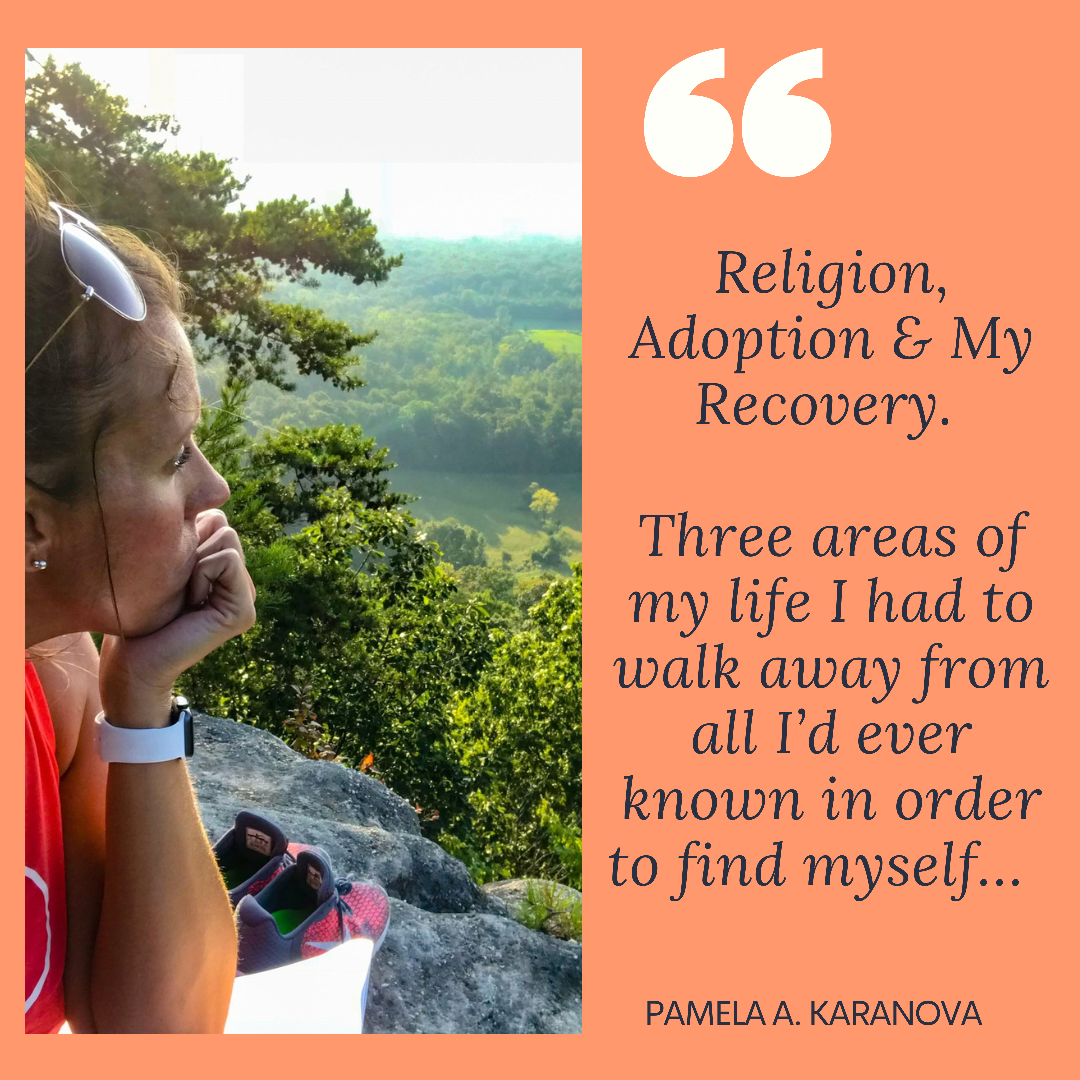



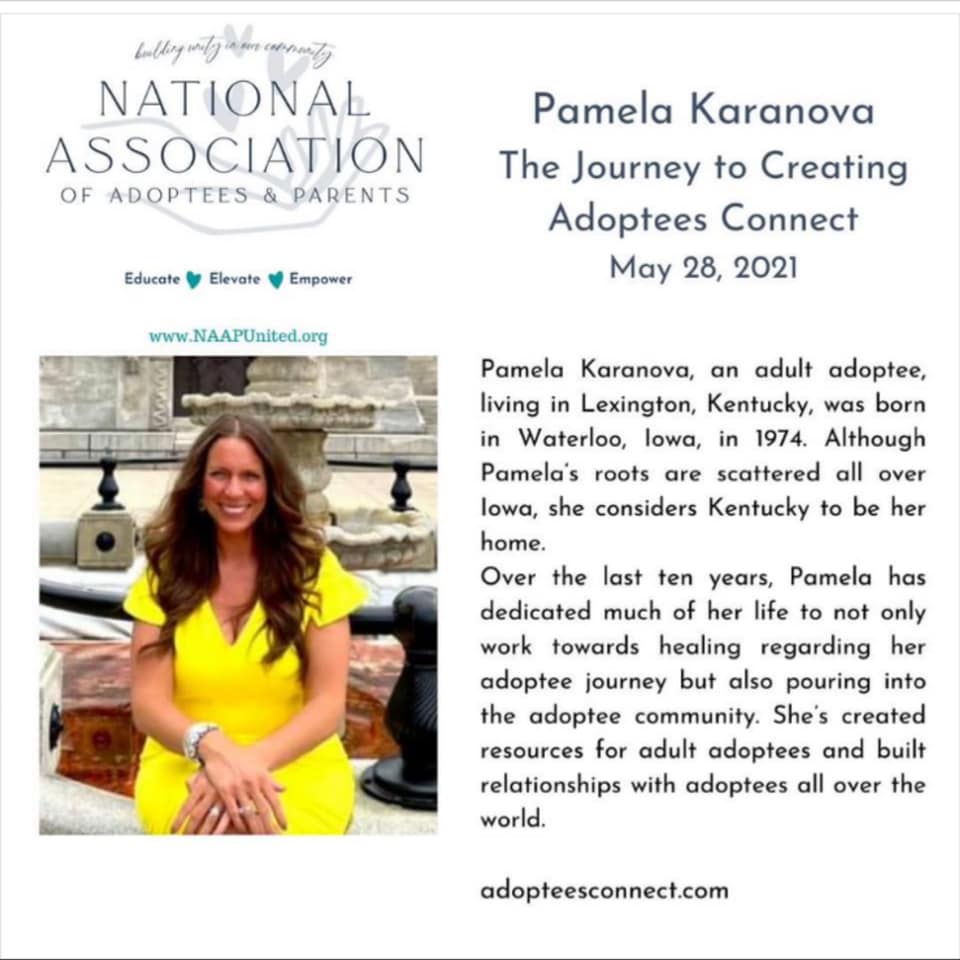

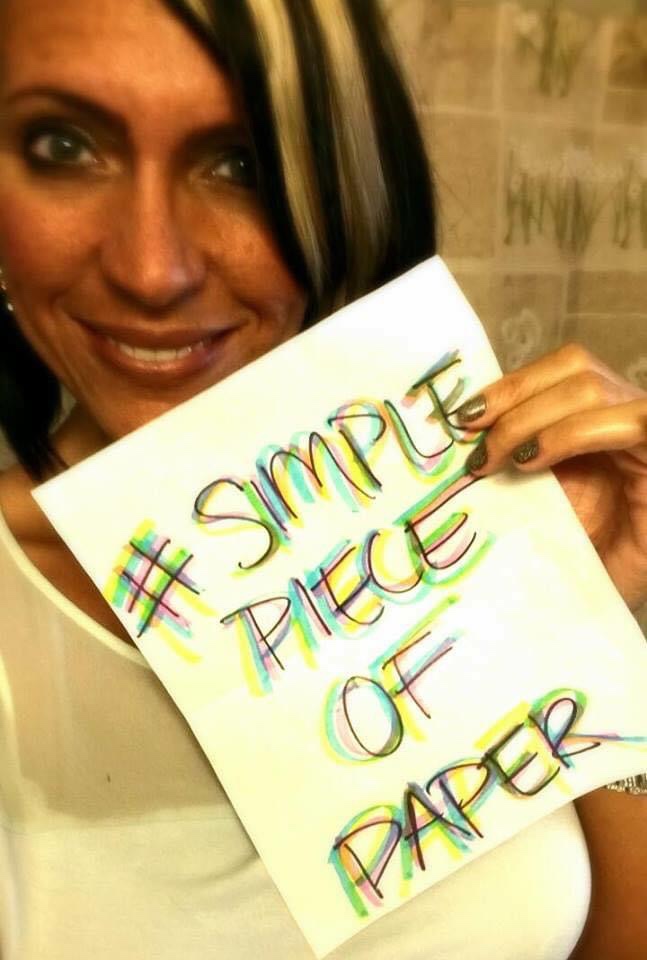
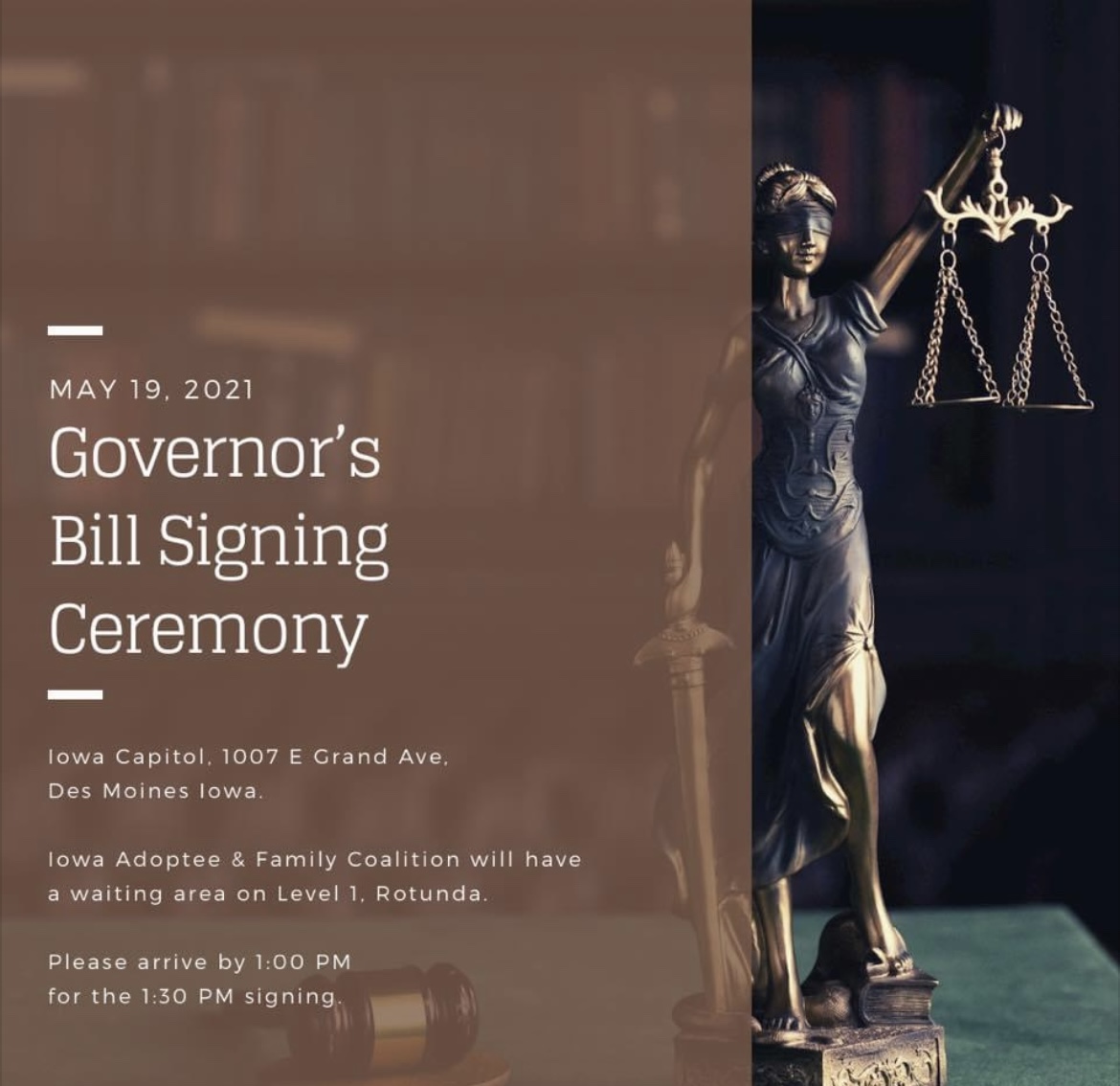


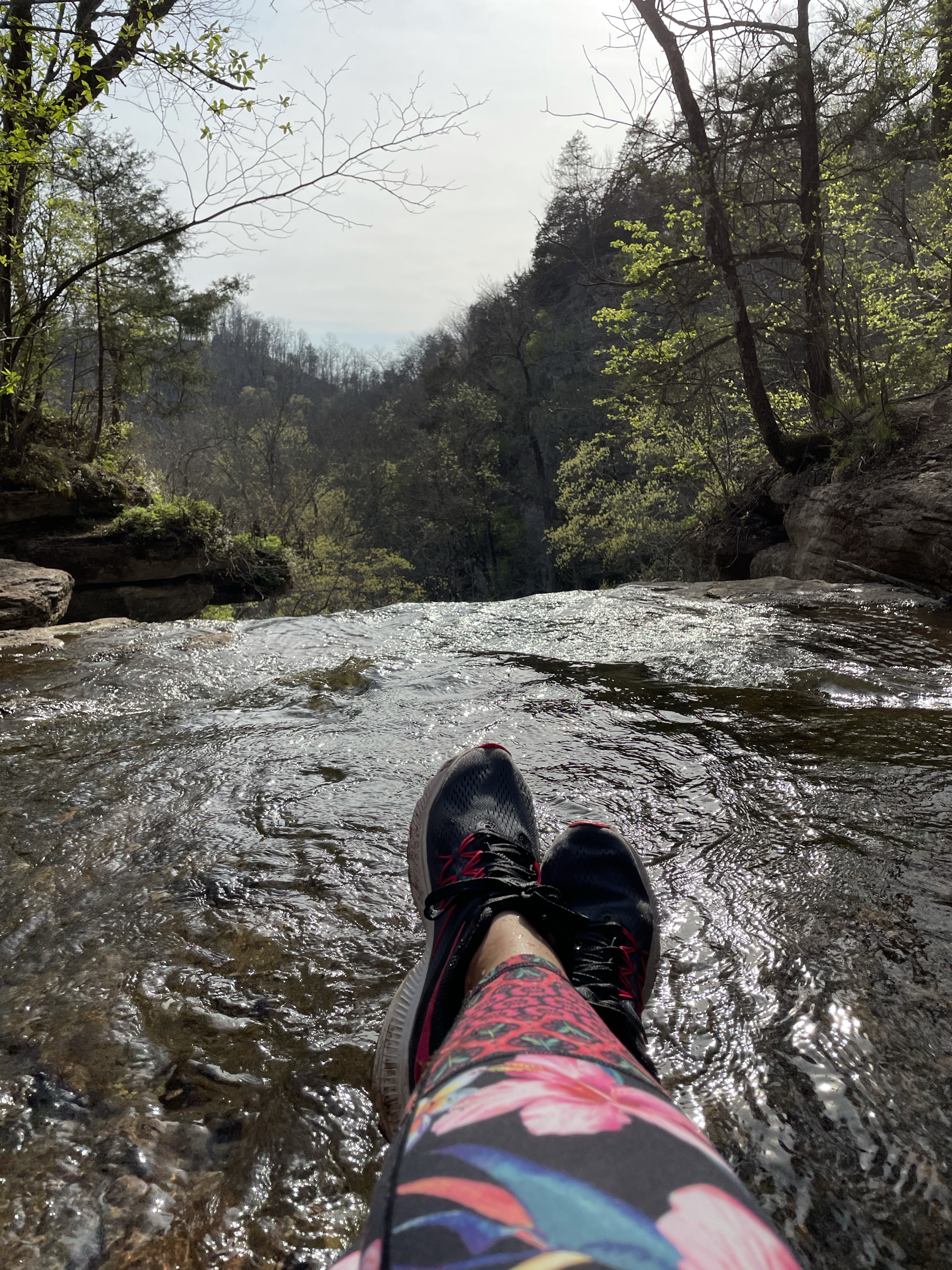


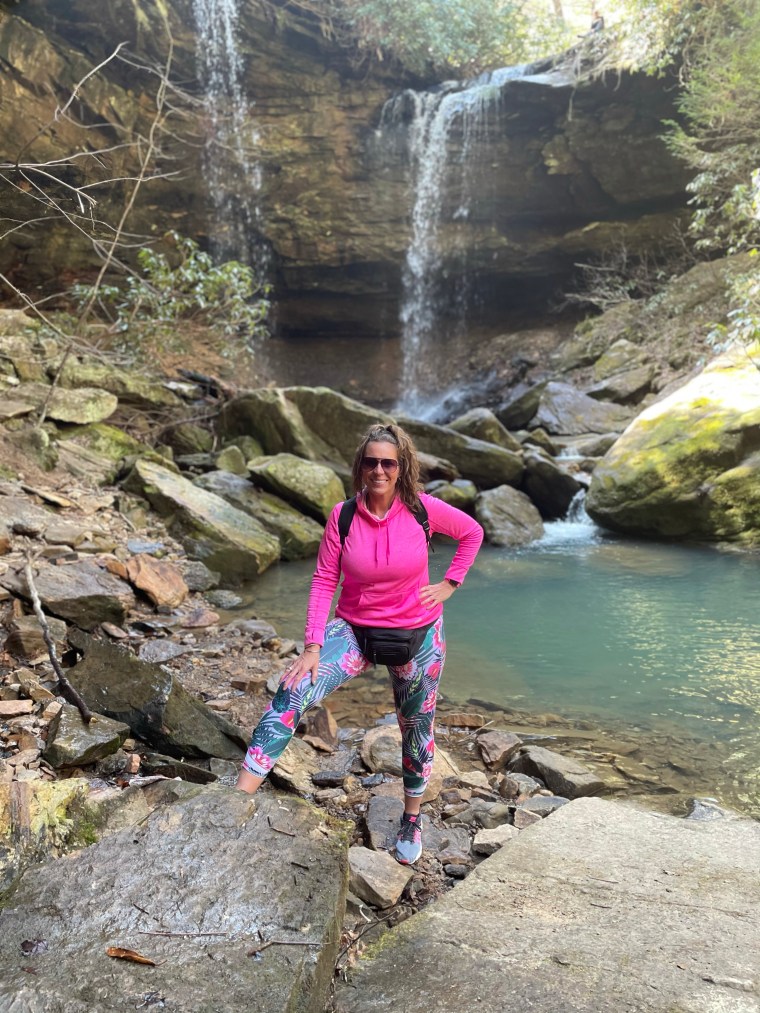


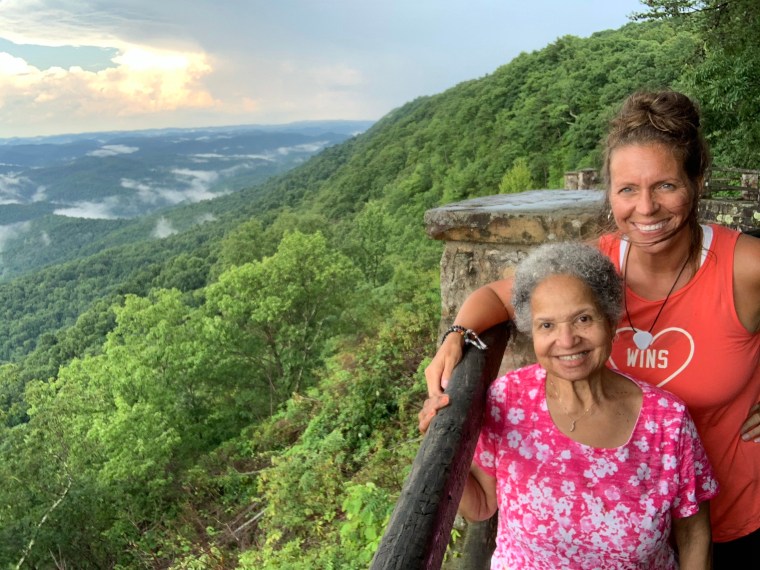


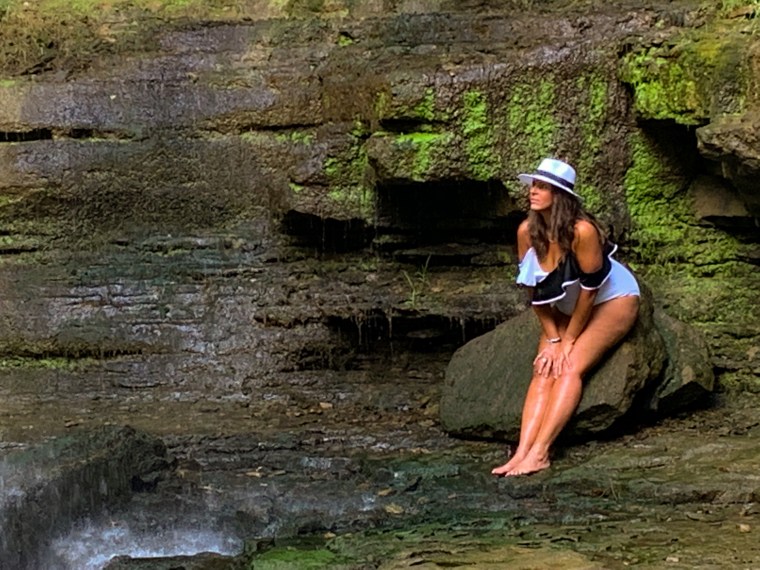


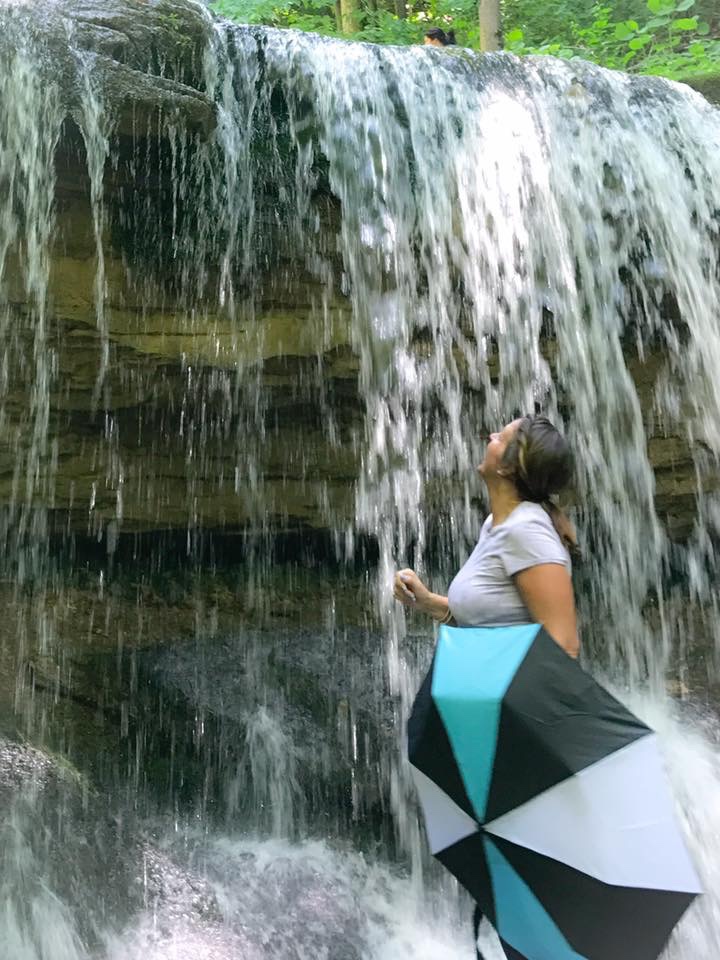
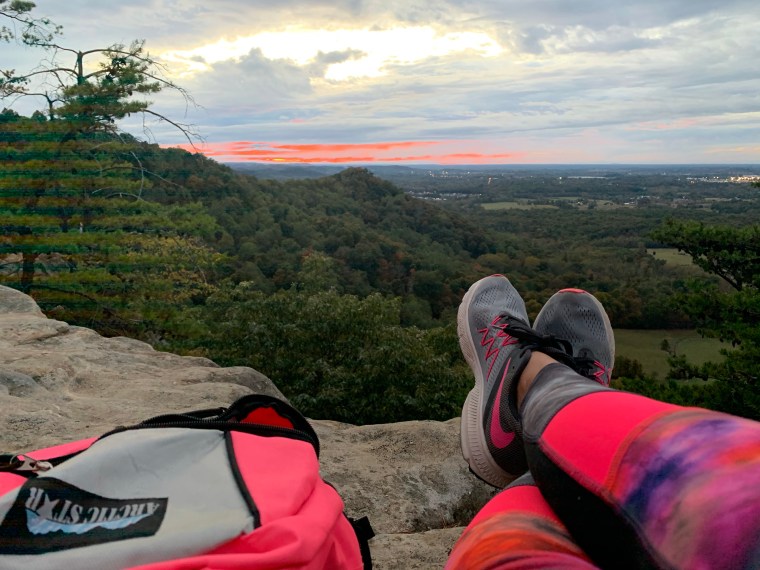


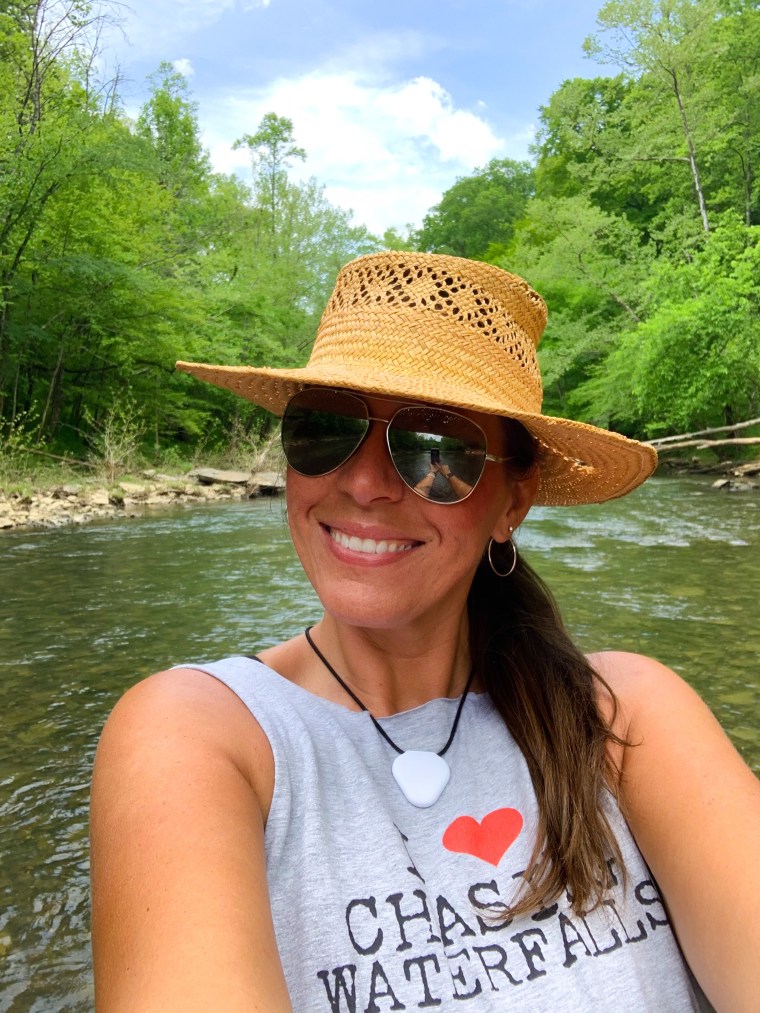


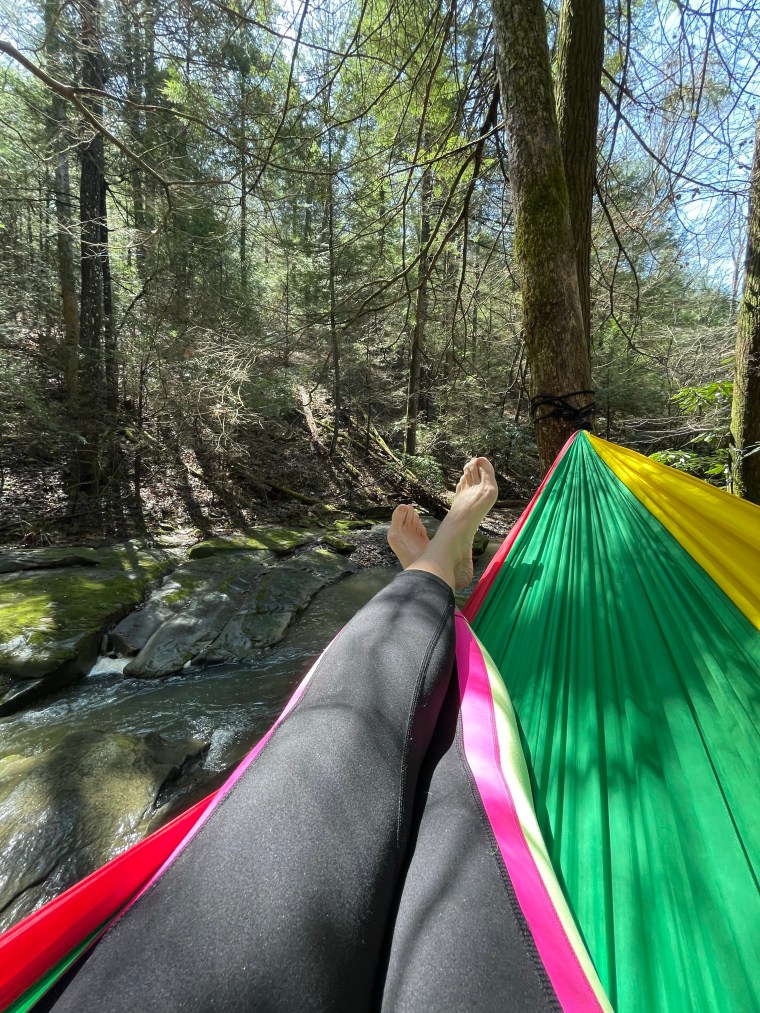


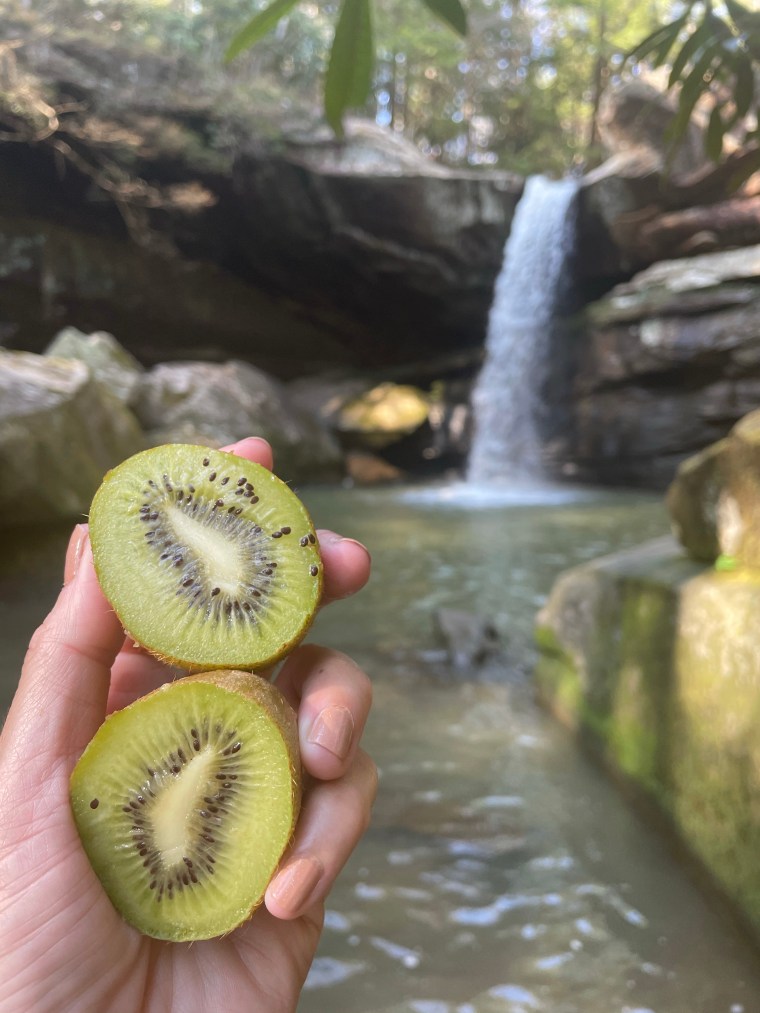


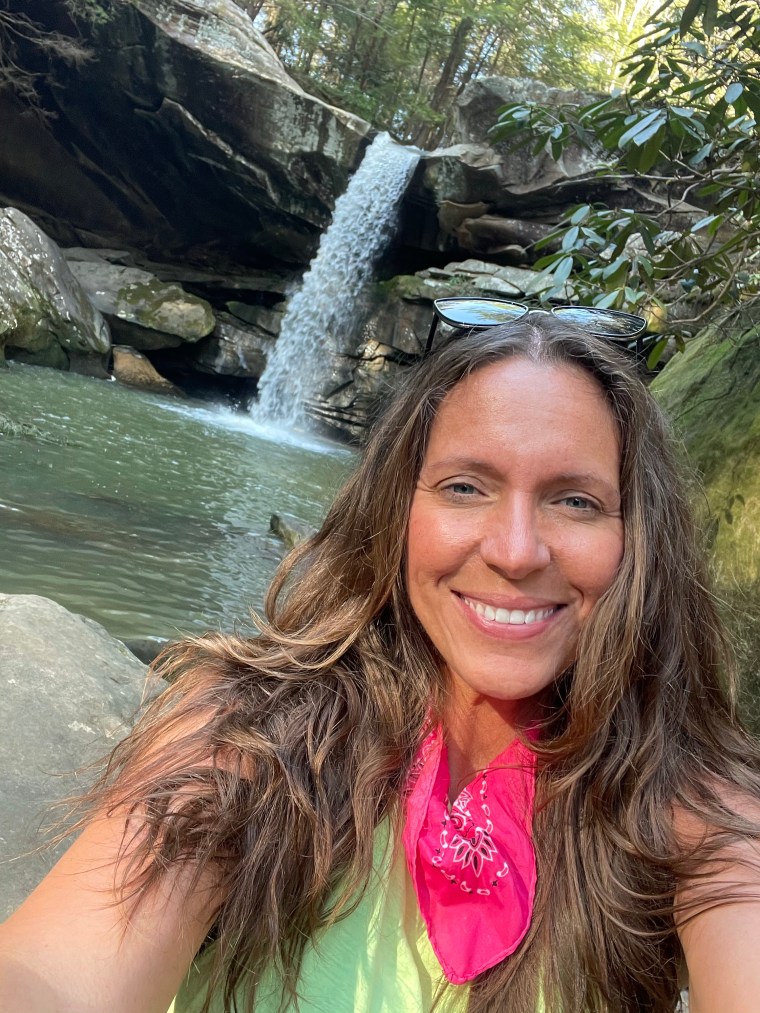

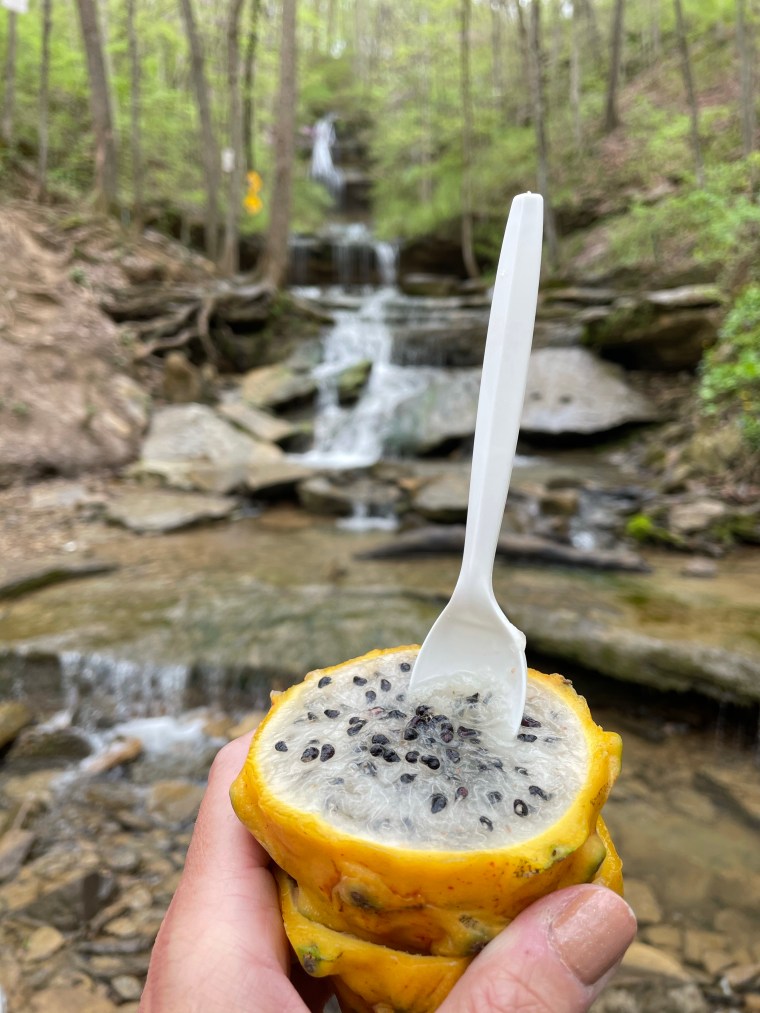


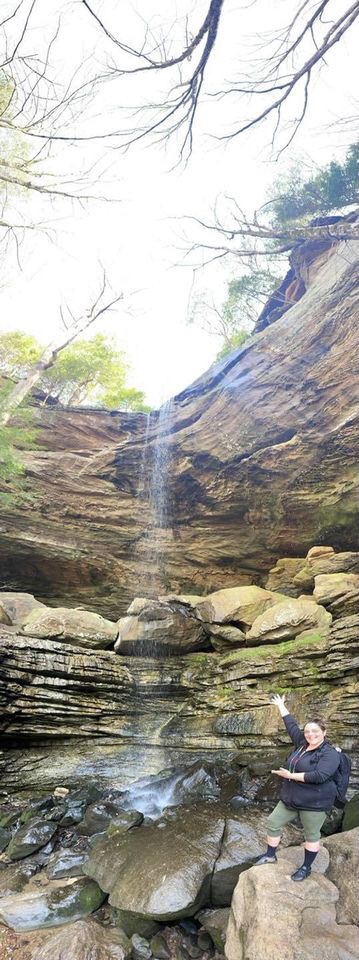


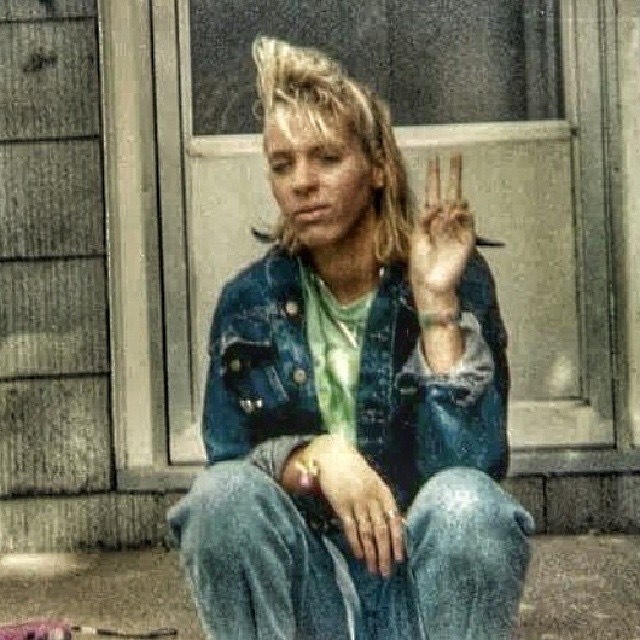
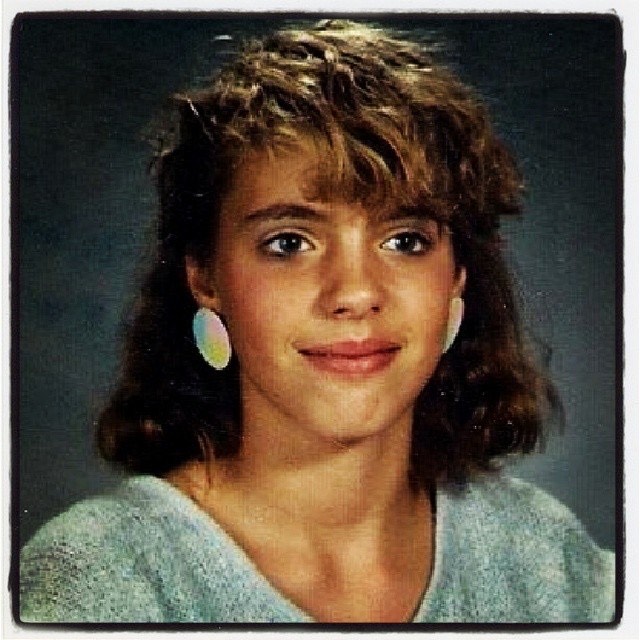

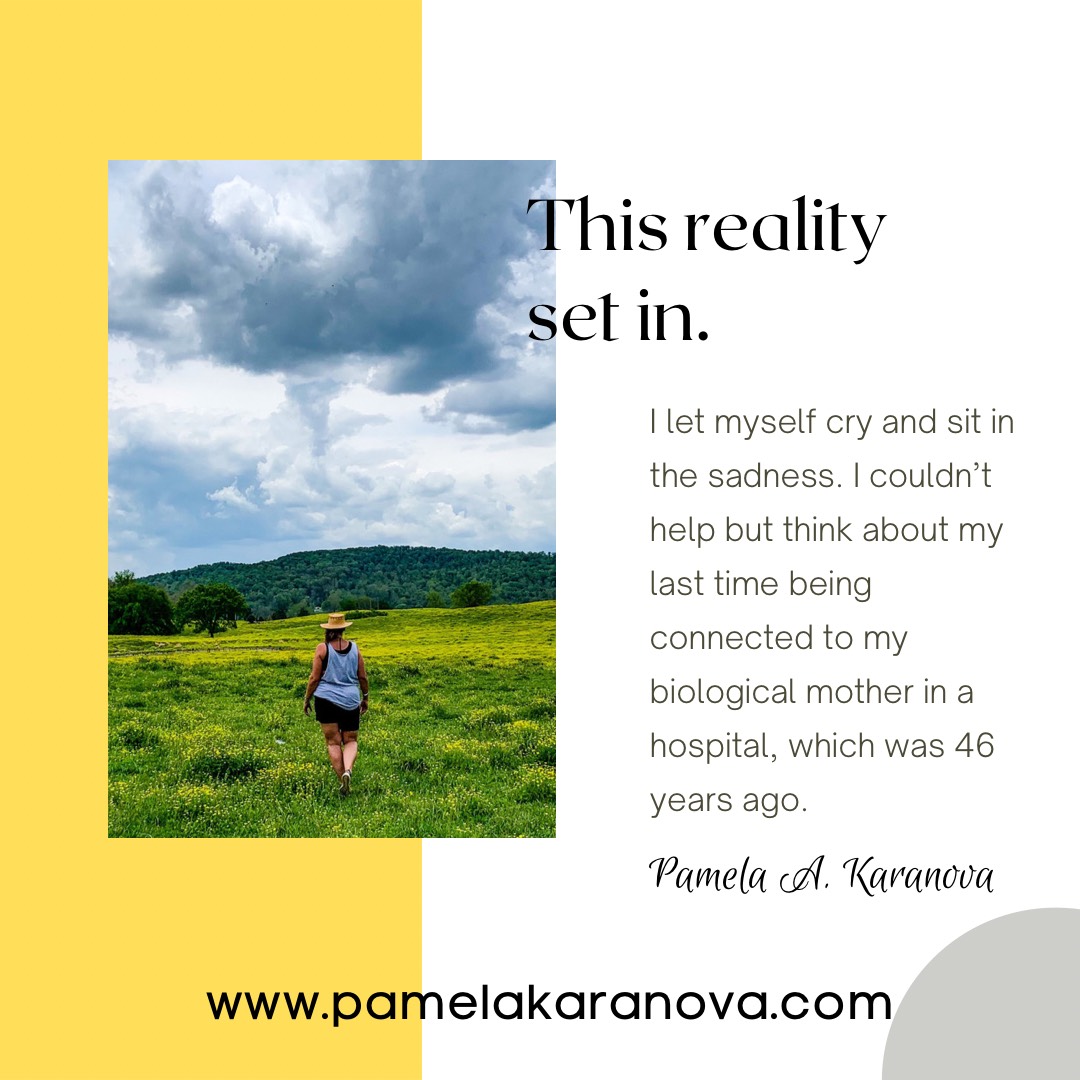
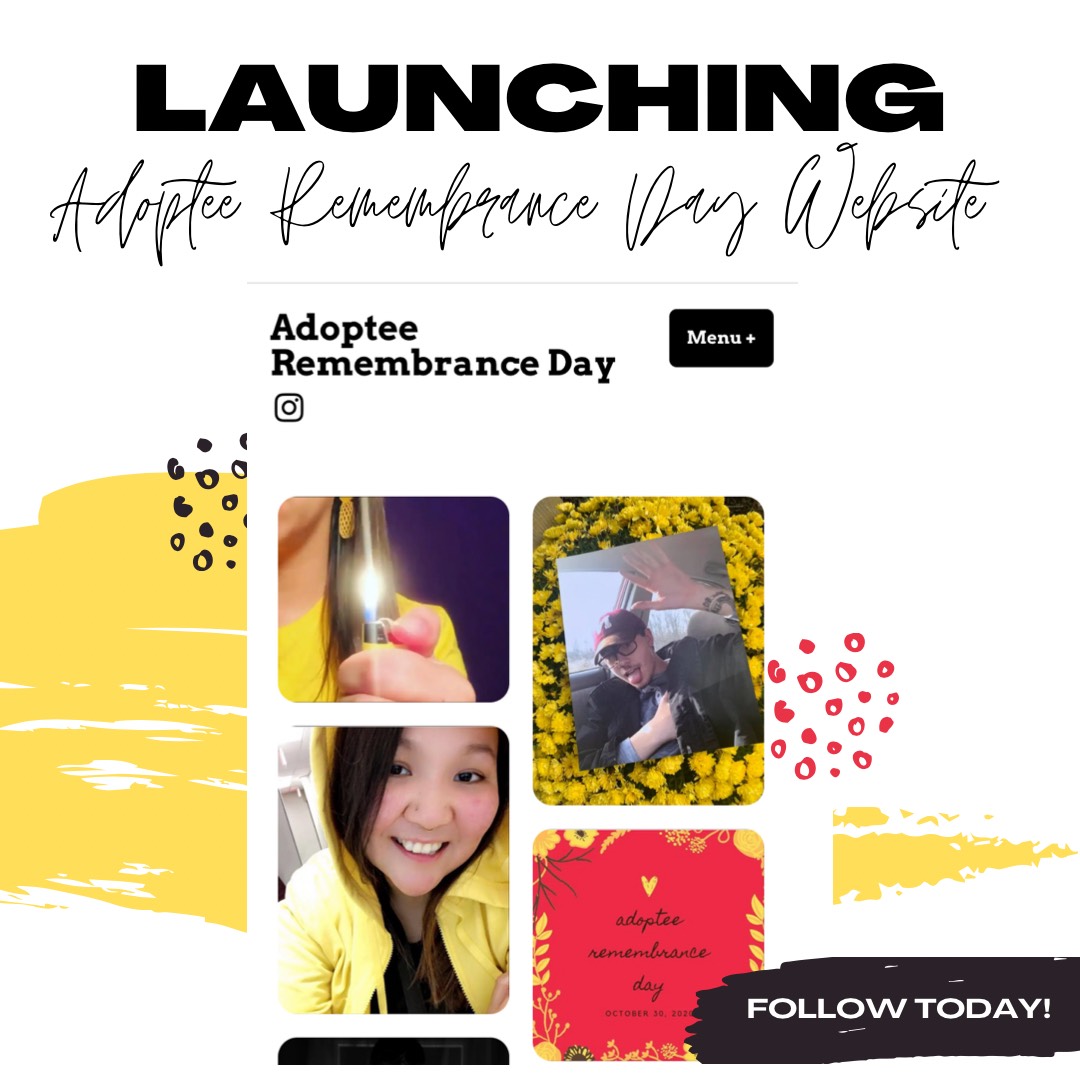

 I genuinely believe as a 46-year-old woman, if I were able to process my trauma at as early of an age as possible, my healing journey wouldn’t have started at 36+ years old. I wouldn’t have been addicted to substances for 27 years of my life. I recently celebrated 8 years sobriety, however I feel like I’ve spent my entire life not only suffering from the trauma of relinquishment and adoption but healing from the lifelong aftermath of these experiences.
 Pamela A. Karanova