Why I Have A Blazing Passion to Share My Story and What It Cost Me to Tell It

“Freedom’s just another word for nothin’ left to lose.” – Janis Joplin.

When an adoptee is adopted, we are immediately put in a position where we are expected to forget our former selves and carry on with life as if our pre-adoption life never existed. 

When we grow up and start to develop internal feelings about this, these feelings often manifest outside ourselves in many different ways. Some of us use unhealthy coping mechanisms like using substances or alcohol. Some of us are perfectionists and overachievers. Some of us are workaholics. Some are addicted to food and spending money. Some of us are rage-filled and angry as hell. Some have healthy coping mechanisms like working out, exercising, hiking, running, bike riding, jogging, volunteering, writing, etc. 

But it’s no secret that when we start to tap into our real feelings and begin to express them verbally, we are walking a thin line here, and we feel every bit of it. I could possibly describe it as modern-day blackmail.  

Blackmail-  “To cheat, deceive or defraud someone for personal gain. A fraudulent scheme or ruse.”

What does this even mean? Many of us have a lot to lose, and we live in fear and intimidation that if we upset our adoptive families, we could have terrifying outcomes. Many of us have similar feelings regarding our biological families, so we remain silent because the risk we take sharing our emotions is too consequential. 

If our adoptive parents love us and take care of us when our biological parents didn’t want us, we must be thankful, grateful and we damn sure aren’t supposed to share any feelings that don’t line up with this narrative. It feels like blackmail, and it constantly hangs over our heads. 

We give you love if you pretend everything is perfect. 

Thoughts like, “If they knew how I feel, would they still love me?” or “If I share my feelings publicly, I will be disowned?” So much of the time, the adoptee can’t share their feelings, even if they want to. Our biological and adoptive families don’t have to say anything; we just know it! We feel it in our souls. Our compliance in keeping quiet is usually in exchange for being included in the family dynamics and receiving the love that’s conditional from the beginning. Trust me, the adopted children that grow up are the first to be left out of wills and shunned or excluded in the family dynamics. If we speak privately or publicly, we take the chance of losing it all!  

So most of the time, adoptees might have online roles or share pieces of their story. Still, they often use pen names to write.  I don’t see many adoptees sharing particular details about their birth parents and adoptive parents publicly because of these reasons. I’m not saying they don’t write about the adoptee experience; I’m saying they are sometimes afraid to share anything that doesn’t line up with the fairytale narrative.

I also see adoptees write or share about their adoption experience, and they feel as if they ALWAYS have to include, “My adoptive family was wonderful or I am thankful my parents chose me.” They don’t feel they can be real and raw without saying these things before, or after they say the truth that adoption has impacted them negatively.

As a result, I sometimes describe our experiences in a way that others can understand, and I call it the “Adoptee Whammy Effect.” 

This is based on having four parents: one adoptive mom, one adoptive dad, one biological mother, and one biological father. In addition, of course, many of us have step-parents or parental roles, which would add layers to this example. 

Let’s also not forget to recognize that some adoptees adopted internationally have not had the opportunity to find biological families, and some adoptees adopted domestically haven’t searched for various reasons. 

This example assumes that the adopted person has two adoptive parents and two biological parents they have attempted to reunite with over their lifetimes. Let’s also accept and acknowledge that before every person is adopted, they experience separation trauma from being removed from their biological mother. This should never be viewed as a positive experience; it’s traumatic. I have learned from other adoptees that even when they have the “Assumed Picture Perfect Adoption Experience” and they have ZERO WHAMMYS, they still have separation trauma that haunts them, and it impacts them in every way throughout life. That alone is enough for an adoptee to feel completely wrecked by adoption. Adding the whammy’s to it, only magnifies the grief, loss, pain and, trauma. Research separation trauma and the primal wound and learn so you can see for yourself.

When I share “Ideal and Fulfilling” relationships with our parents, I mean the adoptee’s relationships with the specific parent (bio mom, bio dad, adoptive mom & adoptive dad) have been generally a loving and healthy one. 

What’s Assumed in Adoption – Every adoptee has an ideal and fulfilling relationship with both adoptive parents. After searching for their biological family, both biological parents receive, love, and accept the adoptee. But, unfortunately, this is the fairytale narrative that most people believe happens in most adoptions. 

What Really Happens to Multiply Our Grief, Loss, Separation Trauma & Adoption Trauma:

A Single Whammy – This is when we don’t have good experiences with one of the two adoptive parents OR one of two of the biological parents 

A Double Whammy – We don’t have good experiences with two of our parents. It could be one adoptive parent and one biological parent, OR both adoptive parents OR both biological parents. 

A Triple Whammy – We don’t have good experiences with three of our four parents. It could be one adoptive parent and both biological parents, OR both adoptive parents and one biological parent. 

A Quadruple Whammy – We don’t have good experiences with all four of our parents, both adoptive parents and both biological parents. 

I try to leave it up to the adoptees to describe what they consider a “Good Experience” when it comes to each of our individual maternal and paternal parents and each of our adoptive parents because no one else should define that for us. 

In my case, I am hands down A Quadruple Whammy and some EXTRA ISH! 

I am not going into all the grimy details on WHY I have a quadruple whammy, but I will share briefly that I was estranged from my adoptive mom before her passing and have no relationship with my adoptive dad. In addition, both biological parents rejected a relationship with me after meeting them each one time. Finally, I have an adoptive step-monster who essentially doesn’t exist in my life for various reasons I’m not going to make public. 

As a result, I don’t feel connected to or a part of any family except the three adult kids I birthed myself. I have accepted this, and I’m at peace with it at this stage of my life, but that doesn’t mean I haven’t lost so much in the process. It still impacts me (and my kids) until this day, and grief and loss are something I will be processing for the rest of my life. This doesn’t mean I am not thankful for what I have, because I am. My kids are the reason I keep living.

What does it cost for me to share my story? I can’t list everything, but I will highlight the main areas that come to mind. 

  • I have lost three shots at having a nurturing, loving, and caring mother. Three chances and I struck out all three times. I will never know what a loving relationship looks like from a mother other than seeing it in other people and their mothers. I have no mother to call, and I never really have. With this, I have never felt a mother’s unconditional love and support. There is no wound on earth quite like the mother wound. When you have it x3 as I do, it only magnifies it. 
  • I have lost the chance to know and grow up with and have relationships with my biological siblings. This is unforgivable, and the pain will echo for a lifetime. I have a lost/missing sister somewhere out there, and I have a half biological sister who resents me because I was adopted, and she wasn’t. She, too, bought into the fairy tale narrative that adoption is rainbows and unicorns, and it’s always a better life. She relinquished her baby for adoption just like my birth mother did. Giving your baby away runs in the family!  She thinks I should be grateful, and I am NOT. She knows nothing about the trauma I experienced in my life, nor has she tried to understand that I might have had a different life than her, but it damn sure hasn’t been a better one. Because of our differences on the issue, we have no relationship today. 
  • I have lost a sense of self because I have had severe identity struggles from childhood to adulthood. Only until I fought like hell for my truth have I been able to come to a place of internal peace in the last five years. That’s a lot of time lost!
  • I have lost a normal childhood; while most kids are frolicking in the fields, I was obsessed with finding my birth mother. It never left my mind. Read “The Sky and I.” I was also consumed with being the caretaker for my sick adoptive mom. I was traumatized over and over again by her manic depressive episodes.
  • I can’t connect with celebrating or even embracing a culture. I didn’t find out my ethnicity until I was 40 years old, and now I don’t even know how to tap into something that has been null and void my whole life.    
  • The dream I had of how much my birth parents “Loved Me So Much” was nothing more than a pacifier statement and a myth to stall my healing, and it stood in the way of me knowing the truth. No truth = no healing. The truth is, not all birth mothers love their children, and not all of them want to be found. My birth mother is one of them. Being told she loved me so much shattered me once I saw her, and she rejected a relationship. Please stop saying this to adoptees! 
  • I have lost the ability to understand what love even is. Your mother is supposed to be your ride or die and the one who fights until the end of the earth for you. So when your mother “Loves you so much” she gives you away to strangers, it’s a significant mental mind fuck. I am still making sense of it, and I am not sure I will ever understand why I was told this in this way? Did they know this would forever manipulate my view of what love is? This “lesson” has caused catastrophic consequences in my lifetime. 
  • I don’t know what it’s like to be a part of a real family, aside from my own three adult kids.  Being adopted to me feels like I’m still an orphan because I never felt like I fit in with my adoptive family. I always knew I was the second choice.  But, I am FOREVER grateful for MY FAMILY WITH MY KIDS. Without them, I would not be here. 
  • I have taken on an impending sense of deep-rooted sadness that will be with me until I leave this earth, for the fact that me being adopted IMPACTS MY KIDS, in every way! The trauma from relinquishment and adoption is generational, and I see my kids experiencing some of the things I did because of my adoption story. I will always hate adoption because of this. I can handle how it makes ME feel, but because it impacts my innocent children in such a profound way, I will never be able to forgive adoption. It will also impact my future grandkids, and their kids. Fuck adoption. 
  • I have lost the ability to trust because I learned early on from my adoptive mother that life and love are based on conditions. I have lived my life feeling like everyone wants something from me. Love is like a carrot, dangling over my head my whole life. The love will be snatched away if I say or do the wrong thing. Well, I’m an adult now, and I don’t want that conditional love anymore. I am learning to trust a few people, and I appreciate small circles.   
  • It’s taken me 47 years on earth to feel complete within myself, finally. The hell I had to go through to get here has consumed every part of my life. Because of this, I feel like I missed out on many moments of my kids being younger and the ability to find beauty in everyday life because most of my 47 years have been spent recovering from separation trauma compacted by adoption trauma. I resent this, and this is one of the reasons I don’t want to waste any more time and I am very selective on what I use my time on. 
  • I have lost every chance at having a father in my life. My biological father didn’t know of my existence, and he didn’t sign any adoption paperwork. However, once found, he still doesn’t want a relationship. My adoptive dad divorced my adoptive mom a year after adopting two daughters; (even when he knew she couldn’t care for us, he left anyway!); he moved over an hour away and remarried. He raised three stepsons as his own, and I honestly feel I don’t even know him. He’s always been far away, and he’s only visited Kentucky 3 times that I can remember,  in over 30 years of me being here. On the other hand, I have been back to Iowa at least 20+ times. No father/daughter dance or date, ever. No one-on-one time, not even an hour. Ever. 
  • Trust –  I have lost the ability to trust the people who are supposed to love me the most. They kept my truth from me for their gain. They paid a cash price for me. They said whatever they had to say to soothe my deep-rooted desire to find my biological family. I don’t just give trust away; people have to earn it in time. 
  • Missing Memories – I have lost all memories I should have made with my biological family’s maternal and paternal sides. This has been one of the most complex parts for me to fathom. I will never know any grandparents or aunts and uncles. I have met a few biological cousins, but we have no shared history. It’s hard building relationships from scratch. To much time is missing. The grief has knocked me down so many times over in my life. It’s consumed me so profoundly; some days and seasons in my life, I didn’t even want to go on with living. The sadness has been that great. 
  • Judgment – When people learn of me, maybe in a professional setting or even in the dating world, I am always putting myself at risk for pre-judgment because people can read my whole life story on my website before they get to know me real life. This impacts me significantly in life, and I am still sharing my story with my fellow adoptees, but it doesn’t come without a considerable cost! It’s a HUGE PRICE TO PAY!
  • People assume I am stuck – When I am still writing about adoption, many people think I am stuck in the places I am writing about. However, the truth is that I am not stuck. I have been stuck in the past; however, I have moved on in my life, I have accepted adoption for what it is, I have healed and continue to heal. It has always been the most significant thing in my life that has hurt me the most. I am sharing my feelings with the world, specifically my fellow adoptees because people need to know they have been sold a lie when it comes to adoption. I share so my fellow adoptees know they aren’t alone and aren’t crazy about their feelings. I am also sharing because it helps me heal, and non-adopted individuals can learn from an adoptee’s lens. They are why I keep writing, but I have happiness and wholeness in my personal life, and I am no longer stuck. However, that doesn’t stop people from making assumptions. The great thing is, I could care less what people think. 

I could go on and on, but you get the idea. 
As you can see, I have nothing to lose by sharing my story – I have already lost everything. When any adoptee shares their story, even if it’s in small pieces or micro-doses, please understand that sometimes that might be the very first time they ever let these feelings come to light. Sometimes it takes us an entire lifetime for adoptee feelings to come out of our mouths. So please listen without judgment and understand that to share our stories, especially publicly, we have A LOT TO LOSE! Be kind, be compassionate, and most of all, have the willingness to understand that there is much more to adoption than what society has been sold. 

In sharing my story and being a lifeline to my fellow adoptees, because I have nothing to lose, I can share from depths that many others can’t. When I share from these spaces, I heal a little more each and every time I release feelings that have been inside for 47 years. Because of these reasons, I keep sharing.

For my fellow adoptees, do you have the fairytale narrative that’s assumed by society? 

Or do you fit into the Single, Double, Triple, or Quadruple Whammy Effect?

How has this impacted your short term and long term?

What has helped you heal? 

Don’t forget this article along with all my other articles are available in audio for your convenience, just look up Pamela A. Karanova Podcast on Google Podcasts, iTunes , Spotify. and Amazon Music. Interested in treating me with a coffee, to add fuel to my fire? Click here. Many thanks in advance to my supporters!

Thank you for reading, Love Love
*The views and opinions expressed in this article are that of the author, Pamela A. Karanova. Reproduction of the material contained in this publication may be made only with the written permission of Pamela A. Karanova

Big Adoptee Feelings, Learning to Feel the Feels While Coming Out of the Fog

I remember back to the earlier days of my life, particularly in my pre-teen years, and I was so angry about my birth mother never coming back to get me; I just wanted to die. I hated the world and, I hated everyone in it. And most of all, I hated myself. For me, this means my self-love was non-existent. Nothing could console me and I didn’t feel connected to anyone or anything.

I was a trainwreck.

During the beginning of my life, I developed the fantasy that she was coming back. I dreamed and fantasized of the day that she would change her mind and decide her love for me was so great, she decided to come back and get me. After all, I dreamed she wanted me back because who could actually give their baby away and genuinely mean it?

During my teen years and childhood, as many times as I saw therapists ( I saw a lot!), adoption was never addressed or discussed. Because of this, I didn’t start working on any adoptee-related problems or issues I was holding deep down until the later part of my 30’s which is when I consider the beginning of my process of coming out of the fog about adoption.

In the years that passed, adoption-related thoughts plagued my mind, but there was no help for me. I learned to keep things tucked inside, never sharing my thoughts with the world for fear. Fear of what? Fear of shattering my adoptive mother’s dream come true to be a mother. Fear of upsetting her or being abandoned once again. I never talked about it, but that doesn’t mean I wasn’t thinking about it. It honestly never left my mind. I was obsessed with finding HER, my biological mother.

Who would have ever known that my internal dialog with myself was one of ultimate torture? What adults in my life would have understood this dynamic played out as an adopted child? I wasn’t acting out until I was in my pre-teens.

But even then, once I started acting out, no one ever acknowledged that being adopted could play a role in my behaviors. Even running away, locked in drug and alcohol treatment, being in group homes, detention, breaking the law, fighting, stealing, unplanned pregnancy, and even a burglary at 15 – Not even my adoptive parents. So I am here to tell you that not one person in all the contact I had with adults, made the connection that “Wow, this girl is adopted. Maybe that brings some root issues for her we need to bring to the table?”

Once I reached my 30’s I lived many years as an everyday drinker, trying to raise three kids as a single mom, work, pay the bills, and not think about my adoptee reality. Alcohol was the escape, so was partying. I didn’t know how to process the pain from relinquishment, nor did I ever make the connection that my drinking was a symptom of a much bigger cause – ADOPTION TRAUMA AND RELINQUISHMENT TRAUMA.

Once I learned that I have always had every reason to act out and be angry, the fog began to lift. It’s taken over 10+ years working on myself. I have learned that my feelings were so EXTREME and SEVERE because not only was I keeping things tucked inside, but sharing my real feelings about my adoption experience was IMPOSSIBLE because I had never done it.

Not only had I not shared feelings, but I was emotionally abused and gaslit my entire life that adoption was a wonderful thing. I made my adoptive parent’s dreams come true to be parents. I was also told that my birth mother loved me so much; she wanted me to have a better life with a loving two-parent home that she couldn’t provide. Too bad my adoptive parents divorced a year later, and I was raised in an abusive home with a mentally ill and narcissistic adoptive mother I never bonded with!

From a very young age, I learned that I must put everyone’s feelings ahead of my own and that my feelings weren’t significant compared to everyone else’s. Of course, I internalized this, and it only magnified my feelings of grief, loss, anger, rage, and self-hate. I was also forced to pretend that my adoptive parents were my only parents. I knew they were not, but I had to go along with the fantasy because I didn’t know who my biological parents were or how to find them. I was forbidden that information, and it was kept a secret from me.

No Truth, No Healing

The reality that I have made it out of this complete nightmare is nothing short of a miracle. This is why I keep sharing my story because it’s a miracle I am alive to do it. The reason I am saying this is because my issues were so deep. I spent the majority of my youth wanting to die. I tried several times to take my own life (no one even noticed), and I would entice others in hopes that they would kill me. Sounds ludicrous, right? Well, it is, but that’s how dark my sorrow and sadness were. I just wanted out of my misery, and at that time, I was hopeless I would ever “feel alive.” So it’s easy for me to understand why so many adoptees choose to leave the world.

The world has failed adoptees.

When I hit 2010, I found my first adoptee online via the Twitter platform named Jessenia Arias. Jessenia is now Jessenia Arias Parmer, and her website is I Am Adopted. I will never forget this beautiful soul, who I consider one of the most amazing lights to adoptees and anyone in the adoption world. I love you, Jessenia! I remember like it was yesterday, reading her tweets and how so many of them resonated with me.

After spending 2010 and 2011 trying to heal from adoption and relinquishment trauma with alcohol in my everyday life, I finally decided that I could not heal while using substances. Instead, it made my problems worse because I wasn’t genuinely feeling my feelings, I was mixing alcohol with raw emotions, and it was indeed a recipe for disaster!

On my earthly birthday, August 13, 2012, I decided to throw in the towel on my drinking, and this was the last day I ever drank alcohol. Why? Because I desperately wanted to heal, and I wanted my kids to have a better mom than what I had. Even when I was in shambles on the inside, I wanted to get better for my kids. And eventually, for myself. Removing alcohol from my life, I had to get honest with myself. Then, all the feelings I had been running from my whole life showed up at my front door.

BIG ADOPTEE FEELINGS!

Frankly, adoptee feelings have been the biggest and most complex feelings I’ve ever had, even experiencing other traumatic events. Slowly, I started sharing my feelings online, but I was scared to my core that if anyone knew how I felt, something terrible would happen. So I began to write online under an alias, and I wasn’t strong enough to share my feelings from my true authentic self. This was when Adoptee in Recovery was born. It protected me.

I wrote many years under this alias, but one day into my healing journey, the lights flipped on, and I realized I was coming out of the fog, but I wasn’t being true to myself in the process. I wrote under an alias, making me feel phony and not legit. So I stepped into a new phase around 2015 of welcoming the real true me into my website and online adoptee world. This was a liberating experience, but it took years to get up enough courage and strength to get here. I finally didn’t feel invisible. I felt more real than I ever had. I was strong and ready to share my story with the world, from the real true me and not just a piece of me.

 ALL OF ME.

No more hiding behind an alias, but it was lifesaving for a time in my life where I was operating out of paralyzing fear. Adoptees have a lot to lose when they share their real feelings. For me, it was worth the risk, especially knowing I could validate the sentiments of my fellow adoptees if I poured my heart and soul out into my articles.

We must recognize that every person who experiences separation trauma from their biological mother has trauma memories stored in their subconscious memory. This trauma can cause many issues that might not be brought to light. They come out later in life, and adoptees usually have to learn about this independently by experiencing triggers.

While many adoptees feel conditioned to be thankful from the beginning of life, we learn to internalize our thoughts and feelings about our adoption experiences. We go most of our childhood for some of us without ever letting the words from our emotions come out of our mouths. However, just because you don’t hear an adoptee sharing heartbreak or sadness doesn’t mean it’s not there. Most of the time, if they know the whole truth of their adoption, it’s there.

I will never forget the first time I started to share feelings about my birth mother. After 27 years of a love affair with alcohol (so I didn’t have to feel), I stopped drinking alcohol in 2012 at 38 years old and made my way to Celebrate Recovery. I was sitting in a circle of women, and I started sharing about my birth mother, and tears started to flow. I began to cry; my cry turned into a sob. The next thing I knew, I started whaling with my cry and tears, snot started slanging. Suddenly, I realized this was the very first time in my whole life I had shared about the loss of my birth mother. I was 38 years old at the time. 38!!!! Suddenly, an adoptive mom interrupted me, who was in the group. She said, “I’m sorry, but you don’t know adoption like I know adoption! I adopted two kids from foster care, and the experience those kids had gone through before we adopted them has been a nightmare!”

Of course, I was silenced. I shut down. I couldn’t even finish my sentence. How many adoptees who are reading have gotten this sort of treatment in your life?

I got up, and I left…

I walked out of Celebrate Recovery, and that was the moment that I knew if adoptees wanted to heal from a space like this, that is supposed to be safe to share, we would have to create our adoptee centric space because I knew we would be silenced if we didn’t! This was when I knew Adoptees Connect, Inc. was so needed!

So you see, the one time I get up enough courage to share my real feelings, I get silenced and shut down. So I left, and I was hopeless after this. To be transparent, if I were suicidal at this time, I would have taken my own life. I needed and wanted help so desperately, but there was no place I could even share my adoptee feelings freely without being silenced. By this time, I had given up therapy. I couldn’t bear to therapy another therapist.

News Flash: This is the treatment most adoptees get in life! We aren’t only silenced and shut down; we are emotionally and mentally abused and gaslit regularly. Yet, we choose to keep our feelings to ourselves for fear of more emotional abuse.

When I started to come out of the fog and share my truth, I feared that my adoptive family would read my feelings? What if my biological family reads my feelings? Will they all leave me too? Will they stop talking to me? Will they be mad at me?

Despite all these internal fears, I stepped out, and I started to share anyway. After a while, I learned to put myself first and not care what anyone thinks. Finally, after a lifetime of being silenced,  being true to myself and sharing my truth loudly became a priority. Unfortunately, many adoptees never get to this point. Instead, they internalize things so long that they lose the battle at life.

They choose not to go on.

I want those reading that aren’t adopted to consider acknowledging and understanding that their role in an adopted person’s life could potentially be a role that sends an adoptee over the edge. What they say to us is a significant piece of our journey. Do you realize I will never forget the way this adoptive mom treated me and how she silenced me?

Let me share that this experience has been the launching pad for everything I have done for adoptees in creating adoptee-centric spaces all over the world? Unfortunately, not all adoptees will have this courage and strength because we are simply tired! We can’t take more gaslighting and abuse from the world that celebrates our trauma. (adoption) We are tired of being treated like second-class citizens to everyone else’s feelings.

If I ever have the opportunity to speak to an adoptive parent, I always share that the sooner the truth is revealed to the adoptee, the better. I would seek emotional support and therapy from an ADOPTEE competent therapist to know when to share the truth, specifically at age-appropriate times. If I had started to identify with grief, loss, and sadness early on, my healing would have started earlier. I might not have depended on alcohol to numb my pain for 27 years of my life.

The thing about adoptees being young and healing are that we need our adoptive parents, counselors, therapists, and adults in our lives to help us find the words to identify the feelings and also spark conversations that will help create a dialogue. As kids, we don’t know how to do this without help.

Before any adopted child begins to share feelings about being adopted, we need our adoptive parents to research and learn as much as possible and acknowledge and accept that adoption always begins with loss. And we need them to recognize that anytime a mother and a child is separated, a trauma occurs. Once they come to a place of acceptance that their adopted child could struggle with these things, then they can know how to hold space for difficult conversations to be sparked at age-appropriate times.

It’s taken me 10+ years to learn how to process my adoptee feelings in healthy ways, and I am 47 years old. My life is over half over if I’m lucky. Adoption has stolen so much from my fellow adoptees and me, but it doesn’t have to keep stealing so much.

Today, I take my time to respond to uncomfortable feelings, and I have learned that all my emotions are valid and legitimate. If no one has ever told you, so are yours! I sit with them when they come, and I am no longer numbing myself with substances, so I don’t have to feel. My tears have gone from being hard as a rock to flowing freely. Now, I have cried so much the last 10+ years as an attempt to feel and heal that my tears are finally starting to dry up.

This is what I call getting honest with myself, and sitting with my sorrow and sadness, and learning that it’s okay to feel these ways. I remember days when I couldn’t feel at all!

 I have also accepted the pain is here to stay, which was one of the most prominent healing dynamics of my journey and life. I spent so much time trying to be completely healed in my past! But after running many rat races, I learned that it was all a hoax, and this pain is here to stay. I’m not saying I won’t heal because I am healing daily, but adoption’s painful parts will always revisit. I will never be completely whole, and that’s okay. I have accepted it, and it’s easier for me to believe this than run a rat race for 100 years TRYING TO BE FULLY HEALED. This reality in itself has helped me tremendously. They will revisit future generations and my children when they aren’t revisiting me. The key is not running from it but embracing it, sharing it, and feeling it.

Today, I am thankful for the ability to feel because I remember when I was a teenager, my heart, soul, and entire being felt so hallow, dark, and empty inside. Because of all the blood, sweat, and tears, I’ve put into my journey, not today.

Today I am full of life, and I have joy in the little things. I hope the same for my fellow adoptees.

Adoptees, What has the process been like to identify with your adoptee feelings? Have you struggled with this? Do you have any advice for your fellow adoptees or tips and tricks you recommend when it comes to processing and feeling adoptee feelings? Have your adoptee feelings been the biggest feelings you’ve ever had? How has your healing journey been? What helped you the most?

Don’t forget this article along with all my other articles are available in audio for your convenience, just look up Pamela A. Karanova Podcast on Google Podcasts, iTunes , Spotify. and Amazon Music. Interested in treating me with a coffee, to add fuel to my fire? Click here. Many thanks in advance to my supporters!

Thank you for reading,

Love, Love

*The views and opinions expressed in this article are that of the author, Pamela A. Karanova. Reproduction of the material contained in this publication may be made only with the written permission of Pamela A. Karanova
My Friend Has an Adopted Child, and They Don’t Have Any Issues With Being Adopted

“Well, Joan is a close friend of mine from church, and she adopted two daughters from overseas in the 1980s, and they don’t seem to have any of the issues you are speaking about. On the contrary, they seem pretty thankful and happy that they are adopted.”

I can’t even express how many times I’ve heard this in my life from people who likely mean well. But, unfortunately, it’s usually when I share something that is not in alignment with the popular narrative of how adoption is viewed, and/or I share some of the heartache and pain many adoptees (including myself) experience in their journey.

Before every adoption takes place, the separation from one’s biological mother is a traumatic experience, and it goes unrecognized most of the time. But, unfortunately, this is sometimes the most significant trauma of the adopted person’s life, and it can and does impact us for our entire lifetimes. So, how can an adoptee heal when our trauma is celebrated worldwide?

 Once adopted, those layers only add to the layer of trauma from maternal separation from our biological mothers. I feel confident in sharing that I genuinely think most people have no idea about the impacts of maternal separation and how the complexities can echo in the adopted individual’s life for years to come. It not only impacts the adoptee’s life for years to come, but it impacts future generations as well. But once you know the truth, you can’t unknow the truth. Of course, you can choose to ignore it, but that has long-term consequences for the adopted individuals in your life.

When someone knows of a “well-rounded” adoptee, they feel the need to speak up and share that they know ONE adoptee who doesn’t have any issues with being adopted. I look at this type of comment as a silencer statement. In other words, when someone says this to an adoptee or about an adoptee, they know I feel their knowledge sharing is meant to trump whatever painful piece to the adoptee experience I am sharing.

I will be candid. I can’t speak for all adoptees, but I can say that by building relationships with hundreds, if not thousands of adoptees worldwide for 10+ years, I have yet to meet an adopted adult who has ZERO issues with being adopted. They are why I keep writing and why I keep sharing, it’s for them.

Most of the time, when I communicate with adoptees, they share that they have never let their adoptive parents or family know how they truly feel because the risk is too consequential. However, we also have to consider that if the adopted person is a child or someone who’s not “out of the fog,” the information shared on their behalf isn’t necessarily accurate. Children can’t tap into sharing feelings about separation trauma, and they don’t know how to articulate feelings they are having that are so complex. They need the adults in their life to help them, but that is an impossible feat as long as all the adults in their life are convinced “Little Johnny and Jane are fine, just fine with being adopted.”

Adults in contact with the adopted child are responsible for researching separation trauma and coming to a space of acceptance that it exists. This is the ONLY way the adopted child will express feelings of grief, loss, and sadness. I have said for many years that every adoptive parent should become a specialist in how to help children process grief, and I recommend the grief recovery method. Why? Because the sooner we start to process the grief from all of the loss of our biological connections and history, the sooner we begin to heal. The only way this will happen is if every adoptive parent chooses to step out of denial that maybe “Johnny and Jane aren’t fine, just fine.” I completely recognize how difficult this might be as a parent; however, if you want to save your adopted child’s life, you will start to learn more about helping them grieve before it’s too late. Trust me when I tell you, I know so many adoptees who have spent their lives just wanting to DIE because they don’t have a way to process the pain; the world won’t listen. They think dying would be easier than living with the neverending doom of sadness that separation trauma, compacted by adoption trauma, brings.

One of the first things I recommend is that all parties do extensive research on how important the bond is between a biological mother and her child. Then, read, read and read more. Look up attachment disruption and learn as much as you can. This has helped me understand what I lost and what has always been missing from my life.

Without this knowledge, I would have never known. One of the books that helped me understand how impactful the bond between a mother and a baby is Babies Remember Birth by David Chamberlain.

Searching the internet, you can find many articles about attachment disruption and the consequences that follow that have lifelong implications. For example, read The Primal Wound by Nancy Verrier.

But, let me also share, you cannot guarantee that a child will attach and bond with the adoptive mother. I know hundreds of adoptees who have never bonded with their adoptive mothers, and the mother wound x2 causes immeasurable damage to the adopted person and lasts a lifetime.

We must recognize that the separation trauma exists, whether the adopted person “seems like they are fine, just fine” or not. Unfortunately, one of the most horrendous things that the adoption agencies and adoption officials have done is normalize maternal separation as if the trauma of this life-altering event doesn’t even exist. Not only are they ignoring it exists, but they aren’t providing the adoptive parents with resources on how to navigate the waters. It’s honestly offensive and monstrous because these agencies and adoption officials are often familiar with these dynamics. Still, they choose to turn a blind eye because they profit from separating mothers and babies.

For all those who continue to share the narrative that “My Friend Has an Adopted Child, and They Don’t Have Any Issues With Being Adopted,” I ask you to please get to know more adult adoptees. (not adopted children)

Please attempt to sit down with them and listen to their stories. Consider that your friend’s adopted child likely wouldn’t tell their adoptive parents how they feel. Ponder that a child can’t usually find the complex language that aligns with the multi-faceted layers of the adoptee experience. Think about the very nature of them being adopted and how it is celebrated worldwide. How could they tap into real feelings when they have been conditioned to be grateful they were adopted?

And how many adoptees do you know that seem to have no issues with it? One or two, you say? Well, I suggest you try to hear the stories from anywhere from five to ten adoptees, and then let’s see if you have the same opinions. As I already shared, I’ve gotten to know adoptees personally all over the world, and not one of them has said they are “fine, just fine” with being adopted.

It’s not even as much about the one adoptee who’s “fine just fine” with being adopted as society at large does not know how to acknowledge and accept the fact that they have been sold an award-winning LIE when it comes to adoption. That’s where people get uncomfortable.  

Well, let me make a declaration for 2022 and share that we’re tired of hearing you say, “your friend adopted a child, and they are fine, just fine.” It minimizes the real adoptee experience, and let’s be completely honest. You have no idea what that adoptee feels, so please stop saying these things to adoptees you meet in life. It’s harmful, and it’s hurtful. If you insist on speaking for adoptees, at least consider putting in the work and sitting down and having a real heart to heart and hearing the absolute truth from an adult adoptee and not just one or two. Talk to many. Learn to be comfortable with difficult conversations. Then and maybe then will you have a truthful opinion that might be valid to share?

Thank you for reading.

Don’t forget this article along with all my other articles are available in audio for your convenience, just look up Pamela A. Karanova Podcast on Google Podcasts, iTunes , Spotify. and Amazon Music. Interested in treating me with a coffee, to add fuel to my fire? Click here. Many thanks in advance to my supporters!

*The views and opinions expressed in this article are that of the author, Pamela A. Karanova. Reproduction of the material contained in this publication may be made only with the written permission of Pamela A. Karanova
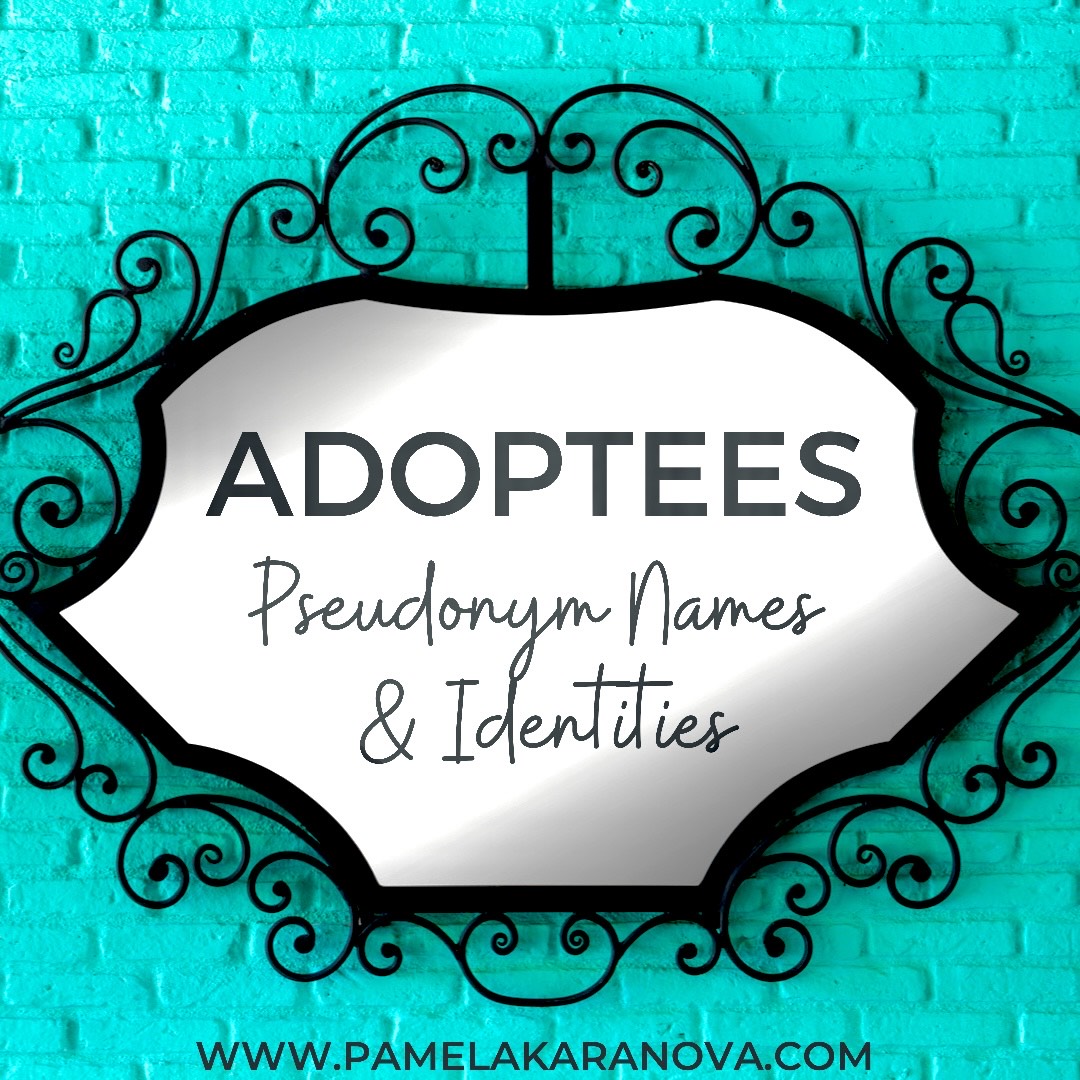
Adoptees, Pseudonyms & Identities

The topic of identity can be a lifelong paradox and struggle for many adoptees. It’s much easier for adopted individuals to tap into their true identity when they have the truth to guide them along the way. However, for many of us, we experience secrecy, lies, and half-truths as soon as we’re born and passed over to strangers. It’s challenging for some and impossible for others to gain a true sense of identity when we have no idea who we are or where we come from. No one looks like us, and we don’t see anyone’s face looking back at us when we look in the mirror. We all experience different variations of complexities when it comes to identity. 

It’s widespread for adopted individuals to have many names and identities in person and on the internet in the adoptee community. In the 11 years I’ve been present in this community, I’ve had my own experiences with my legal name, changing my legal name, and having several different identities on the internet in those 11 years.

There are many layers as to why.  

It can be confusing to many and downright annoying and concerning to others. Therefore, I wanted to take a few minutes to share my experience with this topic to hopefully help others who might not relate be able to understand better. 

For many adoptees, we’re forced to split between two worlds when we are born, surrendered for adoption and adopted by strangers. We’re parts of two worlds, yet usually denied one of them. Our DNA will always be a part of our first families, even when adoption tries to erase that part of our life. We are very much our first families DNA, and even with adoption legally changing our names to our new families. Many of us feel divided between two worlds. For some of us it’s internal and subconscious. For some of us, it’s like critical pieces are always missing. We create a split to protect the people around us, and to protect ourselves.

For most of my life, my legal name was Pamela L e e p e r. That’s right, L E E P E R. What does this name symbolize to me? A legal tie to my previous life, one I didn’t sign up for. It’s a legally binding piece of my life I had no choice in, that I wanted to divorce. It’s a tie to my painful past, the one where I didn’t sign any adoption paperwork. It’s a reminder of my abusive adoptive homes and the people who abused me in those homes. It’s a tie and reminder to an awful and painful childhood, teen life, and history. And let’s be honest, I don’t think I’ve ever felt a connection to this name, well, really because it’s only my name on paper, not via DNA. The Leeper family tree is not my family tree.

It can be if I pretend as I did in kindergarten for that family tree project.  

No one on earth will ever know the depths of it all, but I know it, and this name L E E P E R was a constant reminder of it all. I hated how it sounded, and I hated writing it. I hated having the life sentence of being attached to it. No disrespect to the Leeper family; however, this isn’t about them. It’s about me, my name, and why I chose to change it legally as well as seasons in my life where I used pseudonym names to protect myself. 

What did that process look like for me? 

How many years did it take? 

Who supported me? 

Who was against me?

In 2010, I started writing under a pseudonym, “Adoptee in Recovery,” which was a way to share my journey and protect my real legal identity. Some people refer to this as a “Pen Name.” Writing under a pseudonym name for me was fear-based. First, I was afraid of people I was close to learning how I felt about adoption because if they knew how I felt, they might just leave me too. Just like my birth mother did. I was afraid of judgment and ridicule. I was fearful of being shamed because if I felt these ways, I must not be praying enough or spending enough time with God. But, I didn’t just “Let it go,” so I chose to hang onto the pain. It was clear I had to create two separate identities and keep things separate, and my life depended on it.  

The idea of bringing these identities together caused me great anguish far deeper than someone not adopted could imagine. I lived in constant fear of “What If” my adoptive parents found my writings and disowned me for feeling the way I do? What if my adopted siblings learned how I felt? What if my biological family finds me and reads my writings? Will they all leave me? Will they be angry with me? How will it make them feel, knowing adoption has wholly wrecked me? What would they say if I wasn’t grateful for being adopted and I hated it with every fiber in my being?

Adoptees are professionals at putting others first, before our wants and needs. But, unfortunately, so many of us are groomed from a very early age that our adoptive parent’s feelings are more important than ours, so we tend to be hypersensitive to how they would feel from childhood. After all, shouldn’t we be thankful someone took us in when our own biological families didn’t want us?  Would they send us back or abandon us if they knew how we felt? It hung over my head constantly, and I knew WHY I was creating a dual identity. Almost everyone else had no idea. Likewise, I have learned that many people have no idea of the complexities of WHY adoptees have dual identities. Sometimes fellow adoptees don’t even understand it. 

I get it! 

The pseudonym name did a great job at protecting my legal identity. However, it was one more veil of deception because I hid behind a pseudonym; people didn’t know who I was or the real me. Nevertheless, the pseudonym name served an excellent purpose for that time in my life because I wanted to be protected from others who might look at my feelings as an insult or attack on them. 

I did what I had to do to protect myself. 

However, things change.  

It was clear when I made this decision that I was still hiding from many things, and if I’m entirely transparent, I did not have the inner strength or courage to share my true identity, not for many years to come. However, my courage and strength were building behind the veil using the pseudonym name little by little.

In 2012, I decided I wanted to be identified online as Pamela Jones. 

One more step towards genuine authenticity.

Pamela Jones was one step closer to me identifying the real true me. Jones was my biological father’s surname, and I had the chance to see his face in person in 2010. So I created a Facebook identity under this name and disguised behind it for about two years. I made many friends online under this pseudo name. I knew why I was using this pseudonym name, but reality hit me that I still wasn’t being true to myself.

Another dynamic to Pamela Jones was claiming this piece of my history and DNA, but that part didn’t claim me back. My biological father rejected a relationship with me because I have bi-racial children. His loss, I know, but it doesn’t make it hurt any less. This puzzle piece made me want to divorce from the Jones name because I didn’t truly fit in with that family, although we share DNA. We have no shared history or memories together. It was a paradox non adopted individuals can’t even comprehend. I wanted so badly to be wanted by my birth father, but the reality was even after finding him and meeting him, he doesn’t want anything to do with me. 

It was time I let go of Pamela Jones

*Disclosure Statement: I support the idea of adoptees or anyone using a pseudonym name, however I do not support anyone using a pseudonym name to hide behind an account that bullies, torments, stalks, starts cyber mobbing attacks, or is vile and cruel on the internet. They are flat out cowards!

In 2014, two years after I stopped drinking alcohol, I decided I had gained enough strength that I was going to get my last name changed. I had started coming out of the fog in 2009-2010, and in that time, I became empowered by connecting with other adoptees online and sharing my story. As a result, I had a new level of strength I had never had when sharing my Adoptee in Recovery journey. 

First, I decided to ask my adoptive dad if he would mind if I changed it. He expressed his thoughts and let me choose for myself. The next step was to find a new last name. I live in America, and it’s relatively easy and cheap to change your name legally.  I wrote an entire article called Pamela Karanova: Welcoming The Real True Me!. You guessed it, K A R A N O V A was the new name I legally chose to get changed on my 40th birthday. At this time in my life, I was consumed with the church, religion, and Christianity. 

KARA was another word for PURE. 

Philippians 4:8, “Finally, brothers and sisters, whatever is true, whatever is noble, whatever is right, whatever is PURE, whatever is lovely, whatever is admirable—if anything is excellent or praiseworthy—think about such things.”

NOVA was another word for NEW. 

2 Corinthians 5:17, “17 Therefore, if anyone is in Christ, the NEW creation has come:[a] The old has gone, the new is here!”

It was one of the most unique gifts I gave myself, a new name for a fresh start in my life. Part of me felt like it was divorcing the painful past that hung so tight by carrying the last name L E E P E R. This piece of me was dead and gone on to a new page and a new chapter.  The other part felt like I was finally controlling something in my life when other people controlled most of it. It was liberating, freeing, and exhilarating. Although I am no longer a believer, this new name was and is very special to me. 

I can honestly say that changing my last name legally was one of the most healing things I’ve ever done for myself. It was stepping into a new freedom of making a choice for myself that no one else had any say in. I wear this name so proud, and I love everything about it. It fits me. It is the new me. Today the “what if’s” that used to torment me have vanished into nothingness. I personally care more about being true to myself, than I do about offending others. I made a promise to myself several years ago, to always be true to myself and I will honor that until the day I die.

K A R A N O V A

I received 100% support from everyone in my life with whom I have relationships when I legally changed my last name to Karanova. The only person I heard disapproved of is name change is an aunt by adoption, who gave her baby away by adoption, and she talked down about my decision to get rid of her surname, L E E P E R. I do not have a relationship with her, nor do I care about her opinion. 

It’s currently 2021, and my only regret is not changing my first and middle name when I legally changed my last name. However, I know that in 2014 I didn’t have the strength to change my full name. My kids were still in school at that time, and I didn’t want to put them through the process of their mom changing her first name. 

One day, I desire to legally change my first and middle name, but I’m not sure yet what it will be, but I have a few ideas. Maybe for my 50th birthday? Maybe next week? I’m not sure yet, but I worry more about how other people will respond to this change and don’t want to inconvenience people to try to remember a new name for another chapter of a new me. Finally, one day I will get up enough strength to “Just Do It,” and at that moment, I will have reached another milestone of stepping into genuine authenticity.

I think it’s important to remember that all adopted people are transitioning to a new person every step of the way. Every time we get a piece of the puzzle, it changes us in some way. Although most people have the truth handed to them when they are born, they can’t comprehend what it’s like to fight for your truth your entire life and be spoon-fed pieces of the puzzle over a lifespan. It’s a different kind of life, and one only other adoptees will understand. 

I have learned from my journey of discovery that all of my names have been very symbolic to me and my healing journey. They have each served a great purpose to help me feel safe, depending on whatever space I was in at that time. I can’t speak for all adoptees, but when I see adoptees change names, and hide behind a pseudonym name, I can say from the bottom of my heart, “I GET IT AND I UNDERSTAND.” Sometimes these extremes go with the territory of being an adoptee and finding ourselves when our truth has been kept captive for so long. I’ve seen adoptees attach four and five last names to their names as a way to honor their birth mother, birth father, adoptive mother, and adoptive father. I’ve seen them change their names more times than I can count.

Being adopted is complex! 

As you can see, identity plays such an essential part in the dynamics of the adoptee experience, and this is directly reflected in how we represent ourselves in the names we are assigned at birth, changed by adoption and the ones we choose for ourselves. 

If you are a non-adopted individual, hopefully, this article sheds a little light on why names and identity go hand in hand with the adoptee experience. Hopefully, you understand a little better. Be easy on the adoptees in your life, and accept whatever places they are in regarding names and identity. We weren’t offered the privilege non-adoptees are given. Many of us have to fight the world for our truth, and every clue we get to who we are and where we came from opens a new door of self-discovery. Change is going to happen—identity matters. 

If you are an adoptee who’s considering changing your name, legally or online, I am cheering you on. With every fiber of my being, I understand how we can spend our entire lives getting to the point of finding strength from within ourselves and the courage to push forth with an outward expression of legally changing our names or even creating pseudonym names for ourselves. 

Every step of the way, healing is happening. 

For any adoptees who have changed their names legally or created pseudonym identities online, I would love to hear your stories on how you navigated this piece of your journey? Why did you pick the name you chose? Have you wanted to change your name but haven’t done it yet? Why or why not? 

Whatever you do, be true to yourself and follow your heart. 

Put yourself first. 

You deserve it. 

Don’t forget this article along with all my other articles are available in audio for your convenience, just look up Pamela A. Karanova Podcast on Google Podcasts, iTunes , Spotify. and Amazon Music. Interested in treating me with a coffee, to add fuel to my fire? Click here. Many thanks in advance to my supporters!

Love, Love

*The views and opinions expressed in this article are that of the author, Pamela A. Karanova. Reproduction of the material contained in this publication may be made only with the written permission of Pamela A. Karanova
Adoptees, Mental Health & Daily Self-Care

Once again, I’m noticing a significant amount of changes in the adoptee community, and it’s helped me reevaluate and reorganize my commitments on where I stand within this community. We all have the abilities to make these choices for ourselves.

Back in 2010, when I started to emerge from the fog, Adopteeland (the online adoptee community) was a welcoming place to be in. It was a light to not only me but hundreds of thousands of fellow adoptees. We made online friends, we built online relationships, and we helped one another online when the other was down. 

I remember all of the “aha” moments I experienced in hearing other adoptees share their stories, and little by little, my story started to come out just like the adoptees I knew that shared their stories before me. It was empowering. I was finally able to tap into my deep-rooted issues that stem from being relinquished by my birth mother and being adopted into an abusive adoptive home. I started to share my feelings little by little, and it was validating and freeing in many ways. Eleven years of being completely consumed in Adopteeland has passed, and I’ve learned many things in that time. 

Part of sharing my feelings on my website has been for my healing, but it’s also to help my fellow adoptees who might be reading from afar so they know they aren’t crazy for feeling the way they feel. Our feelings are expected for a not normal situation. Nothing is normal about being separated from your biological mothers at the beginning of life. 

As years have passed, I saw the recognizable need for adoptee-centric spaces that meet in person, in our neighborhoods, and our communities. After a close call with my contemplation of ending my life in 2017, I decided I wanted to take all the pain I was carrying from my adoption experience and do something positive with it. For me, I describe it as finding purpose in the pain. It’s saved my life to create Adoptees Connect, Inc. In return, the resource itself has saved the lives of many adoptees around the USA and beyond who attend our in-person groups. 

Around 2018, I noticed an overwhelming and alarming amount of cyberbullying and cyber mobbing in Adopteeland. It was disturbing in every regard. I have seen fellow adoptees bully other adoptees to the point of attempting to take their own lives. It was so disturbing to see, and I created an Adoptees Connect Social Disclaimer because of this activity. I decided that any of the platforms I am a part of cannot and will not turn a blind eye to this type of behavior.  All of our volunteers and facilitators must agree to abide by this disclaimer to join our organization. 

I was hoping many of the other organizations in Adopteeland would follow suit, but sadly I have been greatly disappointed in that area. 

Let me be honest, aside from the adoptee vs. adoptee discord, the internet, in general, isn’t a safe space for anyone. Adopteeland is filled with triggers for adopted individuals, and time and time again, I see the fallout from these events. Someone is always getting hurt, and that’s never a good feeling. Adopteeland, just like the internet in general, is a breeding ground for keyboard warriors to flex their muscles and mistreat people disrespectfully and downright awful. Many people have big balls on the internet, even women. I have seen adoptees turn on other adoptees or adoptee-centric organizations and the drop of a dime. It doesn’t matter how much good they have done in the adoption community. This is the same community they wish to protect and care for. No one can be trusted on the internet. All of my real adoptee friends are ones I connect with offline, off the internet. There is a small group of them, and they know who they are. 

Because of the increasing toxicity of Adopteeland and the internet in general, I have decided to make some very significant changes for myself, and I hope you consider doing the same. First, I had to self-reflect and ask myself how these interactions with other adoptees and organizations made me feel? Do I feel consciously good about them, or do they leave me feeling drained, sad, depressed, isolated, and alone? Do they trigger me? How do I respond to the triggers? Are they interfering with my quality of life?

A lot of the time, I had so many fires in the oven all over Adopteeland, I sacrificed my time as if my commitments to Adopteeland were a full-time job. I knew the commitments created needed resources, and they were areas that had never been touched in the adoptee community before. I held my commitment to Adopteeland as one of the primary and most significant commitments of my life. This is 11 years of time I can never get back. 

I can’t lie; it’s taken a toll. 

I woke up one day and learned I had been misled by this community I put so much trust in because I saw what they would do to others. I knew they could do the same to me. Adopteeland can and will turn on you in a heartbeat, stab you in the back, and LITERALLY leave you for dead. Most of them don’t care about you. You are just another adoptee on the internet. I have seen adoptees set up cyber mob attacks towards other adoptees or organizations and not think twice about the person they are cyberbullying or what they might be going through in their personal lives. After many years of seeing my fellow adoptees get dragged through the mud, I realized I could no longer witness such travesties. My heart hurts and hurts deeply when I see these interactions online, and it aches me to the core to see adoptees harm fellow adoptees. This is not the community I want to put my hope, trust, and time into. This is one of the main reasons Adoptees Connect groups meet in person in real life. To bypass the internet and build genuine in-person relationships.

It’s life or death for many of us. 

Don’t get me wrong, there are adoptees worldwide whom I have built relationships with online and who mean the world to me, and I will never meet many of them in person. They aren’t included in the Adopteeland problematic scene. They are kind, loving, compassionate, and would do anything for the adoptee community. I would do anything for them. They know who they are. 

Adoptees are tender individuals, and no matter what anyone does that I don’t agree with or dislike, I don’t have a right to cyberbully them or set up cyber mobbing attacks on that adoptee or an adoptee-centric organization. If I was to lower myself to that type of activity, it’s CLEAR that Adopteeland isn’t a place for me. 

I think it is safe to say the old days of Adopteeland back in 2010 are dead and gone, and for my mental health, I have had to disconnect and release myself from 99.9% of adoptee-centric spaces on the internet. Let me be honest; I don’t give my time too much on the internet these days. I have a beautiful life to live, and I don’t like the primary bloodsucker (internet) stealing the most valuable thing I have, my time.

Another dynamic to my mental health is not over-committing myself to adoptee/adoption-centric responsibilities. I sometimes think, as adoptees, when we find the online community, we get so excited we jump all in headfirst. But the kicker for many of us is that we forget to swim back to shore and find life again. It’s sometimes tough, if not impossible, to find a happy balance between life outside of adoption commitments and to be adopted and finding happiness in the world. 

For me, Adopteeland and adoptee-centric activities have drained the life out of me. I think it’s so important that we listen to our bodies and make changes when things aren’t bringing us solitude and happiness. It’s essential that we learn that many things are for a season, and we’re not supposed to sit in Adopteeland or the Adoption arena FOREVER. It will keep us stuck, and I am a prime example that it’s kept me stuck for a long time. 

I don’t regret a minute of my time in Adopteeland, and I am not disappearing. However, I have to put my mental health first because my mental health suffering was impacting my physical health. I encourage anyone reading this to listen to your bodies and what they are telling you. It’s okay to back out of commitments and also prioritize them. 

Adoption and Adoptee related topics are draining AF. The internet and Adopteeland are draining AF. Self-care is an essential dynamic to being knee-deep in something as heavy as adoption. I have developed a very effective self-care routine, and most of the things I do to take care of myself have nothing to do with adoption other than writing. For me, this means removing myself from ALL THINGS ADOPTEE/ADOPTION at times. My self-care routine are the things I’ve found that re-energize me and allow me to stay grounded and centered. Hiking, walking, writing, reading, bonfires, sunrises, sunsets, outdoors, spending time with my kids and loved ones, my dogs, arts and crafts, kayaking, tending to my plant addiction, etc.

Staying in something so heavy so much of the time can and will impact our quality of life. 

I challenge you, if you are an adoptee in Adopteeland spaces, to be mindful of your emotional, mental, and physical health being challenged. Be aware of your interactions on the internet, with others and how you treat people, and how you allow them to treat you. Be mindful of the triggers you experience and how your body responds to the triggers. Adopteeland can be an unhealthy place to be involved in. In the beginning, it’s like you finally found your tribe, a euphoric feeling. It has a lot of pros to it, but all of a sudden, you get sucked into something, and your whole life is consumed into it, from the minute you wake up to the minute you lay your head down at night. Nothing as heavy as adoption can be healthy without consistent and committed self-care and a healthy balance.

Every. Single. Day. 

If anyone on the internet has mistreated you, adopted or not, I encourage you to report them if possible and block and ban them from all of your platforms. However, if you are the creator of a platform and allow this behavior to occur on your platform, I would like to ask you why you let abuse happen? Turning a blind eye, you are no better than the cyberbully or emotional abuser. I used to have a loyalty to the adoptees in Adopteeland, but that ship has sailed and sunk to the bottom of the ocean. Unfortunately, there are many problematic adoptees in Adopteeland, and I will not tolerate anyone’s bullshit. Period. 

We have to realize that sometimes people make mistakes in person and online. We’re all human beings, and we don’t always get it right. If you make a mistake and have tried to right your wrong, and someone won’t allow for an honest, professional, and open dialog to find a solution for the mishap, you can walk away. If someone drains the life out of you, you can walk away. If anyone is bullying you and cyber mobbing you, you do not have to tolerate this behavior. I wonder what the online cyber bullies would do if they pushed another human being over the edge to end their lives? Would they still advocate for adoptee suicide?

WALK AWAY. 

REPORT ABUSIVE BEHAVIOR. 

BLOCK. 

BAN. 

DELETE. 

Adoptee Remembrance Day – October 30th is approaching. I picked one day on behalf of Adoptees Connect, Inc. to be a day we highlight Adoptee Suicide and all the other dynamics ARD symbolizes. I thought long and hard about this. One day was picked (over a week or month) because of the sensitive nature and focus of the day and how it can impact the adoptee community long term. One day seemed like a better idea than a week or a month because I worry about the mental health of anyone participating in such sensitive topics for a longer duration than a day. 

I am noticing the rise of a three-month highlight, starting with September being Adoptee Suicide Awareness Month, followed by October and November trailing on with some of the same highlights. I commend all adoptees who are pouring their hearts and souls into bringing awareness on such an important topic for the adoptee community. I support each of you!

First, of course, November is National Adoption Awareness Month, and it’s heavy and triggering for adoptees in its own way.  I worry significantly and even gravely for the mental, emotional, and physical well-being of all the adoptees participating in these topics for up to three months in a row. Do they have the resources they need? Are people spreading love and light during a difficult time? Who’s on standby when someone is on overload with emotions piling up during such a lengthy focus on such a excruciatingly painful topic?

I know for sure, my emotional and mental well-being can only take one day of it, and I am dedicating that day to Adoptee Remembrance Day. After that, I can not and will not be able to participate in more. It’s just too heavy. I would die committing to more, and I am not saying this lightly. 

One of the main points of me writing this article is that I’m worried about the adoptee community, and I see some awful interactions happening that are harmful and hurtful to the productivity of so many amazing causes. I’ve witnessed dark sides of adoptees I have known online and loved for years that I never thought I would see. In experiencing and seeing these things, I will continue to take steps back away from the same community I have poured my heart and soul into for 11+ years. My main focus is Adoptees Connect, Inc., and that’s the only commitment I have time for these days. Keep in mind, while Adoptees Connect does have a social media account on Facebook and Instagram, the root and main focus of the entire vision of the organization is creating OFFLINE adoptee-centric spaces that meet in person, in real life for many of these reasons. That’s where I choose to put my focus, time, and energy. I can’t get sucked into online drama, and I avoid it to the fullest at all costs. 

Please be careful with your online interactions and the amount of trust you put into Adopteeland. Please give yourself the gift of walking away from anything, anyone, and everything that doesn’t serve your emotional, mental and physical health positively. If Adopteeland is too triggering for you, either walk away entirely or set yourself boundaries and participate in small microdoses. Understand and recognize when your time’s up, and you can cross over to finding other fulfilling things in life. If you don’t do it on your own, your body will do it for you!  

Take care of yourself, and above all things, please put your Mental Health first. 

For any adoptees struggling right now, here are some Recommended Resources we have listed on the Adoptees Connect website. Please share them in your online communities.

Don’t forget this article along with all my other articles are available in audio for your convenience, just look up Pamela A. Karanova Podcast on Google Podcasts, iTunes , Spotify. and Amazon Music. Interested in treating me with a coffee, to add fuel to my fire? Click here. Many thanks in advance to my supporters!

Love, Love. 

*The views and opinions expressed in this article are that of the author, Pamela A. Karanova. Reproduction of the material contained in this publication may be made only with the written permission of Pamela A. Karanova
The Fight of My Life Revised

THE FIGHT OF MY LIFE – REVISED 

by Pamela Karanova

August 13, 1974, the fight began,

The minute I was born, my birth-mother ran.

 Conceived out of a drunken one-night stand with a married man,

Did my tiny body ever feel her warm, soft hands?

A sacred bond would be broken too soon,

 I can imagine the sorrow in the delivery room.

I spent the next four days in the nursery all alone,

But I’ve always wanted to know, 

Did she name me?

Did she hold me?

Did she love me?

Did she think about me?

Who was she? 

Just like that, at the stroke of her pen,

She never wanted to see me again. 

She signed the dotted line robbing me of the history that was mine. 

My birth father knew nothing of my existence.

During her pregnancy, my birth mother was persistent in keeping her distance. 

My history is to be forgotten.

Adopted Unknown

Case Closed

Records- SEALED!

Parents unknown

THE FIGHT OF MY LIFE

I was born fighting, the fight of my life.

Will I ever know my birthright?

What was the beginning of my life like?

August 13, 1974, the fight began. 

The minute I was born, my birth mother ran.

She snatched up my truth, and she took it and fled.

“She loved you so much” is all that was said.

How do you love someone and leave?

I’ve accepted love is a topic that isn’t for me. 

Baby Girl A was looking for a forever home,

 Adopted by a couple who couldn’t have kids of their own.

An outsider looking in is all I’ve ever known.

My truth is kept captive,

 Did they forget that one day I would be grown?  

Who’s fingers and toes do I have?

Why am I so tall? 

When she signed the dotted line, she took it all.

It’s time for me to take back what was taken from me.

I’m going to fight for what’s mine.

 My birth mother is the woman I’ve dreamed about knowing since the beginning of time. 

After spending a lifetime of searching all around, 

I experienced the biggest letdown.

 My biological parents didn’t want to be found. 

My heart shattered in a million pieces all over the ground. 

Abandoned and rejected not once but twice.

By the two people who should love me the most.

For many years, I was a walking dead woman, invisible like a ghost.

 Most of my life feeling hollow and empty inside.

 A dark cloud followed me everywhere I went,

Most days, it wasn’t easy to get out of bed.

Alcohol took the pain away for 27 years.

 As long I was running from the tears,

 The pain will never disappear.

 I have children to live for, 

And I wanted to preserver.

August 13, 2012, was the day I put that alcohol back on the shelf.

Now it’s time to start the lifelong process of finding myself. 

It’s been almost nine years of processing pain, living alcohol-free.

 I’ve been able to embrace the journey of finding me. 

Fighting for my truth has been the fight of my life,

This has been one hell of a fight.

Now that I have my truth,

I can see the light.

None of us can control the hand we were dealt.

But I recognize adoption has caused me the most pain I’ve ever felt, no doubt.

I’ve accepted these were the cards I was dealt.

I’m tired of being sad, and I’m tired of being mad.

I’ve learned the grass isn’t always greener on the other side.

What’s the key to healing for me?

I needed to be the one to SEE instead of everyone else telling me.

Adoption has caused me the most pain of my life but turning this pain into purpose is the only way I’ll survive.

TODAY I’m an adoptee in recovery, and I deserve to thrive. 

THIS IS MY ADOPTEE REALITY

THE FIGHT OF MY LIFE

Don’t forget this article along with all my other articles are available in audio for your convenience, just look up Pamela A. Karanova Podcast on Google Podcasts, iTunes , Spotify. and Amazon Music. Interested in treating me with a coffee, to add fuel to my fire? Click here. Many thanks in advance to my supporters!

Launching the Pamela A. Karanova Podcast – Finding Purpose in the Pain – One Adoptees Journey from Heartbreak to Hope and Healing

I’m excited and honored to share a project I’ve been working on for a long while now, months to be exact. I consider this project a gift to the adoption community, and I hope somewhere along the path of life, it helps others. I know convenience usually wins, so my goal is to offer something that might otherwise be inconvenient specifically to my fellow adoptees.

I want to share a little backstory on how I got here. I’ve been working on a memoir for many years, but every time I start it, something happens, and I have to set it to the side. So after 10+ years of trying to write a memoir, I have concluded that memoir writing is not for me.

To be completely transparent, my life is busy and very active. The last place I seem to want to be these days is sitting in front of the computer, spending a lot of time on it. So small doses for short amounts of time seem to work better for me at this stage of my life.

My website has always been a place of freedom because I can share feelings here without anyone interrupting me and telling me how to feel. So many years of my journey are written and shared on my website in chronological order, back to an open letter to my birth mother I wrote in 2012.

It recently dawned on me that my website is my memoir. So I decided to spend some time transferring all of my old articles to audio via the Anchor FM platform via the Spotify platform. Talk about a time-consuming task! I have written over 200 articles since 2012.

This way, my friends, family, and supporters can tune into several mainstream platforms like Spotify, Google Podcasts, and Radio Public to listen to my articles. My words can reach adoptees and people in the adoption community all around the world. I know time is of the essence these days, and people don’t have time to sit and read as they used to. Listening to books on audio and podcasts has become increasingly popular with almost everyone because our lives are so busy we can fit them into the hustle and bustle of life and keep it moving.

One of the most excellent parts about this transition is the growth I can see in myself and my journey over time. In 2012 I wasn’t as seasoned as I am now, and I was beginning to articulate my feelings about being adopted. I was a baby finding my voice. You can tell I was transitioning out of the fog, and over time I’ve learned to spread my wings like a butterfly and continue to share my story. It’s not been easy, but I know I have reached adoptees all over the world, and they are the reason I keep writing. In healing myself by sharing my story, I am helping others heal and gain courage in sharing their voices and stories.

While I wholly support all the memoir writers out there, my dreams of writing a memoir have dissipated into nothingness. It’s not a sad thing or a bad thing. It’s the reality for me and where I am in my life. So I’m celebrating releasing this task from my plate. I hope you celebrate with me.

As I move forward with a new phase of creating the life I want to live, I hope to spend less and less time in front of electronics and more time out in nature, running wild and chasing waterfalls. Instead of writing a memoir, I want to live my future days filled with adventures and spending time with those I love. I want to take road trips and be living my life.

As a self-care technique, I have chosen to leave almost all online adoptee spaces as they aren’t healthy for me, and I am eliminating as many unnecessary commitments and responsibilities from my life as I can. Not just in the adoption community, but everywhere. As a result, you might see less of me online in adoptee-centric spaces, and you might hear less from me in the days to come. If you follow my social media, that will be the best way to keep in touch, but please understand as I distance myself from the online world, I might take longer than expected to respond, and sometimes I might not respond at all. It’s nothing personal.

Let me be transparent; being in the adoption community for over ten years it’s taken a toll on me. However, as I come to a healthier place as each day passes, I have to set new boundaries for myself. In that, I’m stepping away from many activities I have been a part of, and I’m writing a new life for myself. Adoption has taken so much, and it’s time I take it back and enjoy my life with my friends and family. I still plan on writing but that will be the main place you will hear from me so be sure to follow along if you are interested in keeping in touch.

While I share the launching of the Pamela A. Karanova podcast with you, please be advised that this article is my first recorded podcast in my unique voice. To pull this migration off semi-timely, I had to convert the first 200 articles over with a digital voice that is NOT mine. You would be surprised how long this took by itself. I knew there was no way possible I could record the last ten years of articles in my voice and get it done anytime soon. That would be dead, just like the memoir.

Moving forward, I hope to have all my articles uploaded to the podcast in real-time so they will be available in my voice for you to take a listen while you are on your way to work or working out at the gym.

Be sure to follow along on Spotify and share this gift with your friends, family, and followers. You never know who might be impacted by a country girl from Iowa sharing her story!

Thank you to each of you who has supported me this far! I thank you and appreciate you more than words can express.

To visit my podcast, visit here- Pamela A. Karanova Podcast

Don’t forget this article along with all my other articles are available in audio for your convenience, just look up Pamela A. Karanova Podcast on Google Podcasts, iTunes , Spotify. and Amazon Music. Interested in treating me with a coffee, to add fuel to my fire? Click here. Many thanks in advance to my supporters!

Here’s my most recent article on my Podcast.

Earth Day, Mother’s Day and My Adoptee Epiphany

Today is Earth Day, and Mother’s Day is right around the corner. What does each of these days mean to me, being an adult adoptee? 

Let me back things up a bit and explain what my experience was like with my earthly mothers.

My first chance at a mother did not want to mother me.

My biological mother didn’t want me, so she passed me over to strangers. After a lifetime of searching for her, dreaming, and wishing we would cross paths one day, my one true dream of finding her and having a relationship with her was shattered all over the ground. We met one time briefly in 1995, and that was the last time I ever saw her. What felt like a cold-hearted rejection was her not being able to navigate the pain of her decision and hearing how my life turned out. The better life promised wasn’t better at all. Only different. She felt a deep sadness over learning this reality.

That didn’t change how this rejection has made me feel and the truth that it’s impacted every area of my life. She abandoned me not once but twice. The ultimate betrayal from my biological mother has been the most significant wound I have ever carried, even compared to what other people would consider major traumatic events.

This deep mother wound and disappointment has been impossible to shake, and it will be with me for life. I’ve accepted the pain was here to stay, and that was one of the most healing things I have done for myself. Nothing on earth and no amount of pain I have ever felt compares to this wound. She died in 2010, and I hadn’t had contact with her in over 25 years.

It’s deep. It’s raw. It hurts.

My second chance at a mother could not mother me.

My adoptive mother wanted to be a mother so bad, but the reality was she was so mentally ill, she couldn’t parent me. Instead, I suffered greatly because of her mental health issues. She should have never been allowed to adopt a child, let alone two. My adoptive dad divorced her when I was one years old, and knowing she couldn’t care for us be left and moved over an hour away to remarry, and raise three stepsons as his own. My childhood in my adoptive parent’s homes was filled with traumatic experiences that have impacted every area of my life. I’ve spent years recovering from these experiences and a lifetime of seeing how things shouldn’t be. I never bonded with my adoptive mom, and I despise the facts that I was forced to pretend she was my mother.

The lengths of trauma I experienced in these homes have riddled me with anxiety, fear, and the loss of what so many of us deserve and need, and that’s an opportunity at decent mother and a safe place to live. I didn’t need perfect. I didn’t need a big house, fancy cars, and all the material things money could buy.

I just needed one halfway normal, decent mother.

She was suicidal, manic-depressive, and had severe issues that stemmed back to her childhood. She tried to commit suicide by lying in the street, and she would consistently lock herself in her room and take all her pills and the phone with her letting us know as children she’s about to end her life. We would bang outside her bedroom door, for hours begging her not to die.

She was hurting, and instead of work on her hurt, she adopted two daughters to take care of her. Her main goal was to have two daughters to care for her so she wouldn’t have to go to a nursing home. How do I know? Because back to my early childhood, she talked about not wanting to go to a nursing home, more than she talked about just about anything. Because of the toxicity she brought to my life and because she would not abide by common courtesy boundaries I tried to put into play, we were estranged for several years before she died. I don’t regret choosing to separate, as my recovery and being alive depended on it. That doesn’t mean it wasn’t hard. It was the hardest decision I have ever had to make.

I am sad I had to make such a decision but I did it for myself and my kids.

My third chance at a mother figure, I call my Step Monster.

My adoptive stepmother is no one I consider a mother. She has protected her pedophile son over believing me for 46 years. She has turned a blind eye and has chosen to defend him repeatedly. I won’t go into all the details, but she has never been and never will be anyone I consider a mother figure. We have never been close or had a relationship. For my peace of mind, after being ignored for 46 years about the pain her son has caused me and countless others, I have had to sever ties with her too.

Three chances in the mother area, and I struck out.

Every.

Single.

Time.

While my heartache as a child and teenager is hard to put into words, my experiences in my adoptive home and the abandonment from my birth mother lead me to some dark places. I spent most of my juvenile life as a runaway and locked up in detention, drug and alcohol rehab, and group homes for most of my teen years. I was hurting and hurt people hurt people.

Mother’s Day has always been painful for me as it is for so many people, adopted or not. Some people are sad at the loss of a mother they spent a lifetime getting to know, where they have thousands of memories to hang onto forever. Pictures to reminisce and remember. I get sad because I didn’t get that, and there are no memories to hang on to, to keep forever. I have emptiness, sadness, and abandonment issues that continue to revisit me. Processing grief & loss are going to be with me for life.

I’ve accepted it.

I’ve also accepted these were the cards I was dealt. For the last 11 years, I have been on a healing journey. If you read back over my website, you can see the changes and growth that have transpired over the years. In that time, you will see that nature is something I gravitate towards, and if you follow any of my social media, you will see waterfalls and Mother Nature have a considerable space in my life.

You see, nature, aka Mother Nature, has been a sacred space for me since my early childhood, growing up in the country in Iowa. Inside any of the homes, I was in was chaos and trauma. So outside, running wild in the forest was the only freedom I had as a child. It was healing for me, and it was an escape. It was one of my first loves, along with the sky. Read “The Sky & I” to learn more about my tie to the sky.

As I circle back around and will soon be celebrating nine years of living a life free from alcohol, I’ve been reacquainted with my first love, Mother Nature. Of all the areas I’ve been incorporating into my life for self-care reasons, nature has always been the only one always to be dependable and always there. It wasn’t my birth mother, or my adopted mother, or my step monster.

It was and is MOTHER NATURE.

Bucket list Adventure, Pine Island Double Falls – Daniel Boone National Forest, Kentucky

As Earth Day is here and Mother’s Day is to follow, I am making a conscious choice to redirect myself to focus on the mother who’s always been there – Mother Earth.

As I discover who I am, I have found joy in adventures in the Kentucky forest by chasing and finding waterfalls. Kentucky is filled with over 700 waterfalls, and exploring nature and taking as many people as I can is one of the most powerful healing tools I have yet to find. Trust me when I tell you, I have tried it all. Between 27 years of alcohol dependency, church hopping, religion, other people, places, and things, nothing has provided me with what mother nature has.

Many aren’t aware, but there are healing dynamics to being close to, in, or near bodies of water. I always felt it, but I never knew it was an actual thing. I have a friend and fellow adoptee in recovery named David B. Bohl, and David is an advocate of BLUE MIND.

Q. What is Blue Mind?

A. Blue Mind: A mildly meditative state characterized by calm, peace, unity, and a sense of general happiness and satisfaction with life in the moment.

It’s also described in the book Blue Mind: The Surprising Science That Shows How Being Near, In, On, or Under Water Can Make You Happier, Healthier, More Connected, and Better at What You Do

David shares, “As many of you know, I am a student of Blue Mind science, an advocate for Blue Mind methods, and a practitioner of Blue Mind daily living techniques.  There is no doubt in my mind and experience that proximity to, and engagement in, water provides physical health, mental health, and spiritual/relational benefits that have been scientifically identified – and are essential in today’s stressful world.”

Please check out David’s full article here – Blue Mind and Addiction Recovery

Coming to know David as a friend and fellow adoptee in recovery, we have discovered that we have many things in common, but our love for being near water is one of them. David shares online his outdoor trips in and near water, and I do as well. Mine are usually running off into the forest to chase waterfalls all over the state of Kentucky. We aren’t too far from our next adventure close to a body of water, whatever we are doing. Thank you, David for your continued inspiration over the years!

Surprisingly, after reading the beginning of the Blue Mind book from David’s recommendation, I learned that the author of Blue Mind, Wallace J. Nichols is also an adoptee. I will not lie; something about that shook me up! I had no idea he was an adoptee, but I was so excited to now know of 3 adoptees who have found the healing and therapeutic benefits of being close to water. I can’t wait to read the rest of his amazing book! I’m sure there are many more adoptees who find healing around bodies of water.

While 2021 is moving swiftly and Earth Day is here, I’ve been thinking of ways to connect to Mother Earth and give back to her and to give to others in the process. I can reflect on my childhood up to my current days. I no longer drink alcohol to cope with adoptee pain, and I celebrate nine years of sobriety in August 2021.  This is a massive milestone for me, especially finding both birth parents and learning they are both alcoholics.

One of the things I’ve learned about recovery is that you need to replace it with something else when you remove something. My connection to mother nature has become exceptionally strong in the last nine years. I consider my nature adventures as one of the most effective self-care practices I have yet to discover.

While I think of all Mother Nature is to me, and how she’s been there over my earthly mothers, and she’s never let me down, I get emotional. My truth that no one can come between that connection or take it away is something I think about a lot. Even back to my childhood, she’s been there for me and continues to be there. I call it wilderness wellness, and it’s FREE.

Top of the falls, ya’ll.

I like to combine my mother nature adventures with not only seeking waterfalls, but getting wet and dirty and not thinking twice about it. I think many times we’re groomed from childhood to not get wet or dirty. I see countless people never want to get their feet wet, or get dirty and it pains me to see. Water and dirt have never hurt anyone. Take your shoes and socks off, get in the water and get dirty. I promise you, you won’t regret allowing yourself to be free in this way.

It could mean putting your bare feet in the grass (grounding) or taking a walk outside at your closest park. One of my main goals in life is to encourage people to seek wilderness wellness in their backyards because we all have endless adventures in our state, and most of the time, they are free. You might need a tank of gas and a few snacks. My discovery of how Mother Nature fills me up has been rejuvenating to my mind, body, and spirit in many ways. My adventures are a combination of forest bathing, hiking, nature play, blue mind, grounding, walking, and doing everything in my power to be a kid again. I feel like I’ve been searching for home my entire life, and finding Mother Nature has brought me back home.

As Mother’s Day can be perplexing for adopted people at best, I have decided I’m going to honor Mother Nature for Mother’s Day moving forward. I’m a firm believer that we can all write our stories to suit what fits us the best. Focusing on the mothers that failed me is agonizing. I believe each Mother’s Day will still feel a sense of sadness when it comes to them, and I’ve accepted I always will. I will save space for processing that pain; however I need to process it.

I want to try to shift my focus on how much Mother Nature has done for me and Earth Day – today is HER DAY. I wanted to write this article dedicated to her, to share how much she means to me. It’s not all about what she does for me, but what can I do for her? I salute HER and will do all I can to take care of her moving forward.

I’m not sure where you are with your healing routine and your self-care regimen, but I encourage you to add some wilderness wellness to your self-care toolbox and share it with your friends & family. I love taking elderly people to nature because they are a population that is lacking that resource due to mobility limitations and many other roadblocks.

For me, when so much is lost, never to be seen again because of adoption, I get comfort in knowing that Mother Nature something no one can take away from me. Today I celebrate Earth Day for so many reasons! Mother’s Day I will celebrate being a mother to three incredible humans and Mother Nature because she’s always been there for me. If you feel like following along on my Into the Wild: Kentucky Wilderness & Waterfall Adventures please like my Facebook page today by clicking here. You can also find me on Instagram under @intothewildky.

 Here are a few of my outdoor adventures shared with some of my friends & family. I encourage you to escape for some nature play and wilderness wellness. You might find what you have been searching for all along.

Do you like to get outside in mother nature?

Do you find it to be healing and theraputic around bodies of water?

If so, what are your favorite nature things to do?

How are you celebrating Earth Day and Mother’s Day this year?

What do you do to cope with Mother’s Day if it’s a hard day for you?

Don’t forget this article along with all my other articles are available in audio for your convenience, just look up Pamela A. Karanova Podcast on Google Podcasts, iTunes , Spotify. and Amazon Music. Interested in treating me with a coffee, to add fuel to my fire? Click here. Many thanks in advance to my supporters!

Thanks for reading,

The views and opinions expressed in this article are that of the author, Pamela A. Karanova. Reproduction of the material contained in this publication may be made only with the written permission of Pamela A. Karanova
Do not assume when an adoptee finds their biological family, all their problems will be solved, and the case will be closed.


They say to prepare, but there is no real way to prepare for what some adoptees find when they make the choice to search for biological family.

Searching for and finding biological family as an adoptee is opening up Pandora’s box repeatedly. It is the beginning of a new era of uncovering the secrets that so many think they have protected us from. Even under the best of reunion stories, it is still the beginning of a new painful path that adoptees experience.

If we’re lucky, one door closes, and another door opens. And that’s just it if we’re lucky. Society says at least you have found your truth when so many other adoptees would die to find theirs. Even when the truth has been excruciatingly painful, society thinks we should still feel LUCKY. Even our fellow adoptees suggest this at times, and I understand why they feel this way, mainly when they haven’t found their biological families yet.

I think our friends, families and loved ones sense us in agony before we search and find and in all honestly they hope we will feel “better” after we find out truth. However, when they still see us in agony after we reunite, it hurts them to see us hurt. They want to take our pain away, and they have high hopes reunion will do that. Truth and reality is, it usually doesn’t. It brings on a new set of heartbreak, pain, grief and loss.

Searching and finding biological family, I like to describe it as trading one type of pain for another. Both types of pain are different but equally painful. The pain of the unknown for adopted individuals is like the feelings a parent might have who has a missing child somewhere out in the world. Imagine your 10-year-old child was abducted on the street, and they vanished with no trace ever to be found. The agony that parents must feel every waking moment of every day having their child missing.

Adoptees think similar to this, but it is not just one family member. It’s their very own mother, father, grandparents on both sides, siblings on both sides, and cousins on both sides. We’re on an island all alone, searching in our minds from the moment we find out we are adopted for our biological connections. This is painful from the very beginning. If you don’t think so, I would like to ask you how many adopted individuals you have gotten to know and listened to their stories over the years? I have gotten to know hundreds, if not over a thousand, and not one of them has said adoption has been 100% wonderful. It’s complex, emotional, and painful at best.

Can you imagine what it feels like to not know what your mother looks like?

Or her name?

I know you can’t because it’s unimaginable.

The big difference is, parents of missing children are expected to feel the feelings they feel having a missing child. Society saves space for them, their grief and loss. They have some memories to hang onto, and they have their child’s names and they know who they are. My heart goes out to these parents, because I know it’s a nightmare on every level but I wanted to describe the difference in what adopted individuals experience.

At all costs, we are just supposed to be grateful. If we aren’t, we are labeled as ungrateful, angry, and many other hurtful words.

This is not helpful to the adoptee experience.

To feel whole, complete, and like I was an actual living human being, I had to find this woman that gave birth to me. I had to see her face and know who she was. I fought the closed adoption laws in Iowa like HELL to find her. If I didn’t, I would be dead right now. In my mind, this would solve all the pain I experienced and the heartache I lived with my whole life all the way back to coming home from the hospital with strangers at a few days old.

Living in the unknown is a different type of pain. It was for me anyway. I describe it as agony. Every waking moment of every day for me was painful. I was sad, filled with anxiety, and as I grew into my pre-teen self, it turned into self-sabotage and self-hate. All I needed was HER.

During this time, I had anticipation and high hopes that one day I would be reunited with the woman who gave me away, but things would be different this time. If she “loved me so much,” she had to want to know me and have me back in her life, right?

WRONG

She never wanted to be found, she never wanted to meet me, and she was nothing like what I dreamed about finding my whole life. She was quite the opposite. She was a disappointment on every level and I am still 20+ years later, upset by this disappointment. She considered herself doing me a favor meeting me one time, and we had a 2-hour visit together. After this visit, she shut me out and never spoke to me again. During the visit, she asked me about my life and how my childhood was. I have always been an honest person, even when it hurts. I expressed to her I never bonded with my adoptive mom, and my adoptive parents divorced when I was a year old. I was raised on welfare, food stamps and experienced significant emotional, mental, and even sexual abuse in my adoptive home.

It crushed her, and it was too much for her to handle. Twenty years passed, and she shut me out, not being able to face HER DECISION. She assumed I would have the better life promised to her. I received a message she had passed away, and I traveled to Iowa to her funeral.

I was told by some of her closest friends at her funeral that she was distraught that my adoptive parents divorced, and if she had known that was going to happen, she would have kept me. They said this REALLY BOTHERED HER.

Knowing this truly helped me understand why she shut me out, but it didn’t take away the pain or lessen it. The pain of being rejected by a biological parent is indescribable. The pain of being rejected by your mother, the woman who brought you into the world, is a pain that never goes away. Check out The Primal Wound to learn more.

I’m trying to relay that we should never assume that just because an adoptee finds their biological family that it’s going to be the key that turns the page for them. Or imagine that their life will finally be complete and that they can eventually MOVE ON. Sometimes what we find is so devastating, moving on isn’t an option for many of us. For those of us who can, somewhere along the lines we’ve come to a place of acceptance.

Telling adoptees to MOVE ON or GET OVER IT is never helpful.

It’s actually quite the opposite. High hopes are shattered to the ground, and the disappointment of what was found sets in and rips our hearts to shreds. The grief and loss process continues and will remain a significant component of our lives for the rest of our lives. Adoptees are the kings and queens of adaption, and we do our best to put on a smile for the world to see. It takes everything in our power to pretend that everything is okay deep inside. But it’s usually far from it.

We also must remember that this adaption behavior and pretending is instilled into many of us from a very early age. When we learn that our greatest heartbreak is our adoptive parents’ greatest blessing, we discover our feelings aren’t important. This makes us feel like we aren’t important. We must keep them hidden for fear of upsetting our adoptive parents. Our heartache and heartbreak for the mystery woman we fantasize and dream about are insignificant compared to our adoptive parents’ feelings of finally becoming parents.

The mental mind paradox that any adopted individual has to endure is enough to take us out of this world. It’s way too much for one person to bear. Non-adopted individuals can’t comprehend what the big fuss is all about. Accepting they never will understand because they don’t have the experience has been a critical component to my healing journey. Even when non-adoptees TRY to understand, they simply can’t. We do appreciate those who TRY.

Aside from the failed reunion with my biological mother and rejection from her, I experienced the same failed reunion and rejection from my biological father. Even after DNA confirmation that I am his daughter, he has no desire to know me or have a relationship with me. He said that he would have kept me if he would have known about me, but I was adopted without his consent, so he had no say so. In his eyes, it’s too late now. Double rejection and double heartbreak is a hard pill to swallow. It’s heavy to carry, and the pain surfaces in the grief and loss process for me, which I’ve accepted it will last a lifetime.

Aside from being rejected by my biological parents, I found a long-lost brother who was the best part of my search and reunion. We spent five years catching up for lost time, making new memories together, and being elated that we finally found one another after all these years apart. This reality turned into a shattered nightmare when DNA testing showed we shared no DNA. I can’t even put into words how this experience has made me feel. The heartbreak is accurate, and I have no words to describe it. Pain on top of pain.

After a lifetime of dreaming, I get to meet my biological grandmother at least one time, I succeeded. I can’t express how thankful I am that I had enough courage to drive across the country (even after being told by my biological father that I could not meet her) to meet her for one hour as she lived in a nursing home in Iowa. I stayed one hour, and was a dream come true. It opened the connection to my first cousin, who thought she was the only granddaughter. I was honored to be invited back to Iowa for a second visit to meet her and her family and see my biological grandmother a second time. She took me to the land where my grandparents lived, which she described her childhood memories as being like “heaven.” Even with this being a dream come true, when I returned home and the dust settled, this “reunion” became so emotional for me that it set me up for intense grieving I wasn’t prepared to experience. I became sad, depressed, and things spiraled out of control. My grief and sorrow for what was lost and what I missed out on being robbed of these relationships were all I could bear to handle. I was so sad. I just wanted my life to end because of all the pain, the grief, the loss I was feeling. Death seemed like the only way to escape the pain.

Learning to live with a broken heart has been a key component to my healing journey.

Even ten years post reunions with biological parents and all the pain I have experienced in that time from other dynamics to my adoption journey, I still wouldn’t change the fact that I chose to search and find my people. Even when they haven’t accepted me, knowing my truth has been healing in its own way. I don’t regret it, but handling the aftermath is something I will be navigating for the rest of my life.

Even when our loved ones might expect reunions and finding our TRUTH might be the answer for our healing and freedom, in some regards, it can be. Still, the other side is that we suffer in silence carrying the tremendous pain and sorrow of what should have been, what could have been, and all that was lost because of adoption. The difference for adoptees is that our world doesn’t acknowledge we should even be feeling this way; they do not leave space for us and don’t understand why.

Reunion is still just as messy as adoption, and it looks different for each of us. Even being embraced by one or both biological parents carries pain. It brings grief, and it brings loss. Instead of the outlook that when adopted individuals find their biological family, it will be the CURE ALL for the adoptee, let’s reframe things to help them embrace what they are about to experience. It could be happiness; it could be sadness; it could be a combination of both. It could be feelings that are so complex, they don’t even understand them themselves. It could be emotions so difficult that they withdraw; they use coping mechanisms to get through and become shut off.

There is no limits to what an adoptee might find when they search for their biological family. I think many of us are set up for the greatest disappointment of our lives when we assume our birth mother “loved us so much” but her actions of rejection show quite the opposite. Many of us find addicts, graves, happy homes without us, that our biological parents married and had more kids after us, or single women who never married or had more kids. Sometimes we find parents who are happy to be found, and others who want to slam us in jail for pursuing them. Sometimes we are received but only if we agree to remain a secret. Sometimes siblings embrace us, and sometimes they reject us. Some of us are told our biological parents are dead, but we later find that was a lie to discourage us for searching. This happened to me! (never believe what you have been told, until you prove it) I’ve heard it ALL over the years!

No matter how the adoptee responds, non-adopted individuals must meet them right where they are, and they should accept this is a lifelong journey for the adoptee. They should also accept that nothing they say or do, can take our pain away. Being adopted never goes away, so our feelings won’t go away either. The sooner non-adoptees can get this, the easier it will be on the adoptee.

We must remember that no matter how the adoptee feels, it’s normal for a not normal situation. There is nothing ordinary about being severed from your roots, abandoned by your biological mother, and fighting the world for your truth. To my fellow adoptees, I love you, I see you, I hear you. XOXO PK.

Don’t forget this article along with all my other articles are available in audio for your convenience, just look up Pamela A. Karanova Podcast on Google Podcasts, iTunes , Spotify. and Amazon Music. Interested in treating me with a coffee, to add fuel to my fire? Click here. Many thanks in advance to my supporters!

Thanks for reading.

The views and opinions expressed in this article are that of the author, Pamela A. Karanova. Reproduction of the material contained in this publication may be made only with the written permission of Pamela A. Karanova

Internal Family Systems Model – Introducing A Teenage Part – Goddamn Green Girl

Trigger Warning: Abuse, Childhood Sexual Abuse, Rape, Suicide

Goddamn Green Girl -12 Years Old

Please consider reading my previous two articles before reading this one. They will help you understand this article better. You will find them here and here.

As I started to get my feet wet to learn about Internal Family Systems, the first part of me has presented herself.

I named her Gooddamn Green Girl.

It’s 6:11 am on Saturday, March 6, 2021. I set my alarm for 5:00 am this morning, so I could get up early and do some housework, brew some coffee and write an article about Goddamn Green Girl.

I’m already in tears, thinking about her. I’ve learned on my healing journey; tears aren’t something to run from; they are therapeutic. As soon as the thoughts about Goddamn Green Girl come to my mind, an enormous amount of pain follows her. Anger and rage are at the forefront of my perception. Goddamn Green Girl isn’t sharing her life for sympathy, or for anyone to feel sorry for her. She’s sharing because it’s evident that she’s never been heard or listened too so having the space to share her thoughts is a big deal to her, especially living a life never having a voice.

The IFS model has given her a voice, and that alone is a critical step for her. You would expect for me to start at the beginning, where the core of relinquishment trauma resides for me being adopted. However, Goddamn Green Girl has stood out to me first, as being the soul protector of self, making the most significant impact in my life. If I don’t start with her first, I don’t think I will identify my other parts to follow. To learn more about Internal Family Systems click here.

Goddamn Green Girl made her grand entrance around 12 years old. To read some of her pre-teen backstory, you can visit here. She was rooted in abandonment, abuse, and trauma, and as she grew in her persona, the hardness of her heart grew as well. She discovered alcohol, which was an everyday part of her life, beginning at 12 years old. She never fit in anywhere, not even in her own skin.

Her name is significant to her journey. Her adoptive mom would always threaten she would go to hell for using the Lord’s name in vain, so it made her want to do it more. Trust me; she did it more. She also told her she would hell for dating outside her race, but she never acknowledged Goddamn Green Girl didn’t even know her ethnicity. Dating others looking nothing like her seemed safer to her; at least she knew they weren’t a biological sibling. Knowing she was going to hell made her want to rebel more, and she did. Her favorite color was neon green, and this is why her name is Goddamn Green Girl. She was rebellious, and she was hell on wheels. At all costs, Goddamn Green Girl was a protector, because no one else was looking out for her.

In the deep space of Goddamn Green Girl, she was experiencing the biggest disappointment of her life. She found out she was adopted around five years old, and she set up a false hope that her biological mother giving her away had to be a big mistake. Who would give their baby away and mean it? She believed her birth mother would come back to rescue her, and she waited and waited and waited.

She hates waiting, and finds it to be a huge trigger.

Her adoptive parents divorced, and her adoptive dad remarried and moved away to raise a new family. She would visit her adoptive dad every other weekend during her childhood, where an older stepbrother sexually abused her. Her adoptive mom had always shown signs of mental instability. Before and after adopting two daughters, she showed signs of emotional and mental discord. The home she grew up in grew more and more toxic and emotionally abusive. I will write more about what I experienced in this home soon as I share more parts.

Pre-Goddamn Green Girl – 11 Years Old

Goddamn Green Girl was sprouted from a 10-11-year-old girl who grew up in an abusive adoptive home, and after escaping this environment each day, she found herself in the streets of Cedar Rapids, Iowa. The newfound freedom she experienced was a freedom she had never felt before. She liked it, but truthfully, she was acting out in pain. The reality had finally set in that her birth mother wasn’t coming back. Deep down, she was broken-hearted. No one understood the complexities of her grief, which showed up as anger, self-hate, and rage.

At 12 years old, she was arrested for the first time with a group of kids who burglarized a laundry mat. This was her first experience with breaking the law, and it was only the beginning. She soon became dependent on alcohol to take her pain away, and running the streets was a daily ordeal. She only went home to shower, change clothes, and hit the streets again.

She remembers looking in the mirror at this age and having no idea who was looking back at her. Who did she look like? Where did she come from? This was when her self-hate and sabotage began, and it was a deep part of her life for many years to come. In the back of her mind, being outside running the streets, she had a chance at running into her biological family. She was hopeful that she would find her birth mother one day, and her spirit was never going to be settled until she did.

She became acquainted with a family by becoming friends with two sisters, who took her in as a little sister. Their older brother, who was 18-19, showed Goddamn Green Girl attention, and around 13 years old, She was in her first relationship with him. She so desperately wanted to belong and be a part of a family; most of the time, she never wanted to go home. Let’s be honest; she didn’t want to go home anyway. This just gave her more reason to stay away. She spent close to a year going back and forth between this house and her own, showering and going right back. Keep in mind; alcohol was always available here, and soon, it would become her best friend.

Around the age of 14, she experienced the first physical abuse from the relationship she was in, and instead of run away from the abuse, she kept going back. She thought this must be what love is, right? Why would he go to the extent of abusing me if he didn’t care? At least he didn’t leave me as my biological mother did. The whole concept of him choking her and slapping her showed her he loved her. Kind of like her birth mother giving her away, love always equaled pain.

The abuse continued, and she started to fight back, which only made it worse. They set her up to be raped in an attic at a house party, and they succeeded. She wanted to belong so badly; even after this, she went back. Her view of love was utterly skewed. When your biological mother “loves you so much she gives you away,” it’s easy to have a toxic idea of love. It’s a mental mind fu*k in itself. They also tried to rape her on the kitchen floor in broad daylight, where someone else stopped them and helped her out of there that day. At first, she had no memory of it because they made sure she was intoxicated first. Later, pieces of these memories came back, and they plagued her mind for years to come. This information was tucked away, locked up never to be told to anyone. Shame took over. After the rape attempt, she decided she wasn’t going back to this house anymore, but it was only because someone else convinced her not to go back. If they hadn’t, she would likely have gone back. No one knew her experiences at this house, and she was ashamed and blamed herself. If she weren’t drinking alcohol, this would have never happened—more deep-rooted hate set in, more profound than before.

Goddamn Green Girl always had trouble in school and could never seem to focus on what was in front of her. Traditional school was not an option as anxiety being around so many other people would make her physically ill. She ended up dropping out of traditional school, and off and on she attended the school for “the bad kids.” The idea of being labeled as one of the bad kids, lined up with her feelings of being bad just for being born, and abandoned by her birth mother.

Badness followed her everywhere she went.

It was in her DNA.

Soon, she was onto the next abusive boyfriend. He had controlling ways, and her mind, that was also love. If he didn’t love her, he wouldn’t care or stay. Love leaves, right? He stayed. She ended up pregnant by him at 15 years old, and she miscarried the baby due to the abuse he inflicted on her. She often wonders about the child she would have had, at 15 years old. She always felt like he would have been a boy. What would he have been like? How old would he be now? This relationship and this kind of abuse was much more extreme than the first if you can even imagine that. She doesn’t want to go into much detail, but he was angry and rage-filled and was known in the city she grew up in as tough, and she was his punching bag. But she loved him, and she believed he loved her, so she stayed with him until she was 17 years old.

During that time, she was a runaway. She was in and out of several group homes, detention centers, drug, and alcohol treatment, and she broke the law more times than she can even try to remember. She hoped somewhere along the way, someone would kill her, but only after trying to take her own life didn’t work.

No one even noticed.

While in drug and alcohol treatment at 15 years old, she was put in a hospital room and handed the big book from Alcoholics Anonymous. It was apparent she needed to get familiar with this book, or she was never going to make it out of this locked facility. One of the first confusing areas for her was the concept of finding God, and that was something she had to do to make it out. She knew of God because her adoptive mom read the bible, read her devotionals, and threatened her with hell throughout her life. Is this the same God?  Goddamn Green Girl decided to fake it until she made it out of this treatment facility. Not one time was her root issue of relinquishment trauma, compacted by adoption trauma ever discussed. Just like all of her therapy appointments throughout her entire life, adoption was never addressed.

Goddamn Green Girl hated herself, She hated the world, and She hated everyone in it. Her grief, loss, abandonment & rejection showed up as rage. She continuously provoked physical altercations with others, but her acts of violence on others were actually how she felt deep-down about herself. If her own mother didn’t want her, who else would want her? The more she hated herself, the more alcohol she drank, the more she was arrested, and the more she just wanted to die.

The reality was the pain was so great; she didn’t want to feel it anymore. Where was God? If this was his plan for her life, F*ck him. Dying seemed like the only way out. She just wanted to find her people; She wanted her truth; She wanted to find her way home, to her biological family, because all that was missing from their life had to be her. They were all that was missing from her life. In the back of her mind, She had a tremendous hope that they must be looking for her, and it was only a matter of time until she found her way back home. She felt that ANYTHING had to be better than the abusive adoptive homes she grew up in.

Therapy was a constant part of Goddamn Green Girls life, from the age of 5+. Therapists were never equipped to open the topics of root issues of relinquishment trauma or adoption trauma, so Goddamn Green Girl never worked on the root issues. Around 18 years old, she found herself in another therapist’s office. This time was the first time she shared the childhood sexual abuse from her oldest adopted stepbrother.

She was encouraged to contact her adopted father and her adopted stepmother to share this news. Over the next 30 years of her life, they ignored her and never validated her experience as valid. They never addressed the issue, and Goddamn Green Girl felt ignored entirely, which added further destruction to her life of being invalidated and heard.

Until the age of 21, Gooddamn Green Girl lived a life in the streets while paving a destructive path everywhere she went. What changed everything for her was having her first baby in 1994, who finally give her something to live for when she didn’t want to live for herself. She was up for many new challenges, learning how to be a mother when she never had a healthy example of one was at the top of the list. She was determined to go back to school, graduate and make something of herself. Goddamn Green Girl still shows up sometimes, and she will always be a part of Pamela’s life. She’s learning to acknowledge her and to give her what she needs, which is something no one else has done.

Goddamn Green Girls adoptive mom finally came clean at 21 years old after a lifetime of deception; (lying she knew Goddamn Green Girls truth) that she knew who who her biological mother was. Her initial reaction was more rage, for being lied too. However, she was set out on a new search, to find the woman she had dreamed about her whole life, her birth mother. Alcohol was still her best friend, and it was the only way she knew how to cope with a lifetime of pain, and what has passed and what was to come. From a runaway teenager, to a new mom – she finally had something to live for. Now Goddamn Green Girl was a mother, of a beautiful baby girl. ❤

Now that I (Pamela/Self) have been able to identify Goddamn Green Girl, and acknowledge her part in my life, I am able to sit with her and nurture her which is something no one else has ever done. She visits frequently, in different experiences I have in life, and she’s triggered frequently also. Learning the dynamics to Goddamn Green Girl, and her triggers is helping my SELF understand and make sense of it all. Through IFS, I’m learning that none of our parts are bad, even when much of this article is heavy, I acknowledge that Goddamn Green Girl is a part of me who was protecting other parts of me. And she was brought to life, out of my child and baby parts. I am currently identifying them as well, and they will be shared in the near future.

For my fellow adoptees, have you been able to identify any of your parts? Child, teen or adult? Have you ever used IFS therapy? What’s your experience been like?

The views and opinions expressed in this article are that of the author, Pamela A. Karanova. Reproduction of the material contained in this publication may be made only with the written permission of Pamela A. Karanova
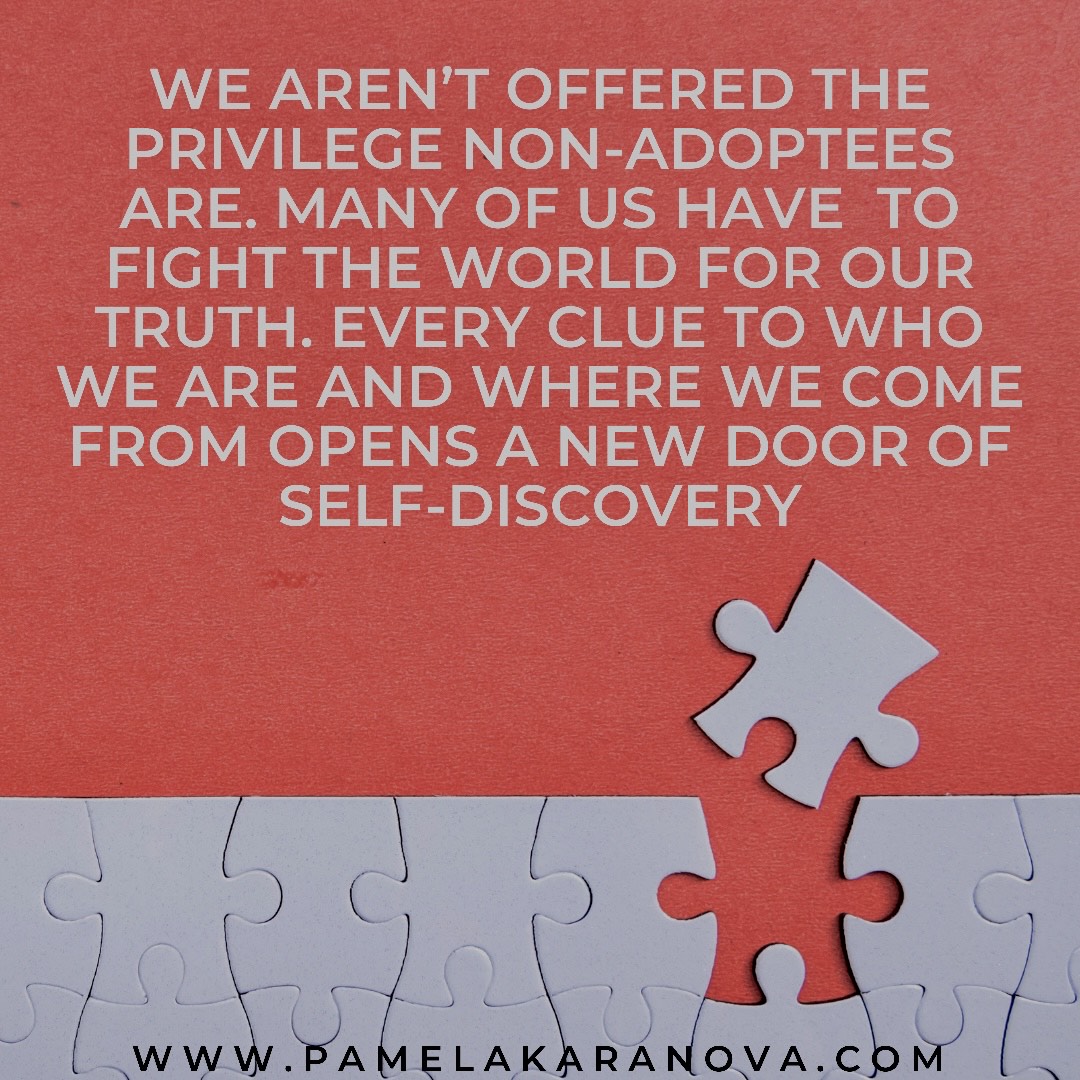
That Moment I Wanted My Mom, Then I Remembered I Don’t Have One.

On February 19th, I had an accident where I slipped hard and fell on the ice, and I hurt myself badly. I was trying to get to work to take the lady I care for to get her Covid-19 Vaccine, and time was in a significant crunch. It was 6:30 AM on a Friday, and the sun hadn’t even started coming up yet.

As my feet slipped out from in front of me and my back and backside landed hard on my three front steps covered with ice. My left hand was mangled in the railing, my car key snapped off the keyring and flew in the snow. My right palm tried to help me land but ended up being bruised and hurt as well.

I tried to find my car key, but I was completely taken back, and now I didn’t even have a car key to get to work. I started to become frantic while my pinkie was bleeding, swelling, and causing me a lot of pain. My backside was doing the same.

I remembered I had a spare key inside, but I had to find a battery. Thankfully, I was on my way to work, pretty banged up. I arrived one minute early. Over the next few hours, a football-sized bruise appeared, and the color changed from dark purple to almost black. The swelling was out of this world. I still had to work, which was not easy.

As the days passed, my pain set in, and I was beside myself. After nine days, I hoped my pain would be better, but I was still in a significant amount of pain. While the bruise was getting lighter, the knot in the middle of the bruise was the same size, about 5in x 6in, and the pain was still about an 8. I decided this past Sunday I was going to the ER to check it out to make sure nothing else was going on. I also wanted to discuss some pain medication for nighttime which seemed to make sleeping impossible.  

All CT scans came back normal, which I figured they would, and they ended up sending me home with some pain meds, and they wanted the hematoma that was causing so much pain to absorb itself back into the skin. In the meantime, they gave me a shot in my arm of pain meds.

This shot was so painful; I had immediate tears stream down my face, and at that moment, it hit me. Something that never hits me.

I wanted my mom.

This wasn’t the familiar daily feeling of wishing I had a mom as an adult; it was much deeper than that. I want a mom every day, and I’m constantly reminded I don’t have one but this was a deep and sad longing, one that has rarely ever come out in my adult life.

Is it a sign of healing?

Is it a sign of saving space for my inner child to come out?

 It was a new experience for me because my story is a story that has unfortunately set me up to live a life MOTHERLESS. As the thoughts of wanting a mother came over me, this deep sadness came over me. I was in the ER hospital room alone, and I realized I didn’t have a mom.

It’s not that my moms are dead, and I had a lifetime of beautiful memories with them, and they just no longer existed because they passed away. Both my adoptive mother and biological mother have passed away. It was more so the sadness set in that the biological mother I wanted and needed didn’t want or need me. And the mother that wanted me couldn’t care for me; she wasn’t there for me. She was mentally ill, and she was emotionally and mentally abusive in a lot of ways. She caused me a lot of childhood trauma, and I never felt connected to her or bonded with her. I felt like I was forced to bond with her, which was traumatic in its own way.

This reality set in, and tears were nonstop. I let myself cry and sit in the sadness. I couldn’t help but think about the last time being connected to my biological mother in a hospital, which was 46 years ago, the day I lost her on 8.13.74. Did you know the maternal bond that’s formed with your biological mother is the core bond that sets the tone for the path of your life? There is lack of resources for adoptees on this topic that directly connects adopted individuals who are relinquished by their biological mothers but there are many studies and articles for adoptive parents, and non adopted individuals.

Robert Winston and Rebecca Chicot explain –

“Infancy is a crucial time for brain development. It is vital that babies and their parents are supported during this time to promote attachment. Without a good initial bond, children are less likely to grow up to become happy, independent and resilient adults.”The importance of early bonding on long term mental health and resilience in children.

David Chaimberlain, Ph.D. says –

“Separation of mothers and newborns is a physical deprivation and an emotional trail. Mothers know deep within themselves what scientists are just discovering – the relations between mothers and babies are mutual, reciprocal, even magical. A baby’s cry triggers release of the mother’s milk, the only perfect milk on earth for babies. In addition, there is a vital power in the baby’s look and touch to turn on feelings and skills necessary for successful mothering.”Babies Remember Birth.

Where does this leave relinquished newborns in regards to the prenatal and perinatal bonding and the traumatic separation at the beginning of life?

When I was a child, I used to have a reoccurring dream that I was about 4-5 years old, running down a maternity ward’s long hallway. Everything was white. I had a hospital gown on, no shoes, and the hallway went on forever and ever. I remember a clock being at the end of the hallway, and the time was disappearing minute by minute as I ran. I remember jerking all the curtains back, one by one in terror, as I searched for HER. It went on forever. I never did find her, but this dream was reoccurring through most of my life. Did this hospital visit connect me to that dream subconsciously? It’s hard to fathom I’m 46 years old, and discovering these connections and truths are still impacting me greatly.

I’ve recently started to become familiar with IFS – Internal Family Systems by recommended by a great friend, Stephani H. (TY STEPH!) Watching the video will explain what IFS is the best, but in a nutshell, you identify different parts of us that have been parts of us back to the beginning of our lives. It helps us learn our parts are all welcomed and a part of us.

Stephani mentioned that it was my inner child part that wanted my mom, and when she said that, it made total sense to me. It was the little girl in me that just really needed my mom with me, and the entire concept that she wasn’t there, and she has never been, and she never will be set in. It was a hard pill to swallow. I was in a significant amount of pain, and that didn’t help me any.

The best part is, I’m learning that my feelings of sadness are not feelings to run from; they are feelings to sit with. I didn’t realize that was my inner child feeling that way until after I was already home and Stephani mentioned it to me. I was blown away because it made total sense.

If I thought of that while I was at the hospital, IFS teaches us to talk to the parts, welcome them and give them what wasn’t given to me as a child. I didn’t realize it until I was already home, but my sadness consisted, and I got comfort in understanding the dynamics of my child part coming out while I was at the hospital.

I have recently decided to give IFS therapy a try, and in the last month of learning about it, it is a miraculous and fantastic tool. I don’t want to share much here, but I plan to write about my experience with IFS because I want other adoptees to consider using it as a healing tool.

At a very young age, I was disassociated from the entire concept of wanting and needing a mother to protect myself. When those feelings came, it caught me off guard. I’m usually a strong person, and tears are something in the past I have held inside. But this time, these feelings wouldn’t let me. Even when I tried to stop crying, the feelings of wanting my mom overwhelmed me. I’m 46 years old and still navigating the aftermath of adoption.

As I learn more about IFS, self & my parts, I want to share them with you! I’m also starting therapy with a new therapist who is an adoptee! I am excited about this process. It seems I’ve done a lot of self-work, but I have never done trauma work. I have work to do. I think acknowledging these parts is the first step, and making the choice to sit with them, and no run is the next step. What’s next? I hope to share with you what the process looks like by trauma informed therapy, IFS and other techniques I am using to navigate the healing process from an adoptees perspective who also lives a life sober of alcohol.

Adoptees, have you ever been in a situation where you wanted your mom on a deeper level? Did these feelings surprise you? I would love to know how you describe them? What helps you navigate them when they come?

Don’t forget this article along with all my other articles are available in audio for your convenience, just look up Pamela A. Karanova Podcast on Google Podcasts, iTunes , Spotify. and Amazon Music. Interested in treating me with a coffee, to add fuel to my fire? Click here. Many thanks in advance to my supporters!

The views and opinions expressed in this article are that of the author, Pamela A. Karanova. Reproduction of the material contained in this publication may be made only with the written permission of Pamela A. Karanova
Adoptees are Paying the Price for Adoptive Parent Infertility Compacted with AP Fragility

It is not enough to lose your biological mother at the beginning of life. Still, adopted individuals also must live up to unrealistic expectations set upon us by society and our adoptive parents. We must fit in the shoes of the fantasized biological child our adoptive parents would have had; could they have had children of their own. They have big plans for us like most parents have for their children.

News Flash: We can’t fit into those shoes or that role. It’s impossible. I’m very sorry for your loss, but its not my job to fix it or make up for it. I shouldn’t have to carry that burden. However, adoptees continue to be presented as a clean slate when we meet our adoptive parents’. Every one of us has a [his]-story & a [her]-story before we’re adopted, and it’s a critically important part of US.

I’ve experienced in my journey and learned by listening to my fellow adoptees that, more times than not, our adoptive parents have never fully healed from the unsettling truth that they couldn’t have children of their own due to infertility issues.  This causes significant problems for the adopted child because we will never live up to the expectations as if we were a biological child, but this demand is high. When healing hasn’t happened first, it can be a disaster in the home.

We’re born experiencing immense trauma by being separated from our biological mothers. This separation trauma impacts every area of our lives showing up as grief, loss, C-PTSD, abandonment, rejection, anger, rage, addictions and so much more.  The weight the adopted child feels and carries into adulthood is tremendous alone. Still, it’s compacted by the expectations set upon us to be something or someone we aren’t by our adoptive parent’s expectations. This weight carries on into adulthood and impacts every area of our lives. 

When our adoptive parents have significant unhealed issues with the loss of not having children of their own, it surfaces in every area of the home.

In my story, I remember my adoptive mom never being well, and she was always taking pills. When I was a child, I didn’t understand what was going on, but now I know “never being well” was depression, pill addiction, and manic depressive suicidal episodes. The depression was rooted in untreated mental illness, the aftermath of not being able to have children of her own, and marrying and adopting two daughters, only to divorce one short year later. I was told she wasn’t capable of parenting one adopted child, but somehow she ended up divorced, alone with two adopted daughters.

A glimpse of my childhood consisted of me being my adoptive mom’s caretaker. She was abnormally emotional every day and cried daily, saying repeatedly she wasn’t worthy of being a mother. I was the comforter and “Good adoptee.” I would sit with her on the edge of the couch and comfort her by rubbing her back and saying, “It’s okay, mommy, I’m sorry, mommy, It’s okay.” I must have said, “I’m sorry,” 100X a day sometimes. I remember being sad all the time and wanting her to stop crying. She never did, but when she wasn’t crying, she was sleeping in the daytime, and she also had a compulsion of wanting to threaten to commit suicide in front of us, which she frequently did. Learning and focusing in school was impossible most days, because I was I was riddled with anxiety and fear day in and day out.

Is it possible her infertility issues were the root of her behaviors? Being 46 years old and evaluating my childhood, I would suggest so. I don’t have the definite answers because she never got help for those issues; she adopted to fill the void instead. It was my responsibility as far back as I could remember to take care of her, cater to her, and be there for her. I was a slave to her.

I’ve recently discovered that I’m a people pleaser, and this characteristic was developed early in my childhood as a direct reflection of wanting to make my adoptive mom happy. I did everything I could think of to bring her happiness, and in the end, I always fell short. A co-dependent relationship was created, but I had no choice in the matter. I felt trapped in this cycle of co-dependency for most of my life due to my adoption experience.

Where was I going to go?

How was I going to get out?

It was all I knew.

I recall my entire childhood was focused on ways to make my adoptive mom happy, at the expense of my childhood happiness. Everything was all about her. I felt like a child servant with a list of tasks to complete daily, and most of them were centered around making her happy. I was brushing her hair, putting makeup on her face, massaging her arms, legs, and back with lotion, filing paperwork for her, cutting coupons, cleaning far beyond everyday routine childhood chores. I was never able to be a kid in this home. My feelings were never validated, nor were they important. Her adoptive parent fragility reigned supreme over all things in this household.

Please understand that this didn’t stop in childhood. It only stopped when I packed up a 22 Foot U haul and left this toxicity. I moved across the country with my three young children at 31 years old. It felt like an escape, and I have never looked back or regretted my decision but it hasn’t come without more heartache.. When I arrived back in Kentucky, I had no job, no car, no money, no home, no place to live, and no keys to anything. Thankfully my twin’s grandmother was kind enough to let us use a bedroom, where we all 4 stayed for the next few months to get on my feet. Little by little, I made a way for my children.

This escape didn’t come without a cost. Unfortunately, it’s taken me 15+ years to recover, and I’m still recovering daily. It’s going to be a lifelong process for me, as it is most adoptees/relinquishees.

My adoptive moms’ actions throughout my childhood and lifetime caused significant damage that has radiated throughout my life course. When I left at 31, I had to sever ties for my mental health, but it wasn’t before I tried to set boundaries first. She overrode every boundary I asked of her, which were simple things like please put your pills away. I asked her to please not cry around my kids. I asked her please not talk negatively about me behind my back to my children. She broke everyone, so I cut all contact. She was not going to do to my children what she did to me. Moving across the country and cutting ties was the only option.

It was the hardest decision I ever made.

Being groomed to put my feelings aside and caretake to her and her feelings have been a pattern I have picked up into adulthood. I put everyone else ahead of myself, and I never learned how to say “no” or even have an opinion about anything. This has caused me a lot of problems in relationships and my personal space and life. Caretaking is something I was conditioned to do from a very early age; it’s no wonder I am a caretaker by career and have been for 15+ years. This role wasn’t healthy for me as a child, and it’s not healthy for me as an adult.

I was forced to pretend, and I ended up being a professional at this game of make-believe. Better yet, I was conditioned to assume the role of expectations from a very early age. In this game, I learned early that my true feelings of grief, loss, and sadness from the loss of my biological mother and families’ weren’t welcomed. If I shared them, I took the chance I might hurt my adoptive parents’ feelings.

With my adoptive mom crying daily, sometimes hourly, having mental health episodes, she was likely already hysterical. My feelings of sadness would only add to this problem. I learned to keep things inside locked away. I learned my feelings weren’t important, and they didn’t compare to her outbursts. The safest place for them was to pretend like they weren’t there. I think I learned to disassociate and became a professional at it as a survival technique. There was a split created between the real true me, and the me she needed me to be.

As an adult, trying to recover from this childhood, I have done countless healing exercises to help myself try to make sense of it all and heal. One of the things I did was put myself in her shoes to try to gain a better understanding of why she was the way she was.

Untreated mental illness has always highlighted itself in a way that I’ve put it at the top of the list of why she was the way she was. I didn’t understand this as a child, but It’s more than evident mental illness is front and center when her suicide attempts of laying in the middle of the street play like a repeated movie scene in my mind from my childhood. She was sick, but I didn’t understand mental illness as a child.

I can’t help but wonder how my life would have been different if my adoptive parents had gotten some therapy for infertility issues before choosing to adopt. I think about it from time to time; although non of us get any “do-overs” in life, I sure would have benefited in a positive way to have a happy, healthy mother figure to think about in my lifetime. I blew it in this area not once, but twice. A total crap shot.

Instead, the trauma of her attempting suicide, her untreated mental illness, pill addiction, and her manic depressive episodes trump all the good memories there were.  Traumatic memories seem to have a way of showing upfront and center in our lives when we least expect it.

Over the years, I have heard countless stories from my fellow adoptees. They experienced similar childhoods and lives. Our adoptive parents adopted a child to replace their biological child they might have had if they didn’t have infertility issues, never healing from infertility issues first. It’s no secret in the adoptee community; we weren’t chosen. We were next in line.

This breaks my heart for my fellow adoptees because many of us didn’t stand a chance at having happy childhoods. There is nothing a relinquishee/adoptee can do to make up for the loss one feels who cannot have their own biological children. Nothing. Yet here we are, forced to fit into a role we can’t possibly fit into.

But we fake it until we make it, and we try because we have no choice. We learn to adapt, or we die trying. This sets us up for a lifetime of a false sense of self, never really knowing who we are or who we aren’t until we break away altogether. And some of us never make it to that place of self-discovery. Breaking away is difficult, if not impossible, for most of us. It’s no wonder adoptees are 4x more likely to attempt suicide. Look at the paradox we are forced to be in the center of.

The sensitivities around this topic echo throughout our lives. Many times it creates an adoptive parent fragility that adoptees are forced to be sensitive to. We’re groomed to put everyone’s feelings above our own, and it can and will create and a lifetime of struggles. 

It’s taken a lifetime to be able to look myself in the mirror and say, “You are important, and so are ALL of your feelings!” because no one ever did this for me growing up. My life was centered around her and her feelings. It was never about me.

I remember conversations with my adoptive mom way before I reached adulthood, where she wanted to make sure I knew she didn’t want to go to a nursing home when she got old. She also had talked about me being her power of attorney way before I was even an adult. It became evident to me at a very early age, and these were the reasons she adopted two daughters. She had a motive the entire time, and it wasn’t hard to piece it all together as I grew up.  

I never was and never will be the daughter my adoptive parents signed up for. I’m pretty sure I’ve turned out quite the opposite, to be honest. I’ve committed to spending the rest of my days trying to recover from this childhood of pain, not just for myself. For my kids, so they have a chance at seeing a happy and healthy mom, which I never had. Even on the days where I didn’t have the drive and motivation for myself, I do it for them.

Suppose you’ve made it this far, and you are possibly a prospective adoptive parent. In that case, I ask you to please consider intense emotional and psychological therapy before you even think of adopting a child. And then before you choose to adopt, visit pages like @askanadoptee and @howdoesitfeeltobeadopted and read and learn what adoption is like from an adoptee’s perspective. Ask questions on the Ask an Adoptee platform because one thing for sure, adoptees there will tell you the truth, even when it hurts. Have you accepted that relinquishment trauma is a real thing? Do you know anything about it? If you don’t you need to learn from adopted adults. We hold the keys of knowledge but you have to have the willingness to listen and learn.

If you are an adoptive parent already, I urge you to seek deep within ourselves to find out where you are in your recovery and healing with your infertility struggles.  Please do this immediately before you project your pain onto your adoptive child. Also, know that we never can and never will be what your biological child would have been. Unless you have accepted this, you still have work to do.

For my fellow adoptees, I’m so sorry for your pain and heartache. I’m sorry for the unrealistic expectations that have been placed upon you to fill the shoes of a child you were never meant to fill. I’m sorry you weren’t listened to. I’m sorry you haven’t felt your feelings are important as a child or an adult. Your feelings are important, and so are you. Can you relate to anything I have shared here? I would love to hear from you!

Don’t forget this article along with all my other articles are available in audio for your convenience, just look up Pamela A. Karanova Podcast on Google Podcasts, iTunes , Spotify. and Amazon Music. Interested in treating me with a coffee, to add fuel to my fire? Click here. Many thanks in advance to my supporters!

Love, Love.

The views and opinions expressed in this article are that of the author, Pamela A. Karanova. Reproduction of the material contained in this publication may be made only with the written permission of Pamela A. Karanova.

My Views on Adoptee vs. Relinquishee

Over the last few years, I’ve learned the noteworthy difference in the concept of an adopted

individual referencing themselves as a relinquishee and why this is even a thing. Take note while I share here, I’m sharing from the perspective of an adoptee adopted from a closed adoption in 1974. I’m not referencing individuals who have never been separated from their biological mothers at the beginning of life.

10+ years ago, I began to come out of the fog regarding my adoptee journey, and in that time, it’s been ten years of processing pain, heartache, adoption, and relinquishment trauma. I had to trace back to the beginning of my life, which we would typically consider being conception. I actually wrote about this before many years ago, Is Adoption the Problem or is Relinquishment the Problem?

 However, we must go much farther back and allow ourselves to spend some time in our birth parents’ shoes, their parents’ shoes, and their parents’ shoes.

Over those ten years, I’ve learned the knowledgeable difference between someone using the reference adoption trauma and relinquishment trauma. They are two very different things, and we must recognize them as such to embrace our healing journeys.

For myself, the root of my pain is a reflection of the original separation and relinquishment trauma from my birth mother. This wound in the adoption community is fitfully referenced as The Primal Wound.

I share my thoughts and feelings based on my experiences, which is especially true for my healing journey. One’s healing journey is never cut and dry, reflecting ONE WAY, so I will never insist what works for me will work for you too, but it might.

I used to refer to adoption trauma as the root of my trauma; however, my growth has caused my views to change over the years. Today, I hear countless individuals reference adoption trauma as the soul wound that an adoptee carries; however, I would disagree. The first trauma an adopted individual experiences is actually from the relinquishment from our biological mothers. This trauma is first, and it is the root of our heartache and pain. Trying to heal these wounds “out of order” where we aren’t acknowledging the root first, can and will stall our healing as relinquishees.

Adoption trauma is definitely in the mix for most of us, who consider our adoptive homes a traumatic experience. Still, we must acknowledge that relinquishment trauma, aka the primal wound, was FIRST.

Adoption trauma compacts relinquishment trauma, making one big cluster fu*ks of trauma on top of trauma. I’m a firm believer in getting to the root of the problem to pull it out and set it on the table to work on it. In my opinion, we must start referring to our pain to share where the root of our heartache and pain comes from, and that’s relinquishment trauma.

The loss of our birth mother is so profound that until we start to recognize this as our original trauma that happened FIRST, our healing will be stalled.

Adoption trauma is a thing. Being forced to bond with a family, you are nothing like is a thing. Adoption abuse is a thing. Adoption itself is separate from relinquishment and in this acknowledgement, I’ve learned this is one reason adoptees are now referencing themselves as relinquishees.

As I embrace a New Year and as 2021 approaches, I feel that for my writings and personal journey, I am going to starting writing from the perspective of a relinquishee because, for me, that’s the one wound that’s been the deepest. It’s the root of my pain. To recognize this, I want other adoptees to consider acknowledging this as their root wound as well. However, it could also be known as the mother wound for adoptees that wound is dual damage.

I have learned over the years some adoptees do not acknowledge adoption or relinquishment as a trauma. However, I feel they likely haven’t done enough research on either of these to make the correlation.

One dynamic of connecting these dots was to step out of denial about relinquishment trauma. This only happened by researching and trying to understand pre and perinatal bonding, separation after birth, and the emotional, psychological, and preverbal trauma that occurs when relinquishment/separation happens. Another avenue to research is generational trauma. No one will tell us to research these things to understand them better, so we must embrace this on our own.

Acknowledging these differences in relinquishment trauma and adoption trauma is critically essential, and our healing depends on it. Moving forward, you will likely see me reference myself as a relinquishee about my views on relinquishment trauma. I encourage you to do your research and study all the adoptee experience dynamics so you can best understand the complex layers of trauma that an adopted individual experiences.

For most adoptions to take place, the adoptee is a relinquishee FIRST. I think this difference is a noteworthy one those in adoption circles should acknowledge because the more we understand, the more we heal.

Don’t forget this article along with all my other articles are available in audio for your convenience, just look up Pamela A. Karanova Podcast on Google Podcasts, iTunes , Spotify. and Amazon Music. Interested in treating me with a coffee, to add fuel to my fire? Click here. Many thanks in advance to my supporters!
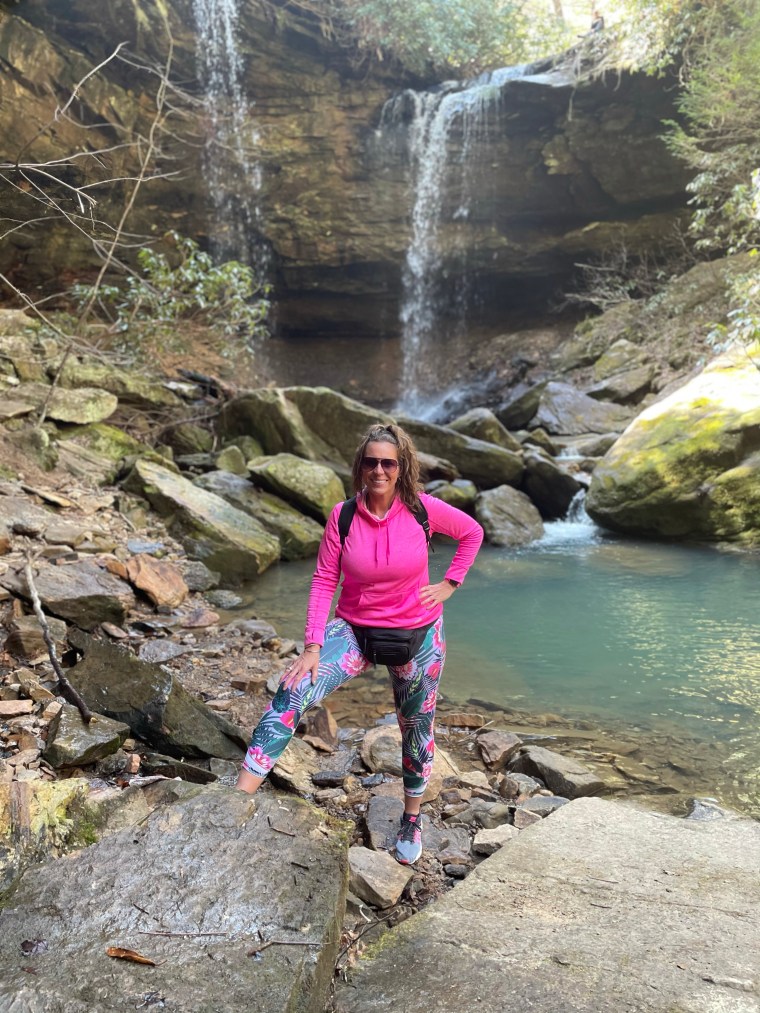
Thanks for reading.

The views and opinions expressed in this article are that of the author, Pamela A. Karanova. Reproduction of the material contained in this publication may be made only with the written permission of Pamela A. Karanova.

2021 – A New Year, A New Chapter

It’s time to turn the page

We’re winding up 2020, which could very well be the worst year of many of our lives. It’s been so weird, in so many ways, that most of the time, I don’t even have the right words to share how this year has made me feel. Today I will do my best to try.

It’s been a year of feeling for me. It’s been a year of independence, growth, and prioritizing commitments. It’s been a year of pruning relationships out that no longer serve a purpose. It’s been a year to focus on being true to myself. It’s been a year to set boundaries and to bring visions to life. It’s been a year of isolation and aloneness. This year has been so complicated and filled with a million layers. I’ve experienced highs and lows and just about every emotion in between, as I’m sure many of us have.

But if you’re reading this, you made it, and I made it. We’ve survived. But I never want to forget all the people who didn’t. So many people have lost so much, and my heart truly aches for them and their families.

One of the things I can share is that this year, personally, hasn’t been a year that was much different for me than most years when it comes to feeling alone and isolated. I’ve been feeling that way my entire life, from adoption. I’ve talked to many adoptees, and they feel the same way. We’re the kings and queens of adaption. We’ve handled it like a camp, just blending in, in the background. Other’s of us completely lost our sh*t. I’ve experienced a mixture of both.

While this new transition has rocked the world of many, it’s not new for many of my fellow adoptees and me. I’ve learned to adapt to this way of life from as far back as I can remember. My adoptee experience is described as being alone on an island, and it’s just the way it is because it’s the way it’s been for my entire life.

While 2021 is right around the corner, I have several new topics I plan to write about this year. I’ve been slacking on writing on my website, but only because I have so many other things going on with Adoptees Connect, Inc. It’s hard to find the time, but writing is one of the most therapeutic healing tools I have yet to find, so I am making a recommitment to myself to pick back up on writing as a healing tool for myself.  

Some topics I hope to write about:

  • Religious Trauma Syndrome
  • Open Adoptions being Closed by AP’S
  • Religion & Adoption
  • Relinquishee vs. Adoptee
  • Adoptee in Recovery/AA/NA/Celebrate Recovery
  • Dual Mother Wounds for Adoptees
  • Healing Tools for the Mother Wound
  • Adoptees & Mental Health
  • Deconversion & Religion
  • Articles to Birth Parents & Adoptive Parents
  • Mother Nature AKA Mother Earth & Healing Adoptee Pain
  • Adoptee Attachment vs. Adoptee Connection
  • Generational Relinquishment & Adoption Trauma
  • Being Brave – Sharing Your Adoptee Story

These are just a few things that come to my mind. I’ve never written about some of these topics, yet only shared my feelings with a small circle of close friends. It’s taken me years of self-reflection and processing to get to a space where I feel comfortable sharing some of my feelings associated with these topics.

Adoption isn’t the only thing in life we come out of the fog about.

When adoptees come to a place in their journeys where they embrace a journey of sharing their voices, it’s so important the adoption community come together to support them. Getting to this space can take a lifetime for many of us.

This year has been one of the most challenging years of many of our lives, and I hope we exit out of 2020 with a newfound hope that 2021 has to be better. I haven’t set myself up for the false hope that as soon as midnight hits on 12/31/20 like a magic wand, everything will be back to “normal.” I don’t think the normal as we once knew it will ever return.

However, hope is on the horizon that things will be better. At least that’s what I’m hanging onto, a sliver of hope I’ve found among the fear, heartache, and pain I’ve experienced this year.

What are you looking forward to this year?

For me, I’m hopeful that in the early spring, our Adoptees Connect – Lexington, KY group will be back at meeting in person again.  I’m confident that I will have many more outdoor adventures, and my soul will be filled with the great outdoors, which brings me great joy. I’m hopeful love will continue to knock on my door, and be an experience that I’ve never had before. More memories with my kids will be made, and I feel I will cherish my health more, and I will continuously be consciously aware of what I consume, and put in my body. I will focus on my health, and happiness and not just what everyone sees on the outside either. I will continue to set hella boundaries, and I will stop explaining these boundaries to others, as well as stop explaining myself and my reasoning when most of the time, people could care less. I will take my time in responding, being on time and accurate because I can allow myself grace to make mistakes. I will tap the breaks when new people come into my life, so I can learn them before I make a decision to just let them in my life.

Not everyone deserves to be in our lives.

I feel the sorrow we’ve experienced in 2020 will linger on for a lifetime, however a new day will bring new joys. A new year will bring new goals. New people will bring new memories. Turning the page will allow us to embrace new challenges, new fears and new hopes for 2021. As you see, I’ve accepted that it might not be all rainbows and unicorns, and things won’t likely ever get back to “normal” however, I’ve also accepted that I have many things to look forward too and that’s where I hang my hat. Hope 2021 will be better than 2020.

I hope the same for you!

If you’ve made it this far, I thank you for taking the time to read my article. I wish you and your family a peaceful transition as we roll into 2021. A special THANK YOU to each of you who support my work, writings, and missions. Without you, I wouldn’t be here because your support means everything!

Ignorance is Bliss, My Experience with Therapying the Therapist

At 5 years old I remember the first time I sat in a therapist office. It was my adoptive mom, my adoptive sister and me. She used triangulation tactics to turn my adoptive sister and I against one another. It was a regular scene at our home that all hell would break loose and things were chaotic on the regular. I’m not sure who directed the therapist visits, but if I were to make a guess it would have been my adoptive mom. It should have been social services or the courts but somehow, they never were called.  

I remember having alone visits with the therapist, as well as visits with all of us together. Adoption was a topic that impacted our family in every way, however it was never talked about in the therapy sessions.

What was talked about is our adoptive moms parenting skills, and our responses to them as children. When we would share the experiences in this home, the therapist would encourage us all to do some different things to help calm the house down. One of those things was going to our rooms to allow time to calm down when all hell would break loose. We tried to keep our end of the bargain; however, our adoptive mom would constantly come banging on our door, manic demanding we open them.

I didn’t have the language for it then as a child, but now I do. My adoptive mom was narcissistic, she would have manic depressive and paranoid schizophrenic episodes, she was addicted to prescription pain pills, and she was suicidal. She battled major depression and would try to commit suicide on the regular.

Anytime the therapist would guide her to do something different as a parent, she felt targeted. She stopped going to that therapist soon after, and eventually she would find another one. I remember therapist my entire childhood, but adoption was never talked about.

I started to run away around 12-13 years old. I hated this home and found being in the streets a new freedom I had never experienced before. I started getting arrested at 13, and spent my juvenile life locked up in detention, drug and alcohol treatment and I also spent a lot of time in group homes.

Compared to the house I lived in, I always felt a peace in any of the places I was locked up at, over the home I was adopted into. Structure was something I wasn’t used too but I liked it. It was peaceful. But you would never believe of all the places I was, and all the therapist I saw throughout my juvenile years, Adoption was never talked about. It was very much on my mind looking back, I wonder why I didn’t say anything?

I wonder why they didn’t say anything.

I remember sitting in from of my probation officer, Kathy Lake. She was very stern, and by the book when it came to probation, but she never once asked me, “Why do you keep getting in so much trouble? What is making you angry? What’s happened to you in life that’s hurt you so bad you keep breaking the law?” I always wished someone got to the bottom of adoption issues, but at that time the outbursts in the home were at the forefront of all hell breaking loose. I took my anger and pain outside to the streets.

Part of me feels like I didn’t’ mention adoption being the root of my pain because I didn’t understand the links between the way I was behaving and feeling and adoption. I also feel I was gaslighted from an exceedingly early age to be thankful and grateful that a family took me in when my own family didn’t want me. I was my adoptive moms greatest joy because I gave her the title “Mother.” How could I share my real feelings, especially when they all tell me to be thankful? My true feelings would hurt them. I didn’t know how to process this as a child.

 I think one of the biggest issues I had was being told to feel a certain way, but inside I didn’t feel that way at all. I wasn’t thankful or grateful. I hated the home I lived in. I didn’t have the language as a child to come up with connecting the dots on these topics and no one else helped me find this language or open conversations to talk about it. My adoptive parents, therapists or adults in my life ever helped me gain an understanding that relinquishment trauma very well could be the root of my issues, compacted by adoption trauma. I feel they all failed me miserably even all the way to seeing a therapist at 18, because I was suicidal. They never brought adoption up, nor did I but most of these years of experiences with therapy I was a child.

I can’t help but wonder if it’s the same way for my fellow adoptees who are children sitting in the therapy rooms today? Has anything changed? Have the therapist failed them too? Is this a big reason why adoptees are 4x more likely to attempt suicide, as well as over representing prisons, jails, mental health, and treatment facilities? I can’t help but wonder.

Where does the real problem lie?

It was up to me to do the self-work as an adult and try to get to the root of my problems. No one was going to do it for me. After spending 27 years addicted to alcohol, angry and mad at the world, running a rat race trying to get to the bottom of what my problem was, let’s all share a drum roll please…

Relinquishment Trauma was the root, compacted by adoption trauma. Surprise, surprise.  I have tried many times to get therapy as an adult as I’ve emerged out of the fog, and into my truth. There have been times my pain was so great, I just wanted to end my life. But instead I have hung onto hope for many reasons. Mainly my children, and my fellow adoptees.

As my experiences with therapy as an adult have been significantly different than when I was a kid, at the end of the day they have still failed me. I have tried several times to find a new therapist, begin to build a relationship and I find myself explaining all the dynamics to the adoption experience so that they can understand the magnitude and depth of my root issues. Complex PTSD, Complex Grief, Loss, Abandonment, Rejection, The Primal Wound, Relinquishment & Adoption Trauma, Bonding, (or lack of) Identity Issues, Anger, Rage, and the list could go on. Each time I have found myself therapying the therapist. At that point, I feel like I should be the one getting paid. At what point do I realize this therapeutic relationship isn’t going to go anywhere because this person isn’t educated on all these levels of adoption and relinquishment trauma so they can help me? It’s more like I’m helping them.

I’m tired of therapying the therapist.

I recently had an experience that left me with no hope that I will ever be able to receive therapy ever again. I shared on my website an article called My Experience with Accelerated Resolution Therapy (ART). At the end of the second session ( I committed to four) my new found therapist lets me know she’s an adoptive mom, and she asks me if she could share my information about Adoptees Connect, Inc. with some of her friends and colleagues. I won’t lie, it was a huge red flag learning she was an adoptive mom. However, due to my two ART sessions being great experiences I expressed that would be fine, and they could reach out to me if they had any questions.

A few days later, I get an email from my therapist as follows:

The message above was copied and pasted to me via email, from my therapist. She did not include the identity of the colleague/parent/therapist.

I can’t even begin to express how upset this made me. First of all, there is one adoptive mom on this entire earth that I have had a great relationship with and that’s because she’s my friend of over 25 years, and she is 100% receptive to learning the adoptee experience in hopes to understand her adopted children better. She’s it for me. The rest of the experiences I’ve had with them haven’t been great. I will add this experience to the list of them.

When I read this email, my stomach sank. It’s been said by a friend close to me that she likely thought “I could handle it.” I think she’s right, but that doesn’t excuse the message that was sent concealing her colleague/adoptive mom/friends’ identity, meanwhile mine is wide open for her to learn. In her defense, I agreed that would be fine to share my information, but this was taking it was too far IMHO. Her friend should have contacted me directly. I found this to be very unprofessional.

As soon as I read the email, I felt like I had two adoptive moms against me and that I was all of a sudden in a position where I not only had to defend myself, but my nonprofit and also every other adopted person on the planet. It was an awkward and uncomfortable situation to be in. I immediately had to put my Adoptees Connect, Inc. hat on and that made me even more upset.

As feelings started to boil over, I woke up early the next morning to craft the email I would soon send to my therapist and her friend who are both adoptive moms. After this, I sent an email to this new therapist letting her know I couldn’t keep a therapist relationship with her due to the conflict of interest of her being an adoptive mom. I had someone mention that I let her off the hook, which is true. I resent that, but one more time I had to put my Adoptees Connect hat on, and it overrode my own feelings and I was really angry that I was put in a position where I had to do this.  As I crafted this email to these two adoptive moms, here I was once again therapying the therapist/s.

This situation tainted and ruined the once trusted relationship that I was trying to build with this new therapist. It was over. This situation left me feeling so discouraged and upset, it was the beginning of a downward spiral of sadness and emotions I hadn’t felt in alone while. I’m still not over it. This was a last resort for me. Not to mention this experience tainting the two positive therapy sessions I had.

I realize there are many adoptee’s who are stepping up to become ADOPTEE COMPETENT therapist, but there are none in my entire state, and I’m sure that’s the same for many of my fellow adoptees. Major kudos to all those who are adoptees and therapists, and those who are in the process of becoming therapist. I personally know many of you, and I am so thankful for what you give our community!

 I will share the list that is a recommended resources on the Adoptees Connect website and that’s Adoptee Therapist Directory if by chance you are an adoptee in search of an adoptee therapist please feel free to check this website out.

I genuinely believe there is an incredibly significant inadequacy when it comes to therapist and their general knowledge regarding all the different dynamics to relinquishment and adoption trauma. So much missing data and information to be learned and it’s so needed for the adoptee population. From my experience in therapying the therapist and their lack of being able to help me, is one of the reasons Adoptees Connect, Inc. was created and founded as a nonprofit. Because the world has failed adoptees, and we’re truly all we have when it comes to being able to share our experiences with others who get it. And many days that doesn’t seem like enough. We can listen and be there which is what the Adoptees Connect groups are focused on but we aren’t equipped to counsel other people’s trauma.

If you are an adoptee and have had a great experience with therapy, or even an adoptee who is considering therapy please don’t take my article as a reason to discontinue or disconnect from therapy. You might have a better experience than me. If you do, I’m happy for you. I encourage therapy if the relationship is serving the adoptee in a positive way and I feel it’s very needed to be able to heal from the adoptee experience. Unfortunately, after 46 years of being on this earth, I have yet to find that relationship but I’m happy for those to have.

Maybe one day all the adoptee therapist can get together and write some adoptee centric literature for therapist and adoptive parents that can help teach non-adopted therapist about the truth about adoption? I know it’s a far fetch, but it needs to happen. We need adoptee therapist and more adoptee centric resources; our lives and survival depend on it.  

For my fellow adoptees, can you relate to any of what I have shared here? If you feel up to it, please share your experiences.

Don’t forget this article along with all my other articles are available in audio for your convenience, just look up Pamela A. Karanova Podcast on Google Podcasts, iTunes , Spotify. and Amazon Music. Interested in treating me with a coffee, to add fuel to my fire? Click here. Many thanks in advance to my supporters!